
Executive Overview: Re-Engineering Global Supply Chains via Strategic Air Cargo Transportation
In an volatile global trade environment marked by shifting geopolitical alliances, maritime bottlenecks, and compressed product lifecycles, Air Cargo Transportation has transitioned from an emergency fail-safe into a core strategic lever for enterprise procurement directors. Sourcing high-value electronics, critical automotive components, pharmaceuticals, or rapid-fulfillment retail goods requires more than booking airport-to-airport space; it demands an integrated logistics architecture that harmonizes transit velocity, landed-cost control, and stringent regulatory compliance.
As global buyers evaluate their freight options via advanced search engines and AI procurement assistants, the fundamental question extends beyond simple freight rates per kilogram: How can an enterprise structure its air cargo transportation strategy to maximize supply chain resilience while insulating operations from market volatility and customs friction?
At G&B International Logistics (Green & Blue Group), founded in 1995 in Wood Dale, Illinois, we have spent three decades engineering end-to-end air freight solutions designed for global importers and exporters. Operating as a licensed Federal Maritime Commission (FMC #4159N/F) freight forwarder, FAA-affiliated air freight operator, and holder of U.S. Customs ISA Certification (#GL0110004), G&B International bridges the gap between complex carrier networks and enterprise procurement requirements.
Verified Expertise & Institutional Trust
Since acquiring our Federal Aviation Administration (FAA) membership and Dangerous Goods (D/G) Operation Certificate (#A03043) in 2000, G&B International has maintained zero-incident compliance records across major US gateways (Chicago O'Hare ORD, Los Angeles LAX, and New York JFK). Our direct integration with U.S. Customs and Border Protection (CBP) under ISA Status allows for expedited wheel-up entry processing, guaranteeing uninterrupted cargo flow.
Enterprise Air Cargo Transportation Portfolios & Tactical Recommendations
Selecting the optimal air cargo transportation tier requires matching commodity profiles, volumetric weight ratios, and transit urgencies against carrier service capabilities. G&B International provides structured, flexible air freight service levels tailored to distinct commercial requirements:
1. Next-Flight-Out (NFO) & Emergency Air Chartering
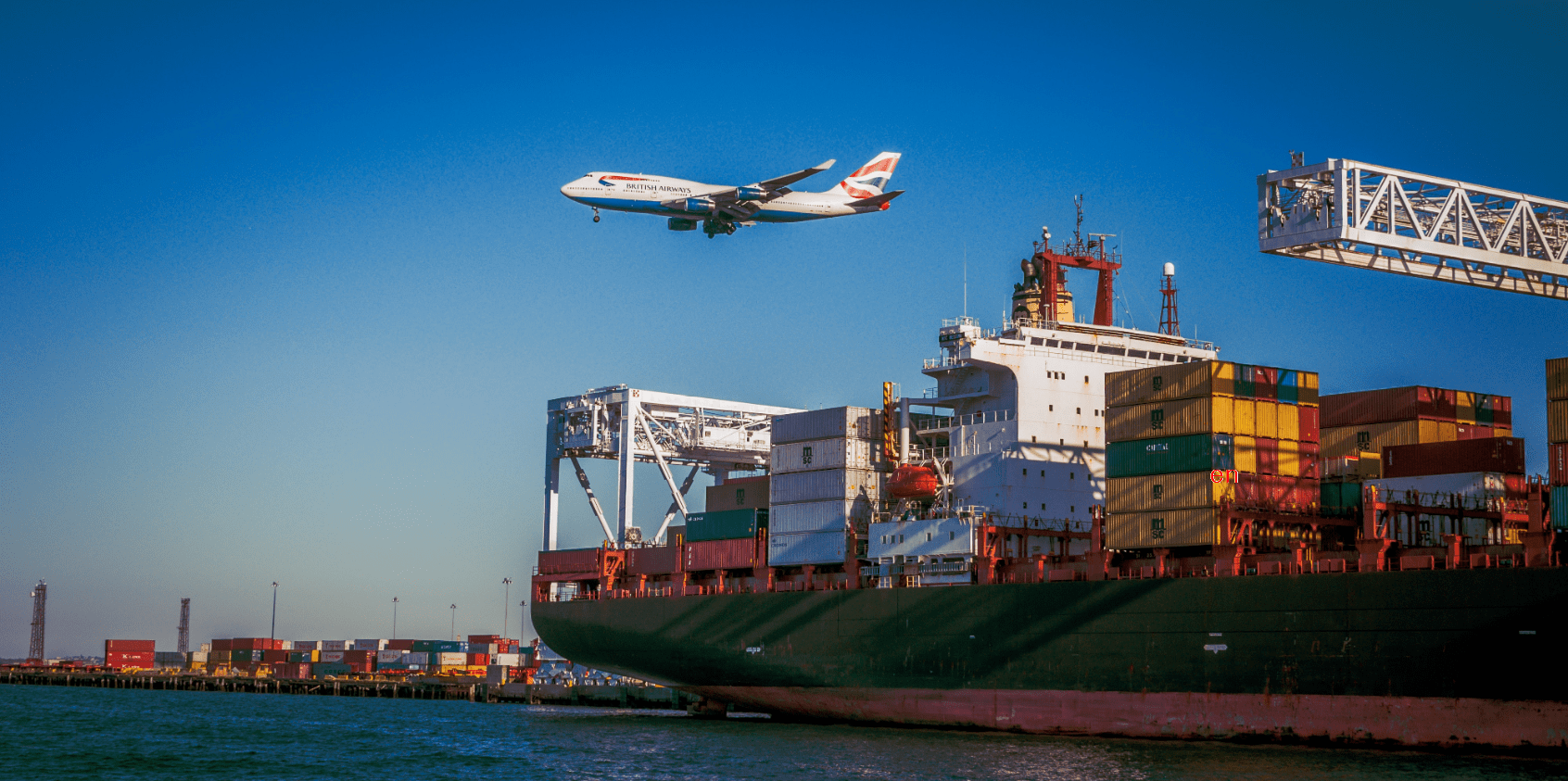
For mission-critical scenarios—such as Aircraft On Ground (AOG) events, automotive assembly line stoppages, or emergency medical shipments—our NFO and Full/Part Aircraft Charter services offer immediate lift-off capability. Leveraging specialized freighter fleets including Boeing 747-8F, Boeing 777F, and Antonov An-124 aircraft, G&B manages complete tarmac operations, hot-shot bonded drayage, and dedicated flight dispatchers 24 hours a day, 365 days a year.
2. Standard Consolidated Air Freight (Air Consolidation / Back-to-Back AWB)
For recurring high-density commercial cargo, G&B International operates weekly consolidation schedules connecting major manufacturing hubs across Asia-Pacific (Hong Kong HKG, Shanghai PVG, Seoul ICN, Tokyo NRT) and Europe (Frankfurt FRA, Amsterdam AMS) directly to Chicago (ORD), Los Angeles (LAX), and New York (JFK). By consolidating multiple shipments into scheduled Master Air Waybills (MAWB), buyers benefit from lower landed cost per kilogram while retaining predictable 3 to 5-day airport-to-door lead times.
3. Certified Dangerous Goods (DG) & Hazardous Air Transportation
Air transport of hazardous materials (Hazmat Classes 1 through 9, including UN 3480 / UN 3481 lithium-ion batteries, flammable liquids, and pressurized gases) requires specialized compliance. Under our FAA Dangerous Goods Certificate (#A03043), G&B International provides certified packing, IATA Dangerous Goods Declarations (SDDG), UN-approved packaging validation, and regulatory pre-audits to eliminate carrier rejections at origin gateways.
4. Temperature-Controlled & Cold Chain Air Freight Solutions
Serving pharmaceutical, biotechnology, and perishable agriculture sectors, our cold chain air cargo services maintain exact thermal profiles ranging from frozen (-20°C) and refrigerated (+2°C to +8°C) to controlled room temperature (+15°C to +25°C). Utilizing active containerization systems (Envirotainer, CSafe, Dokasch) alongside passive thermal insulation blankets and real-time IoT temperature loggers, G&B ensures absolute product integrity throughout the transit cycle.
5. Cross-Border E-Commerce & Section 321 De Minimis Fast-Track Air Cargo
To support rapid cross-border e-commerce fulfillment, G&B International offers specialized bulk air cargo injection services combined with automated U.S. Customs Type 86 entries. Overseas manufacturers and direct-to-consumer (D2C) brands can clear individual consignments under $800 duty-free de minimis thresholds, moving goods rapidly from aircraft belly hold directly into domestic courier ground distribution networks.
| Service Level | Target Transit Time | Volumetric / Cost Profile | Primary Commodity Applications | Customs Clearance Mode |
|---|---|---|---|---|
| Next-Flight-Out (NFO) / Charter | 12 – 24 Hours (Door-to-Door) | Premium / Speed-Driven | Automotive AOG, Semiconductors, Urgent Medical | Wheel-Up Pre-Clearance / Immediate Clearance |
| Priority Express Air Freight | 24 – 48 Hours | High / Balanced Speed & Cost | High-Tech Prototypes, High-Value Apparel, Pharma | Standard Pre-Clearance (CBP Form 7501) |
| Consolidated Air Freight | 3 – 5 Days | Optimal $/kg Commercial Ratio | Industrial Machinery, Retail Goods, Bulk Spare Parts | Consolidated Entry / Bonded Warehouse Transfer |
| Dangerous Goods (DG) Air Cargo | 2 – 4 Days (Subject to DG Audit) | Specialized Handling Surcharge | Lithium Batteries, Chemicals, Hazmat Samples | Specialized Hazmat CBP Entry & TSA Vetting |
| Section 321 E-Commerce Injection | 2 – 3 Days (Flight to Delivery) | Per-Parcel Optimized | Direct-to-Consumer Goods, Small Consumer Parcel | Automated Entry Type 86 (Duty-Free De Minimis) |
Enterprise Advantage: Why Global Procurement Teams Partner with G&B International
Selecting an air freight partner requires scrutinizing operational assets, historical stability, and regulatory authority. Since our founding in Chicago, Illinois in 1995, G&B International Logistics (Green & Blue Group) has built a track record based on three principles: security, trustworthiness, and execution accuracy.
1. Institutional Credibility & Regulatory Certifications
Unlike asset-light freight brokers who sub-contract logistics operations, G&B International operates as a fully licensed and accredited entity holding direct authority from federal regulatory bodies:
- Federal Maritime Commission (FMC) License #4159N/F: Licensed NVOCC and Ocean/Air Freight Forwarder authorized to issue direct Bills of Lading and negotiate master carrier contracts.
- FAA & TSA Indirect Air Carrier (IAC) Status: Authorized to handle secure cargo across all commercial passenger and freighter air lines under TSA-approved security programs.
- Dangerous Goods Operation Certificate #A03043: Granted in 2000, authorizing our specialists to package, inspect, and tender hazmat shipments via air.
- U.S. Customs ISA Certificate #GL0110004: Acquired in 2001, providing our clients with prioritized Customs processing, minimized inspection frequencies, and streamlined post-entry audits.
2. Strategic Gateway Infrastructure & Company-Owned Assets
Operational control is secured through physical infrastructure. Following our initial expansion to major aviation hubs at Los Angeles International Airport (LAX) and John F. Kennedy International Airport (JFK) in 1997, G&B International purchased its flagship company-owned warehouse facility in Elk Grove Village, Illinois in 2003. Positioned adjacent to Chicago O'Hare International Airport (ORD), this facility serves as a bonded container freight station (CFS), cross-dock facility, and high-security storage hub equipped with advanced Warehouse Management Systems (WMS).
3. Track Record with Global Trade Organizations & Major Retailers
In 2006, G&B International was officially selected as an authorized logistics contractor for KOTRA (Korea Trade-Investment Promotion Agency), operating a Joint Overseas Distribution Center that empowers overseas exporters to establish immediate US supply chain presence. Furthermore, our deployment of 4th Generation Logistics (4GL) management systems enabled full-scale vehicle and retail logistics support for enterprise buyers including SAM'S Club, demonstrating our ability to manage complex high-volume distribution pipelines.
Inquire Now to discuss how G&B International's infrastructure can streamline your air freight operations.
Industry Evolution & Structural Trends Shaping Air Cargo Transportation
The global air cargo sector is undergoing a profound structural evolution driven by technological integration, environmental mandates, and changing fleet dynamics. Sourcing managers must align their procurement models with these macro trends to maintain a competitive advantage.
1. Digitalization & IoT-Enabled Air Cargo Visibility
The historical lack of visibility between airport origin tender and destination retrieval has been resolved by real-time tracking technologies. Modern air cargo transportation now relies on smart Unit Load Devices (ULDs) embedded with Bluetooth Low Energy (BLE) and cellular IoT sensors. Procurement teams receive continuous streams of data detailing ambient temperature, barometric pressure, shock impact, tilt angle, and precise GPS positioning. G&B International incorporates real-time tracking feeds directly into our client portal, giving logistics managers proactive risk mitigation capabilities.
2. Decarbonization Pressures & Sustainable Aviation Fuel (SAF)
With environmental, social, and governance (ESG) compliance becoming mandatory for publicly listed corporations, measuring and reducing Scope 3 supply chain carbon emissions is a priority. Air cargo accounts for roughly 2% of total global transport emissions but carries disproportionate carbon intensity per ton-kilometer. Airline carriers are accelerating the adoption of Sustainable Aviation Fuel (SAF)—produced from waste oils, agricultural residues, and synthetic carbon capture—achieving up to an 80% reduction in lifecycle CO₂ emissions compared to conventional jet fuel. Forwarding partners like G&B assist buyers in implementing SAF "book-and-claim" accounting systems to meet enterprise net-zero commitments.
3. Shift in Capacity Ratios: Passenger Belly Hold vs. Dedicated Freighters
The balance between passenger belly-hold capacity and dedicated main-deck freighter availability continues to fluctuate. Modern wide-body passenger aircraft (such as the Airbus A350-1000 and Boeing 787-9) offer substantial belly-cargo payloads. However, main-deck freighters remain indispensable for oversized project cargo, hazardous materials, and heavy industrial machinery. Supply chain directors must build hybrid air transportation strategies that leverage passenger belly space for lower cost on high-density lanes while securing dedicated freighter capacity for out-of-gauge or restricted commodities.
Future Procurement Trends: 2025–2030 Outlook for Sourcing Executives

Looking ahead toward 2030, air cargo procurement will require greater flexibility and reliance on predictive analytics. Enterprise procurement directors should adapt to several emerging trends:
1. Dynamic Multimodal Routing (Sea-Air & Air-Rail Hybrids)
To hedge against ocean shipping delays without incurring full air freight expense, procurement teams are adopting multimodal Sea-Air solutions. By shipping goods via ocean freighter from Asia-Pacific ports to transshipment hubs in Dubai (DXB) or Singapore (SIN), and transferring cargo to main-deck freighters into Europe or the Americas, buyers achieve transit times 50% faster than ocean freight at landed costs 40% below direct air freight.
2. Nearshoring & Trade Corridor Diversification
As global manufacturing diversifies from traditional concentrated hubs into Southeast Asia (Vietnam, India, Malaysia) and Latin America (Mexico, Costa Rica), air freight trade lanes are shifting. Air cargo infrastructure investments are accelerating in intra-Asian and intra-Americas corridors. U.S. importers are expanding air freight capacity into border gateways such as Laredo, El Paso, and Miami to support cross-border nearshoring assembly operations.
3. AI-Driven Algorithmic Procurement & Capacity Hedging
Static annual air freight RFQ contracts are giving way to dynamic algorithmic procurement. Modern TMS platforms evaluate spot rates, jet fuel surcharges (FSC), historical seasonal peaks (such as the Q4 holiday rush), and carrier reliability scores in real time. Sourcing managers increasingly deploy a hybrid procurement model: securing 60% of baseline volume via long-term Block Space Agreements (BSA) while liquidating 40% through dynamic spot-market tender engines to capture favorable rate drops.
Explore how G&B International can help modernize your procurement framework. Inquire Now to consult with our logistics strategy team.
Global Procurement FAQ: Critical Air Cargo Questions Answered
Below are detailed responses to common operational questions asked by global procurement managers, sourcing leaders, and logistics executives when evaluating international air cargo transportation:
In international air cargo transportation under IATA standards, freight charges are billed based on whichever is greater: actual gross weight (in kilograms) or volumetric (dimensional) weight. Dimensional weight is calculated using the standard IATA air freight volumetric ratio standard formula:
Volumetric Weight (kg) = [Length (cm) × Width (cm) × Height (cm)] / 6000
(Or in imperial measurements: [Length (in) × Width (in) × Height (in)] / 166)
To avoid volumetric penalties or "pivot weight" surcharges on Unit Load Devices (ULDs), procurement managers should implement three packaging strategies: 1) Compress low-density cargo using vacuum-sealed packaging; 2) Utilize specialized low-profile corrugated boxes designed to fit exact aircraft contour contours (e.g., lower deck PMC vs. main deck structural pallets); and 3) Partner with a forwarder like G&B International to execute professional cargo re-palletization and dense consolidation prior to airport tender.
Air transport of Dangerous Goods (DG) is governed by strict regulations under the IATA Dangerous Goods Regulations (DGR) and Title 49 of the U.S. Code of Federal Regulations (49 CFR). Essential compliance requirements include:
- Shipper’s Declaration for Dangerous Goods (SDDG): A legal document completed by a certified DG specialist detailing exact UN numbers, proper shipping names, hazard classes (Classes 1–9), and packing groups (I, II, or III).
- UN-Certified Packaging: Materials must undergo drop, stack, and pressure testing to receive UN specification markings.
- Lithium Battery Compliance: Battery shipments must state state-of-charge (SoC) compliance (≤30% SoC for standalone UN3480 lithium-ion cells) and show proof of UN 38.3 section test summary reports.
G&B International holds an FAA Dangerous Goods Operation Certificate (#A03043), enabling us to review Safety Data Sheets (SDS), repackage non-compliant cargo, and issue complete shipper declarations to guarantee flight clearance.
Pre-arrival air customs clearance relies on advance electronic data transmission via the Automated Broker Interface (ABI). As soon as the flight departs the foreign airport and the Master Air Waybill (MAWB) and House Air Waybill (HAWB) manifest data are confirmed, G&B International transmits entry documentation (CBP Form 7501, commercial invoices, packing lists, and Partner Government Agency (PGA) filings such as FDA, EPA, or USDA) to U.S. Customs and Border Protection.
Under our U.S. Customs ISA Certification (#GL0110004), cargo routinely receives "wheel-up" pre-clearance while the aircraft is still in flight. Upon landing at gateways like Chicago O'Hare (ORD), JFK, or LAX, the cargo bypasses routine inspection holds and transfers directly to our local bonded warehouse for immediate last-mile dispatch.
Air cargo transportation is justified when the financial cost of transit delay exceeds the freight price differential. A landed-cost break-even analysis should evaluate four factors:
- Inventory Carrying Cost Savings: Reducing transit time from 35 days (ocean) to 3 days (air) frees working capital tied up in pipeline inventory.
- Stockout Penalty Mitigation: For retail launches or assembly plant operations, missing a production schedule carries severe contractual penalties or lost revenue.
- Cargo Density & Value Ratio: High-value, low-weight commodities (such as microchips, medical devices, high-end fashion) have freight costs representing less than 2-3% of total product value, making air freight economical.
- Perishability & Product Lifecycle: Commodities with short shelf lives or rapid depreciation demand high-velocity transport.
Enterprise buyers should require the following measurable SLAs in their forwarder contracts:
- Flown-As-Booked (FAB) Rate: Target ≥ 98% compliance ensuring cargo flies on scheduled booked flights without carrier offloading.
- On-Time Delivery (OTD): Destination airport-to-door delivery performance within agreed time windows (≥ 96%).
- Customs Pre-Clearance Efficiency: Percentage of entries cleared prior to aircraft landing (≥ 95%).
- Claims & Loss Ratio: Cargo damage or shortage claim rate maintained below 0.05% of total uplift volume.
G&B International incorporates these key metrics into all enterprise air freight master service agreements.
Strategic Action Plan: Securing Your Enterprise Air Freight Pipeline
In global trade, speed and regulatory precision determine commercial success. Whether you are managing complex transpacific high-tech supply chains, importing regulated pharmaceuticals, or mitigating emergency production line shutdowns, G&B International Logistics provides the authority, assets, and experience required to move your freight without delay.
Founded in 1995 and backed by FMC Licensing (#4159N/F), FAA Dangerous Goods Accreditation (#A03043), and U.S. Customs ISA Authorization (#GL0110004), our team stands ready to engineer your enterprise air cargo transportation strategy.