
In modern international commerce, Dangerous Goods Air Transport represents the highest echelon of logistics complexity. Whether shipping lithium-ion battery assemblies for electric vehicles, volatile organic solvents for industrial chemical processing, or life-saving pharmaceutical reagents requiring dry-ice stabilization, global supply chain executives face unprecedented regulatory scrutiny. The air cargo cabin operates under extreme physical variables—including atmospheric pressure drops, temperature fluctuations, and continuous vibrational stress. In this high-stakes environment, non-compliance leads not only to severe carrier rejections and costly port-of-entry delays, but also to devastating financial penalties and supply chain disruptions.
For global procurement managers, logistics heads, and corporate compliance officers searching for verified hazmat air freight strategies, key questions routinely dominate decision-making: How do we guarantee 100% acceptance during airline tender? Which UN packaging standard applies to Class 9 lithium power banks vs. Class 3 flammable liquids? How do state variations impact US Customs entry clearance? This comprehensive technical framework details the precise operational requirements, emerging industry shifts, and specialized enterprise services offered by G&B International Logistics (Green & Blue Group) to convert dangerous goods logistics from a corporate risk into a competitive advantage.
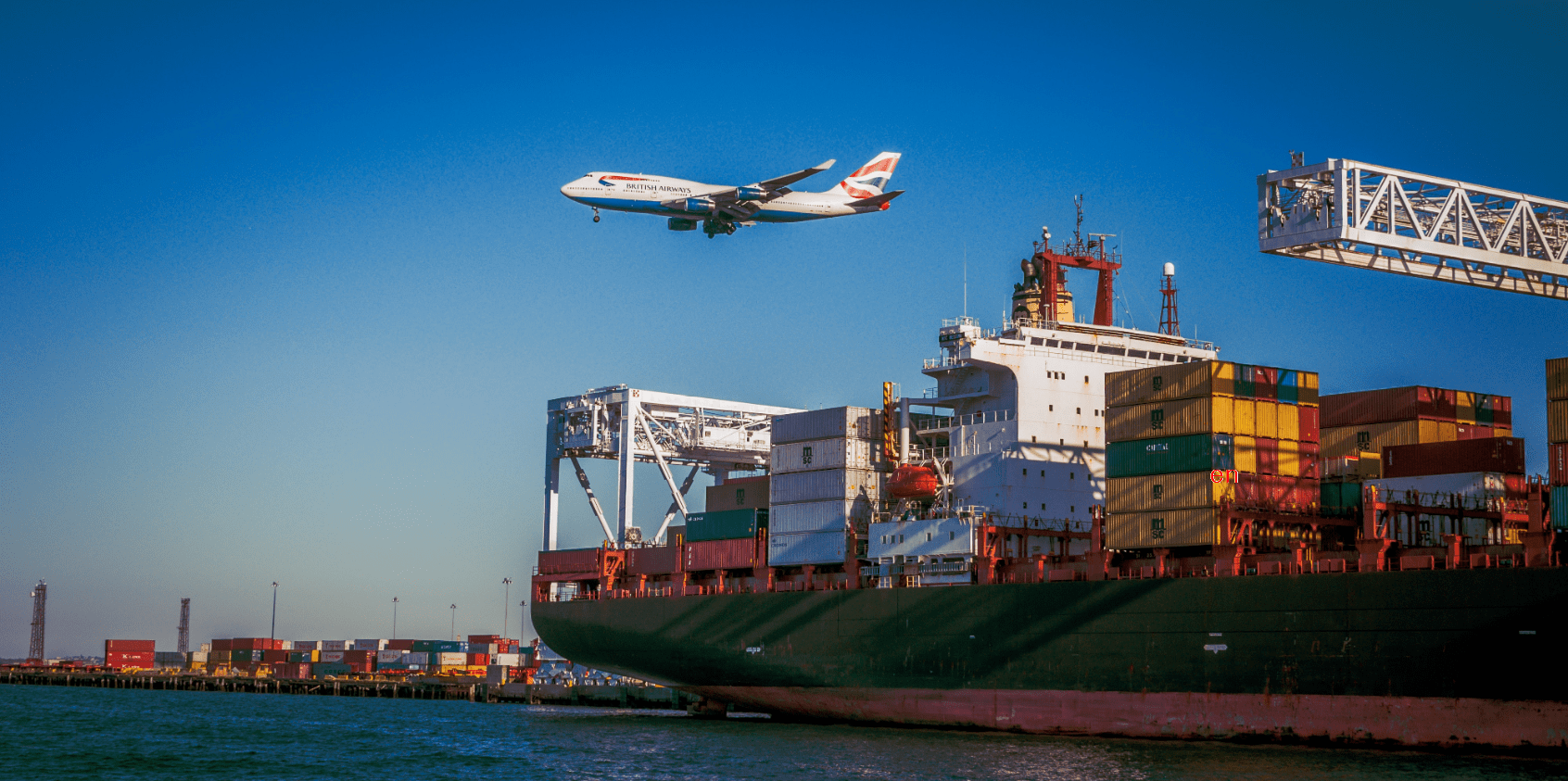
Figure 1: Dedicated air cargo vessel undergoing standardized Dangerous Goods acceptance inspection at Chicago O'Hare International Gateway.
Unlike sea freight or ground drayage, air transport operates under the mandatory mandates of the International Air Transport Association (IATA) Dangerous Goods Regulations (DGR) and the International Civil Aviation Organization (ICAO) Technical Instructions, enforced domestically in the United States by the FAA and DOT under Title 49 CFR (Code of Federal Regulations).
A single missing entry on a Shipper’s Declaration for Dangerous Goods (SDDG), an improper UN specification mark, or an unapproved inner receptacle orientation can result in immediate cargo quarantine. Partnering with a licensed 4th Generation Logistics (4GL) provider possessing specialized Dangerous Goods Operation Certificates is essential for global risk mitigation.
G&B International Logistics delivers specialized packaging, hazard labeling, documentation, and carrier allocation across the full spectrum of dangerous goods recognized by IATA and ICAO. Our certified Dangerous Goods specialists evaluate Safety Data Sheets (SDS) at the line-item level to assign correct UN numbers, Proper Shipping Names (PSN), packing groups (PG I, II, or III), and net quantity limitations for both Passenger & Cargo Aircraft (PAX) and Cargo Aircraft Only (CAO).
Specialized routing for pyrotechnics, airbag inflators, aerosol canisters, compressed nitrogen, and liquefied flammable gas cylinders under strict temperature monitoring.
Solutions for industrial adhesives, paints, alcohol solutions, resin solutions, and organic solvents. Inner packaging integrity verified for pressure differential resilience (95 kPa test).
Compliant handling of self-reactive substances, solid desensitized explosives, and materials that emit flammable gases upon contact with moisture (e.g., magnesium powders).
Custom containment for chemical oxidizers, hydrogen peroxide solutions, and temperature-controlled organic peroxides requiring continuous thermal monitoring during transit.
Bio-hazard containment, pharmaceutical active ingredients (APIs), diagnostic specimens, and industrial radioactive isotopes packaged under stringent UN Class 6.2/7 protocols.
End-to-end management of battery acid, alkaline fluids, plus Class 9 dominance: Lithium Batteries (UN3480, UN3481, UN3090, UN3091), Dry Ice (UN1845), and Magnetized Materials.
As global demand for energy storage, EV mobility, and consumer electronics accelerates, lithium battery shipments represent over 60% of all Class 9 Dangerous Goods Air Transport inquiries. Compliance requirements vary dramatically based on State of Charge (SoC limit of 30% for standalone UN3480 lithium ion cells), watt-hour (Wh) ratings, Section IA/IB vs. Section II Packing Instructions (PI 965 through PI 970), and UN 38.3 thermal/vibration test summary verification.
G&B International maintains certified packaging lines equipped with UN-rated fiberboard boxes, thermal-insulating inner liners, and fire-retardant absorbent materials designed to suppress thermal runaway scenarios, guaranteeing seamless acceptance by top-tier global air carriers (including CX, SQ, LH, FX, and 5Y).
Since our founding in 1995 in Chicago, Illinois, G&B International, Inc. (Green & Blue Group) has established itself as an authoritative leader in international freight forwarding, US customs clearance, and dangerous goods supply chain management. We do not act merely as booking intermediaries; we provide fully accredited, enterprise-grade dangerous goods air transport infrastructure.
Our commitment to safety and operational reliability is documented across three decades of milestones:

Figure 2: G&B International's bonded warehouse management system orchestrates real-time tracking and UN-standard hazmat staging.
Dangerous goods air transport does not start on the tarmac—it begins in certified storage facilities. G&B operates company-owned, high-security warehouse infrastructure in Elk Grove Village, Illinois. Engineered for high-density logistics, our facilities feature temperature-segregated storage zones, spill containment systems, and direct integration with our 4th Generation Logistics (4GL) system.
Recognized since 2006 as a preferred logistics contractor for global enterprise organizations including KOTRA (Korea Trade-Investment Promotion Agency) and major multi-national retail chains like SAM'S Club, G&B combines high-touch human expertise with digital automation to eliminate cargo hold times.
The global dangerous goods air transport market is undergoing a seismic shift driven by technological innovation, stricter environmental regulations, and geopolitical compliance shifts. Enterprise procurement officers must adapt their sourcing strategies to navigate four critical trends shaping the next 3 to 5 years:
As automotive and energy storage manufacturers transition from traditional liquid-electrolyte lithium-ion cells to solid-state chemistry, IATA regulatory bodies are developing new UN numbers and specific testing parameters. Procurement teams must partner with forwarders capable of dynamically updating Packing Instructions to avoid global supply chain bottlenecks.
Leading global buyers no longer accept passive tracking for high-value Class 3 chemicals or Class 9 battery assemblies. Modern dangerous goods air transport requires smart, FAA-approved IoT tracking devices attached to ULDs (Unit Load Devices) to record ambient temperature, pressure differentials, shock vibration, and humidity levels in real time throughout transit.
Airlines are rapidly deploying automated document scanning tools that instantly reject Shipper's Declarations containing minor formatting errors. Procurement workflows must incorporate AI-assisted pre-clearance validation engines—such as G&B's digital DG portal—to cross-reference Safety Data Sheets against current IATA State and Operator variations prior to truck dispatch.
Corporate Scope 3 emission targets are influencing hazmat packaging procurement. The industry is moving away from single-use EPS foam towards fully recyclable UN-tested cardboard containment and lightweight composite drums, reducing airborne tare weight and carbon footprints without sacrificing structural safety under 49 CFR standards.
Looking ahead, the dangerous goods air transport sector will be governed by tighter international harmonization between UN Sub-Committee experts, ICAO, and domestic civil aviation authorities (such as the US FAA, EASA, and CAAC). Understanding these development vectors allows procurement executives to build resilient, future-proof logistics programs:

Figure 3: Seamless multimodal integration bridging ocean container vessels and fast-track air export corridors for regulated dangerous goods.
As air freight capacity fluctuates, dangerous goods supply chains increasingly utilize hybrid Sea-Air or Air-Sea intermodal transfers. Aligning IATA DGR rules with the IMDG (International Maritime Dangerous Goods) Code requires integrated forwarders capable of handling dual packaging certifications, re-labeling cargo at hub gateways, and submitting seamless customs manifest filings across modes.
Airlines are introducing carrier-specific restrictions that exceed base IATA DGR standards (e.g., total bans on standalone lithium battery shipments on passenger airframes, or mandatory UN packaging overpacks). Future success hinges on working with forwarders maintaining direct block-space agreements (BSA) with hazmat-friendly cargo airlines.
Furthermore, digital integration between U.S. Customs and Border Protection (CBP) via the Automated Commercial Environment (ACE) system and PGAs (Participating Government Agencies such as EPA, DOT, and FDA) will automate the cross-referencing of chemical inventories against TSCA (Toxic Substances Control Act) declarations during air import clearance. Forwarders lacking direct ISA and customs brokerage credentials will face severe clearance delays.
Below are technical answers to the most common questions global procurement buyers, compliance leads, and supply chain managers ask when evaluating dangerous goods air freight solutions:
Every dangerous goods air shipment requires three core compliance documents:
1. Shipper’s Declaration for Dangerous Goods (SDDG): A legally binding document signed by a certified DG specialist specifying UN Number, Proper Shipping Name, Hazard Class, Packing Group, Packing Instruction, and emergency contact details (24/7 hotline like Chemtrec).
2. Safety Data Sheet (SDS): A current 16-section SDS (less than 3–5 years old) aligned with GHS standards, specifically validating Section 14 Transport Information.
3. Air Waybill (AWB): Standard air manifest containing mandatory handling statements (e.g., "Dangerous Goods as per attached Shipper's Declaration" or "Cargo Aircraft Only").
Under current IATA DGR regulations, standalone Lithium Ion Batteries (UN3480) packaged under Packing Instruction 965 Section IA and IB are strictly prohibited from being transported on passenger aircraft. They must be shipped on dedicated cargo freighters under the Cargo Aircraft Only (CAO) handling label.
Furthermore, all UN3480 cells must be offered for transport at a State of Charge (SoC) not exceeding 30% of their rated design capacity, unless specific written authorization has been granted by the State of Origin and the State of the Operator.
UN Specification Packaging refers to containers (boxes, drums, jerricans) that have passed rigorous structural safety tests—including drop tests, stacking resistance, hydrostatic pressure, and leakproofness tests—certified by an authorized testing authority. They bear an official UN mark (e.g., UN 4G/Y14.5/S/24/USA/+AA0000).
UN packaging is legally required for all dangerous goods transported by air, except when items qualify for specific limited quantity (LQ) or excepted quantity (EQ) exemptions under IATA DGR Section 2.7/2.8.
Airlines enforce a zero-tolerance policy during physical acceptance checks using the standard IATA DG Acceptance Checklist. Common causes for rejection include:
G&B International prevents rejections by executing complete pre-tender audits at our Elk Grove Village facility prior to airport delivery.
Importing hazardous cargo into the US requires coordinating DOT regulations with US Customs and Border Protection (CBP) and PGA agencies. As an ISA-Certified (#GL0110004) licensed US Customs Broker since 2001, G&B submits electronic entry filings via ACE prior to flight arrival, ensuring EPA TSCA statements, DOT hazmat registration numbers, and SDS reviews are pre-approved to prevent port-of-entry quarantine.
A 4th Generation Logistics (4GL) provider manages the strategic, technological, and operational aspects of the supply chain. Instead of dealing with separate packaging suppliers, customs brokers, trucking companies, and air freight forwarders, G&B’s 4GL framework aggregates the entire hazardous supply chain under one accountable enterprise system, lowering total cost of ownership and ensuring continuous regulatory compliance.
Connect with G&B International’s certified IATA/FAA Dangerous Goods Logistics Specialists today. Get custom UN packaging solutions, SDS reviews, route feasibility audits, and instant air export/import quotes.
Contact Us