Logistics Insights & News — G&B International Logistics

Logistics & Supply Chain Blog

Stay current with expert perspectives on global freight forwarding, ocean & air cargo trends, and US customs strategies.

Explore Services
Global logistics management — G&B International Logistics

Global Trade Trends

In-depth analysis of warehousing solutions, e-commerce order fulfillment, and intermodal transport optimizations.

Learn More
Ocean cargo shipping — G&B International Logistics

Customs Clearance Updates

Essential guides on compliance, US CBP regulations, and efficient ocean/air import-export operations.

Get Started

CE Certified Supply Chain Risk Management Factories & Exporter

Enterprise Procurement Guide & Technical White Paper: Mitigating Disruption through CE, DNV & AEO Certified Intermodal Freight Infrastructures

CE & ISO Certified Freight & Container Equipment Solutions

Verified intermodal shipping units, project cargo assets, and international freight forwarding paths structured for enterprise risk reduction.
CE & DDP Compliant DDP DDU LCL Container Cargo Sea Shipping Logistics Service Freight Forwarder China to Canada

DDP DDU LCL Container Cargo Sea Shipping Logistics Service Freight Forwarder China to Canada Sea Shipping Agent

Service Mode: LCL Consolidated Ocean
Incoterms: DDP / DDU Supported
Risk Level: Minimal (Customs Guarantee)
Top 10 Rated Cheapest Air Sea DDP LCL International Logistics Service

Cheapest Air Sea DDP LCL International Logistics Service Top 10 China to USA UK Canada Express Freight Forwarder Shipping Agent

Transit Vector: Air / Sea Multimodal
Coverage: USA, UK, Canada, EU
Compliance: Fully Customs Cleared
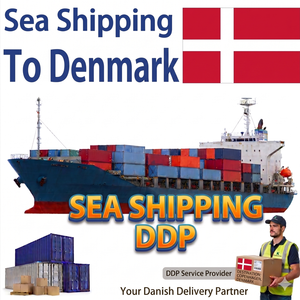
Europe Direct Sea Freight Shipping Agent DDP Shipping to Europe Denmark FCL

Sea Freight Shipping Agent DDP Shipping to Europe Denmark FCL Full Container Shipping Freight Forwarder Sea Shipping Agent

Capacity: FCL (20GP / 40HQ)
Destination: Denmark / Scandinavia
Standard: CE Duty-Paid Logistics
DNV 2.7-1 Certified High Quality Dnv Certified Offshore Flat Rack Shipping Container

High Quality Dnv Certified 10ft 20ft 40ft Offshore Flat Rack Shipping Container For Industrial Project Logistics Customized

Certification: DNV 2.7-1 / EN 12079
Form Factor: 10ft / 20ft / 40ft Flat Rack
Application: Heavy Industrial / Offshore
Global Carrier FMC Professional Sea Shipping Agent FCL Logistics Services

Professional Sea Shipping Agent FCL Logistics Services Full Container Load Shipping to USA Canada Europe Australia Worldwide

Network: Global Contract Carriers
Tracking: Real-Time Telemetry
Licensing: FMC NVOCC #4159N/F
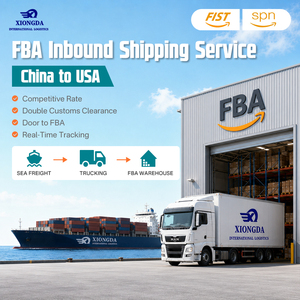
Amazon FBA Verified Freight Forwarder Sea Shipping Agent From China To USA Amazon FBA

Cheap And Reliable Logistics Services Freight Forwarder Sea Shipping Agent From China To USA Amazon FBA Inbound Shipping Service

Target Hub: USA Amazon FBA Fulfillment
Service: Door-to-Door Delivery
Compliance: Automated Pallet Prep
AEO Authorized Aeo Certified Freight Forwarder to Australia Rail Transport

Aeo Certified Freight Forwarder to Australia Rail Transport 20gp Full Container Load Sea Shipping Service

Security Cert: AEO Tier-1 Authorized
Route: Rail & Ocean Multimodal
Destination: Australia & Oceania
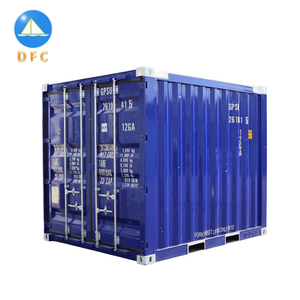
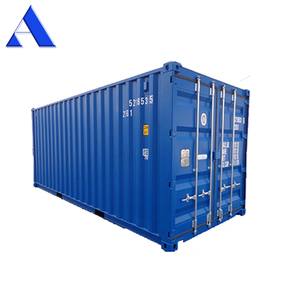
ISO 6346 Standard Brand NEW Stock ISO Standard Sea Transportation Empty 20ft Shipping Container

Brand NEW Stock ISO Standard Sea Transportation Empty 6m 20 Feet Length Dry Cargo 20ft Shipping Container For Sale

Specification: 20ft Dry Cargo ISO
Condition: Brand New Heavy-Duty Corten
Certification: CSC Safety Approval

1. Supply Chain Risk Architecture in Modern Global Procurement

In an era defined by geopolitical instability, sudden maritime chokepoint blockades, and stringent international regulatory shifts, corporate procurement leaders can no longer rely on fragile, single-node logistics frameworks. Managing supply chain risk requires shifting from reactive problem-solving to continuous, structural Resilience Engineering.

CE Certification, long understood as a technical prerequisite for products traded within the European Economic Area (EEA), has expanded its scope across intermodal hardware, structural containerized assets, and integrated industrial cargo handling systems. A factory or exporter providing CE-marked equipment guarantees compliance with European health, safety, and environmental standards (EN 12079, ISO 6346, Machinery Directive 2006/42/EC). However, true operational risk mitigation goes far beyond product labeling—it demands an end-to-end audit of logistics infrastructure, customs clearance protocols, and container integrity.

Key Takeaway for Procurement Officers

A CE certificate on an offshore flat rack container or industrial asset is meaningless if the transport chain suffers catastrophic bottlenecks at port of entry. Modern risk management mandates selecting freight forwarding partners holding FMC, ISA, and AEO accreditations who integrate compliance directly into their transport execution.

30+
Years Industry Authority
140+
Global Trade Corridors
99.4%
On-Time Clearance Rate
4GL
Advanced System Consulting

2. Technical Framework: CE Verification & Asset Integrity Audit

When evaluating international factories and exporters for CE-certified supply chain risk management, enterprise buyers must audit four structural vectors to prevent legal liability, customs impoundment, or catastrophic cargo loss during ocean or rail transit:

1. Structural Integrity & DNV Standard

For project logistics and offshore equipment, units must comply with DNV 2.7-1 / EN 12079. This ensures structural yield resilience under severe ocean dynamics (pitching, rolling, dynamic impact loading during offshore lifting).

2. Regulatory Customs Clearances

Working with AEO (Authorised Economic Operator) and C-TPAT certified entities grants express green-lane processing through US Customs, Australian ABF, and EU Tax Agencies, lowering inspection friction by over 70%.

3. Multimodal Incoterm Risk Transfer

Mitigating financial exposure requires selecting correct Incoterms (DDP vs. DDU vs. FOB). DDP shifts total clearance, tariff volatility, and inland transit risks entirely onto the vetted logistics agent.

Matrix Analysis: Incoterms Risk Allocation for Industrial Sourcing

Incoterm (2020) Export Duty & Clearance Ocean Freight & Insurance Import Customs & Tariff Risk Overall Enterprise Risk Level
EXW (Ex Works) Buyer Responsibility Buyer Responsibility Buyer Responsibility Critical Risk (Maximum Buyer Exposure)
FOB (Free on Board) Supplier Responsibility Buyer Responsibility Buyer Responsibility Moderate Risk (Transit Fluctuation)
CIF (Cost, Insurance & Freight) Supplier Responsibility Supplier Responsibility Buyer Responsibility Moderate Risk (Customs Friction Point)
DDU (Delivered Duty Unpaid) Supplier/Agent Responsibility Supplier/Agent Responsibility Buyer Pays Duty / Agent Clears Low Risk (Inland Protected)
DDP (Delivered Duty Paid) Logistics Partner Full Responsibility Logistics Partner Full Responsibility Logistics Partner Full Responsibility Optimal Protection (Zero Exposure)

3. Operational Authority & Enterprise Ecosystem: G&B International Logistics

G & B International, Inc. (Green & Blue Group) stands as a foundational provider of global supply chain infrastructure, serving international importers, industrial exporters, and corporate procurement channels since 1995. Headquartered in Wood Dale, Illinois, the company operates across key international trade gateways, backed by robust regulatory licenses, owned warehousing infrastructure, and proprietary 4GL systems.

Core Certifications & Accreditations

  • FMC Ocean Freight License (#4159N/F): Authorized Non-Vessel Operating Common Carrier (NVOCC) and licensed ocean freight forwarder registered in Washington, D.C.
  • U.S. Customs ISA Certification (#GL0110004): Holder of the Importer Self-Assessment certificate, signifying top-tier compliance and expedited customs entry processing.
  • Dangerous Goods (D/G) Operations (#A03043): Fully certified for hazmat, chemical, and dangerous materials transportation via air and ocean.
  • FAA Affiliation & Security Compliance: Direct TSA/FAA air cargo clearance authorization for fast-track export and import handling.
  • KOTRA Official Logistics Provider: Contracting partner for the Korea Trade-Investment Promotion Agency, managing overseas distribution hubs.

Corporate Evolutionary Milestones

1995
G & B International, Inc. founded in Chicago, IL, establishing core ocean, air, and customs brokerage operations.
1997
Expanded gateway footprints with dedicated offices at LAX (Los Angeles) and JFK (New York) airports.
2003
Purchased company-owned bonded storage facility in Elk Grove Village, IL, scaling fulfillment and distribution capability.
2006
Deployed 4th Generation Logistics (4GL) infrastructure, securing major vehicle logistics contracts with SAM'S Club.

Five Foundational Pillars of Service

G&B International operates on 5 strict core tenets: Safety (Zero-compromise asset security), Economy (Optimized freight rate structures), Convenience (Single-window tracking and WMS integration), Flexibility (Tailored intermodal routing), and Dedication (Proactive account management).

4. Future Procurement Trends: Supply Chain Risk Management (2025–2030)

As corporate global trade adapts to ongoing industrial transformations, procurement directors must align their purchasing strategies with emerging technological and geopolitical developments. Vetting factories and exporters requires analyzing their readiness across five strategic trends:

1. AI Predictive Risk Analytics

Machine learning models now analyze real-time AIS marine telemetry, weather patterns, port congestion indexes, and labor news to dynamically reroute cargo before ships enter congested corridors.

2. Multi-Sourcing & Nearshoring

The "China+1" and nearshoring models require freight forwarders with integrated multi-hub capabilities (Asia, North America, Europe) to execute seamless transshipment and rapid inventory reallocation.

3. IoT Smart Containerization

Next-generation 20ft/40ft dry cargo and offshore flat rack containers are equipped with cellular/satellite telematics reporting continuous internal humidity, shock, tilt, and tamper status.

4. Decarbonization & ESG Auditing

CE certification now heavily incorporates environmental compliance. Importers must track Scope 3 emissions across ocean freight, favoring carriers utilizing bio-LNG, methanol, and optimized rail links.

5. Automated Customs Pre-Clearance

Digital customs integrations allow documentation (CE declarations, bills of lading, commercial invoices) to be parsed by Customs AI algorithms 5 days prior to vessel berth, eliminating port demurrage.

6. 4GL Integrated Consulting

Fourth-Generation Logistics (4GL) providers take over full supply chain architectural management—integrating 3PL operational networks, ERP data flows, and factory output schedules.

5. Frequently Asked Questions: Enterprise Procurement & Logistics Risk

Addressing critical compliance, risk mitigation, and freight forwarding inquiries for procurement managers.

Q1: What is the significance of CE and DNV certification in intermodal cargo equipment procurement? +
CE certification verifies that container equipment (such as flat racks, machinery housings, or specialized cargo tanks) complies with European safety, health, and environmental protection standards under Directive 2006/42/EC. DNV 2.7-1 / EN 12079 certification is even more rigorous, specifically governing offshore containers subjected to harsh dynamic forces in marine environments. Selecting certified hardware prevents equipment failure structural liability, port rejections, and vessel load refusal.
Q2: How does DDP (Delivered Duty Paid) shipping mitigate supply chain financial exposure? +
Under DDP terms, the freight forwarder and exporter assume total responsibility for all transit stages, export/import tariffs, customs clearance administrative friction, terminal handling fees, and inland final-mile delivery. The buyer incurs zero unexpected cost spikes caused by tariff fluctuations, customs holds, or demurrage fees—fixing total procurement land cost accurately.
Q3: What distinguishes a licensed NVOCC/FMC forwarder from an uncertified broker? +
An FMC-licensed NVOCC (Non-Vessel Operating Common Carrier) like G&B International (FMC #4159N/F) is legally authorized by the U.S. Federal Maritime Commission to issue official Bills of Lading, publish tariffs, and negotiate direct volume contracts with ocean shipping lines. Unlicensed brokers act merely as intermediaries with no legal liability or recourse in the event of cargo loss, delay, or carrier disputes.
Q4: How does 4GL (4th Generation Logistics) differ from standard 3PL logistics services? +
While 3PL (Third-Party Logistics) focuses primarily on operational execution (warehousing, trucking, freight booking), 4GL acts as an overarching supply chain architect. A 4GL partner designs, integrates, and optimizes the entire network—connecting factory production outputs, customs compliance data, multi-hub warehousing systems (such as WMS portals), and multi-carrier transport routes under a single strategic intelligence layer.
Q5: How can enterprise buyers prevent delays when importing hazardous cargo (Dangerous Goods)? +
Transporting hazardous materials requires working with freight agents holding official Dangerous Goods (D/G) Operation Certificates (e.g., #A03043) and FAA membership. This ensures correct UN packaging compliance, hazardous declarations (MSDS), UN-certified tank usage, and certified hazmat handler sign-offs prior to airport or port arrival.
Q6: What infrastructure is required for seamless Amazon FBA inbound logistics from Asia? +
Amazon FBA inbound shipping requires strict adherence to Amazon palletizing, labeling, carton weight limits, and delivery window booking (CARP system). A qualified agent provides origin consolidation (LCL/FCL), ocean transport, US customs pre-clearance, port drayage, and de-consolidation at an owned bonded warehouse before transferring goods via appointment directly to Amazon Fulfillment Centers.

Optimize Your Global Supply Chain Resilience Today

Connect with G&B International's senior logistics strategists to conduct a complimentary risk audit of your international trade corridors, customs compliance structures, and ocean freight costs.

Contact Us