
Direct Factory Logistics, Multimodal Cargo Solutions, and Specialized Industrial Shipping
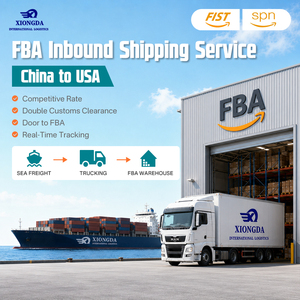

In the contemporary landscape of global trade, cross-border freight forwarding has evolved far beyond basic port-to-port cargo movement. Enterprise procurement teams, global OEMs, and high-volume e-commerce brand aggregators require integrated, highly resilient, and regulatory-compliant supply chain architectures. Operating as a premier China Cross Border Freight Forwarding Logistics Provider and Industrial Supply Chain Partner, G&B International Logistics (Green & Blue Group) provides end-to-end operational control, mitigating volatile spot rates, geopolitical customs friction, and port congestion through precision logistics engineering.
Logistics Quality & Information Gain Insight: Modern cross-border shipping requires a hybrid model combining origin consolidation in major Chinese manufacturing hubs (Shenzhen, Ningbo, Shanghai, Qingdao) with destination-side bonded warehousing, automated WMS integrations, and NVOCC-backed ocean vessel contracts.
Established in 1995, G & B International, Inc. (Green & Blue Group) has engineered a bulletproof freight forwarder infrastructure designed to seamlessly bridge Asian manufacturing centers with North American, European, and Australian consumer markets. Headquartered in Wood Dale, Illinois, with strategically located gateway facilities at Los Angeles (LAX), New York (JFK), and Chicago (ORD), our organization operates under strict federal and international regulatory accreditations.
Fully licensed by the Federal Maritime Commission (FMC License #4159N/F) in Washington, D.C., authorizing direct contract negotiations with ocean carriers (Vessel Operating Common Carriers) for guaranteed space allocation and competitive FCL/LCL rate structures.
FAA-affiliated membership and certified Dangerous Goods (D/G) Operations authority (Certificate #A03043). Capable of handling hazardous material classifications, lithium-ion battery transport, and time-critical express charter flights.
Holder of U.S. Customs ISA Certification (#GL0110004). In-house licensed Customs Brokers executing remote location filing (RLF), ISF 10+2 compliance, section 301 tariff mitigation, and duty drawback execution.
G & B International, Inc. founded in Chicago, Illinois, setting the standard for ocean and air cargo clearance precision.
Secured official FMC License (#4159N/F) in Washington D.C. Expanded gateway offices to Los Angeles International Airport (LAX) and JFK International Airport (NY).
Acquired Dangerous Goods Operation Certificate (#A03043), joined FAA, and earned U.S. Customs ISA Certification (#GL0110004).
Purchased dedicated bonded warehouse facility in Elk Grove Village, IL. Rolled out 4th Generation Logistics (4GL) system, managing heavy vehicle logistics for major enterprise accounts including SAM'S Club, and appointed as official contracted logistics partner for KOTRA (Korea Trade-Investment Promotion Agency).
Selecting the optimal trade framework is paramount to controlling landed costs and allocating liability between Chinese manufacturing plants and international destination hubs. The technical matrix below evaluates operational risk, cost transparency, and speed for enterprise buyers.
| Incoterm / Service | Cost Control | Customs Responsibility | Transit Time Spectrum | Recommended Cargo Type | Risk Allocation |
|---|---|---|---|---|---|
| DDP (Delivered Duty Paid) | Maximum (Fixed All-in) | Managed by Forwarder | Sea: 18-28 Days | Air: 4-7 Days | E-Commerce FBA, Retail Goods | Low (Supplier/Forwarder bears transit & duty risks) |
| DDU (Delivered Duty Unpaid) | High (Excludes Import Tax) | Consignee Handles Tax/Duty | Sea: 18-28 Days | Air: 4-7 Days | B2B Manufacturing Equipment | Medium (Importer responsible for tax clearance) |
| FCL (Full Container Load) | Optimal for Volume (>15 CBM) | Standard Port Clearance | Sea: 14-22 Days (Direct Routes) | Heavy Machinery, Raw Materials | Low (Sealed container, minimal handling) |
| LCL (Less Than Container) | Pay-per-CBM Efficiency | Consolidated Clearance | Sea: 22-32 Days (Includes De-consol) | Mid-sized Shipments, Samples | Moderate (Requires cargo re-handling at CFS) |
| Specialized DNV / Flat Rack | Custom Project Basis | Specialized Tariff Filing | Variable / Heavy Lift Charter | Industrial Skids, Offshore Gear | Managed via Rigging & Lashing Audits |
The global trade ecosystem is undergoing structural shifts driven by geopolitical diversification, dynamic tariff structures, digital transparency requirements, and decarbonization mandates. B2B procurement managers sourcing from China must align with modern freight paradigms to maintain competitive advantages.
Static freight contracts are being replaced by dynamic AI procurement algorithms. Modern forwarders leverage predictive analytics to dynamically switch between China-to-US/Europe direct ocean lanes, intermodal rail (China-Europe Railway Express), and sea-air combined transport based on real-time port congestion indexes and spot rate volatility.
While primary manufacturing remains rooted in China, global enterprises are adopting multi-node distribution strategies. Freight forwarders now manage dual-origin consolidation, seamlessly merging components manufactured in Shenzhen or Ningbo with secondary assembly nodes in Southeast Asia prior to single-bill-of-lading ocean dispatch to Western buyers.
European and North American regulatory bodies (such as the EU Corporate Sustainability Due Diligence Directive) increasingly require verifiable Scope 3 transport emissions data. Enterprise logistics partners must offer low-emission ocean routing, biofuel-powered vessel allocations, and standardized ISO 14064 carbon reporting across all FCL and LCL movements.
Hardware innovations and cloud-based software architectures are transforming physical container shipping into a transparent, real-time data stream.
Standard ISO 20ft and 40ft dry containers, as well as specialized DNV-certified offshore flat racks, are rapidly integrating IoT smart sensors. Importers gain continuous telemetry regarding internal container temperature, humidity, tilt, shock events, and precise GPS geofencing, preventing damage to high-value industrial shipments.
First pioneered in enterprise logistics to manage complex distributor fleets (such as SAM'S Club retail delivery systems), 4GL frameworks unify supply chain planning, warehouse management (WMS), transport management (TMS), and international customs clearance into a single automated dashboard. This eliminates information silos between Chinese factories and end destinations.
Executing flawless supply chain operations from Chinese manufacturing hubs requires proactive risk management protocols. Implementing the following operational standards drastically reduces lead-time variability and administrative penalties:
Under DDP (Delivered Duty Paid), the freight forwarder and seller assume complete responsibility for all transportation costs, export/import customs clearance, harbor maintenance fees (HMF), merchandise processing fees (MPF), and local tariffs. Under DDU (Delivered Duty Unpaid), the buyer/consignee is responsible for paying duty and tax assessments directly to customs authorities upon vessel arrival.
An FMC (Federal Maritime Commission) licensed NVOCC (Non-Vessel Operating Common Carrier) possesses legal authority to issue official House Bills of Lading (HBL), publish independent rate tariffs, and enter into direct service contracts with ocean lines. This guarantees legal recourse, transparent liability coverage, and direct access to allocated vessel space without intermediary markups.
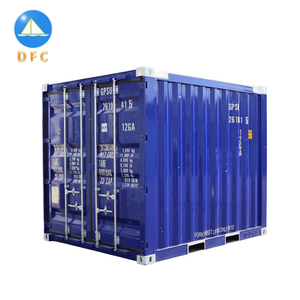
Standard dry cargo is typically loaded into 20ft GP (33 CBM capacity) or 40ft HQ (76 CBM capacity) ISO containers. For oversized, heavy industrial machinery or offshore equipment exceeding standard container width or height, specialized DNV-certified Flat Rack or Open Top containers are deployed, requiring custom lashing and marine insurance surveys.
Essential documents include the Commercial Invoice, Detailed Packing List, Master/House Bill of Lading (MBL/HBL), Certificate of Origin (COO), and specific regulatory filings such as US ISF 10+2, FDA filings for food/medical contact items, or Lacey Act declarations for timber/wood components.
While a 3PL handles physical warehouse storage and transport execution, a 4GL provider acts as an overarching supply chain integrator. 4GL systems manage end-to-end data architecture, multi-vendor carrier networks, automated inventory placement, customer order management, and strategic supply chain optimization across international boundaries.
Direct ocean freight transit from major Chinese ports (Shanghai/Shenzhen) to US West Coast ports (LAX/LGB) typically spans 12 to 16 days, while US East Coast routes take 24 to 28 days via the Panama Canal. Express air freight services deliver within 3 to 5 business days, with standard air freight requiring 5 to 8 days including terminal handling.
Connect directly with G&B International Logistics engineers to review your lanes, audit customs compliance, and receive tailored ocean, air, or intermodal freight quotes.