
Verified consolidation services, specialty project containers, and DDP/DDU ocean freight routes connecting China to North America, Europe, UK, and Australia.
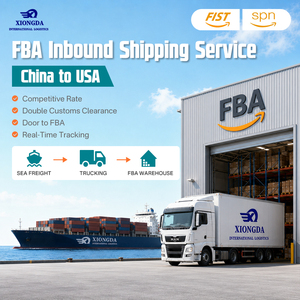
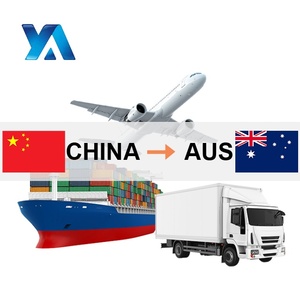
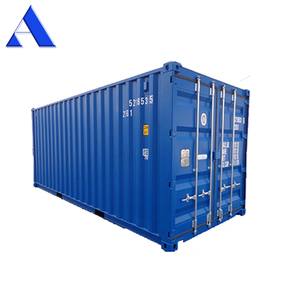
A deep semantic analysis of Less than Container Load (LCL) consolidation mechanisms from China’s leading industrial hubs to global destination markets.
Less than Container Load (LCL) is the operational bedrock of modern agile supply chains. Designed for shipments between 1 CBM and 15 CBM, LCL aggregates cargo from multiple suppliers into shared 20GP, 40GP, or 40HQ ocean containers at specialized Container Freight Stations (CFS) across Ningbo, Shanghai, Shenzhen, and Qingdao.
A critical risk factor in LCL logistics is "co-loading"—where intermediate forwarders trade cargo space, creating extra handling nodes. Enterprise buyers require Direct Tier-1 CFS Loading to prevent cargo damage, eliminate secondary handling delays, and guarantee transparent bill of lading issuance.
LCL shipments require individual manifest filings under strict regulatory regimes including U.S. Customs AMS/ISF (10+2), EU ENS system, and Canada ACI. Failure by a single co-shipper to comply can hold up the entire container, making licensed forwarder supervision mandatory.
When evaluating China LCL factory suppliers, total landed cost is governed not merely by the ocean freight rate per CBM, but by origin CFS fees, destination deconsolidation tariffs, and duty terms (DDP vs. DDU). High-volume procurement operations achieve maximum efficiency when utilizing Buyer's LCL Consolidation, merging goods from multiple factories into a single dedicated co-loaded container bound for a single customs entry point.
Over three decades of certified freight forwarding, 4GL control tower management, and direct customs brokerage authority.
G & B International, Inc. (Green & Blue Group) holds Federal Maritime Commission (FMC) License #4159N/F in Washington, D.C. As a licensed Ocean Freight Forwarder and NVOCC, we issue legally binding House Bills of Lading (HBL) and contract directly with primary ocean vessel alliances (2M, Ocean Alliance, THE Alliance).
We hold U.S. Customs ISA Certificate #GL0110004, guaranteeing expedited entry processing and reduced customs inspection ratios. Additionally, G&B holds Dangerous Goods (D/G) Operation Certificate #A03043 and maintains FAA affiliation for hazmat air cargo consolidation.
Headquartered in Wood Dale, IL, G&B operates owned bonded warehouse facilities in Elk Grove Village, IL, alongside dedicated gateway hubs at Los Angeles (LAX) and New York (JFK). We serve as an official logistics service contractor for KOTRA and major global retail buyers including SAM'S Club.
Quantitative benchmark comparison for supply chain managers determining optimal freight modal splits from China manufacturing regions.
| Logistics Mode | Ideal Cargo Volume | Average Transit Lead Time (China to US/EU) | Cost Index ($ / CBM) | Customs Risk Level | Primary Benefit |
|---|---|---|---|---|---|
| Direct Ocean LCL (Direct CFS) | 1 CBM – 15 CBM | 18 – 28 Days | Low-Medium ($120 - $280/CBM) | Low (Isolated HBL) | Maximum flexibility; no need to accumulate full container volume. |
| Buyer’s LCL Consolidation | 8 CBM – 22 CBM | 16 – 24 Days | Low ($90 - $180/CBM) | Very Low (Single Consignee) | Merges multiple vendor invoices into one customs entry and container. |
| Full Container Load (FCL 20GP/40HQ) | > 25 CBM / > 55 CBM | 14 – 22 Days | Lowest (Bulk Flat Rate) | Lowest (Dedicated Seal) | Highest security; fastest seal-to-ramp transit time. |
| China-Europe Express Rail (LCL) | 2 CBM – 12 CBM | 12 – 16 Days (To EU) | Medium ($300 - $550/CBM) | Medium (Transit Borders) | Bridge solution between ocean latency and air freight expense. |
| Air Freight Export (Standard) | < 300 kg / < 2 CBM | 3 – 7 Days | High ($4.50 - $8.50/kg) | Minimal | Emergency stock replenishment; perishable/high-value electronics. |
Standard ocean LCL rates are quoted per W/M (Weight or Measurement), where 1 CBM = 1,000 kg (1 Metric Ton). If your cargo weighs 800 kg and occupies 2.5 CBM, you are charged for 2.5 CBM. However, if dense industrial cargo weighs 3,000 kg while occupying only 1.5 CBM, the chargeable volume becomes 3.0 W/M. Factoring this ratio prevents budget overruns during China origin intake.
How artificial intelligence, digital telemetry, and green consolidation hubs are reshaping China’s export logistics landscape.
Next-generation CFS hubs utilize 3D volumetric laser scanning combined with AI packing algorithms. This balances container axle weight distribution, maximizes spatial utilization efficiency above 96%, and eliminates cargo displacement risks during rough ocean transits.
Global ESG compliance demands transparent carbon footprint tracking. Modern LCL forwarders issue certified Scope 3 carbon emission reports per CBM-kilometer, paired with biofuel-blended ocean carrier allocations for carbon-neutral supply chains.
With the rise of direct-to-fulfillment models (Amazon FBA, Walmart WFS), destination CFS hubs are transitioning to direct off-dock cross-docking. Containers are unsealed, sorted by fulfillment center zip codes, and injected straight into regional parcel/LTL networks within 12 hours of port discharge.
Real-time visibility architectures driving high-reliability ocean logistics.
Real-time satellite GPS tracking combined with internal shock, temperature, and tilt sensors. Importers receive automated milestone alerts from CFS origin loading through final last-mile gate delivery.
Eliminating paper document delays, paperless eBL systems backed by DCSA standards allow instant title transfer, accelerating destination release times by 3 to 5 business days.
Direct EDI integration with U.S. Customs Automated Commercial Environment (ACE) enables real-time HS code screening, automatic PGA (FDA, DOT, EPA) hold flags, and duty calculation pre-clearance while cargo is mid-ocean.
Expert answers to standard operational, compliance, and billing inquiries encountered when sourcing LCL freight from China.
Under DDP (Delivered Duty Paid), the freight forwarder handles all export customs in China, ocean transportation, destination customs clearance, local port fees, and pre-pays all import tariffs and taxes on behalf of the buyer. The buyer receives the cargo at their warehouse door with zero additional fees. Under DDU (Delivered Duty Unpaid), the forwarder manages transportation to the buyer's destination door, but the importer of record remains directly responsible for paying applicable customs duties and local taxes to customs authorities prior to final release.
Volume is calculated using the maximum bounding box dimensions: Length (m) × Width (m) × Height (m) measured at the widest points of the palletized or crated goods. For example, a pallet measuring 1.2m × 1.0m × 1.5m equals 1.8 CBM. If a shipment contains 5 identical pallets, total volume is 9.0 CBM. Freight forwarders verify dimensions via automated laser scanners at the origin CFS to ensure exact billing billing integrity.
Generally, the financial break-even point occurs between 13 CBM and 15 CBM. Although a standard 20GP container holds up to 28-30 CBM, the cumulative per-CBM consolidation fees, origin terminal handling charges (OTHC), and destination deconsolidation fees of LCL can exceed the flat ocean freight rate of a full 20GP container once you pass 14 CBM. Additionally, FCL offers faster transit because it bypasses destination CFS stripping.
G&B enforces strict cargo compatibility standards at our origin CFS hubs. Heavy machinery and raw metals are placed at the base and secured with heavy-duty dunnage and ratchet straps, while lighter cartoned cargo is stacked above. Fragile items, liquids, or non-stackable crates are assigned top-tier cargo positioning with physical barriers. Furthermore, all hazardous goods (DG) undergo strict Segregation Table compliance per IMDG code regulations.
Smooth customs entry requires four core commercial documents: 1) Commercial Invoice (detailing HS codes, itemized values, and currency), 2) Detailed Packing List (gross/net weight, carton breakdown, dimensions), 3) House Bill of Lading (HBL) issued by an FMC/AEO licensed forwarder, and 4) ISF 10+2 Filing Data submitted at least 24 hours prior to vessel departure for U.S.-bound cargo. Specialty items may require FDA certificates, CE compliance declarations, or MSDS for battery-powered products.
Hidden charges typically stem from CIF/FOB terms where origin suppliers select cheap forwarders who inflate destination deconsolidation fees (DO fees, warehouse handling, release charges). To avoid this, buyers should insist on purchasing under FCA (Free Carrier) or EXW terms and nominate a trusted, U.S.-based FMC-licensed forwarder like G&B International. We issue clear, transparent, pre-agreed destination rate schedules prior to cargo pickup.
Total door-to-door transit comprises three phases: 1) Origin CFS consolidation and export customs clearance (3–5 days), 2) Ocean transit (12–16 days for US West Coast ports like LA/LBG; 22–28 days for US East Coast ports via Panama Canal), and 3) Destination deconsolidation, customs clearance, and last-mile trucking (3–5 days). Total transit averages 20–24 days to the US West Coast and 30–35 days to the US East Coast or Midwest.
Yes. G&B holds Dangerous Goods (D/G) Operation Certificate #A03043. We handle Class 3, Class 8, and Class 9 hazardous cargo—including UN3480/UN3481 lithium batteries. Our certified Hazmat specialists verify UN-approved packaging, Dangerous Goods Declarations (DGD), and ensure strict container segregation in accordance with SOLAS and IMDG ocean regulations.
Partner with G&B International Logistics (Green & Blue Group)—your FMC-licensed, U.S. Customs ISA-certified freight partner since 1995. Get instant access to transparent CBM rates, direct CFS consolidation schedules, and end-to-end DDP/DDU fulfillment.
Contact Us