
Customized international freight forwarding, certified offshore containers, and DDP/DDU clearance services designed for strict cross-border regulatory compliance.
 Canada DDP/DDU
Full compliance clearance management for consolidated ocean freight moving from main Chinese ports to Canadian metro hubs.
 Multi-Route Express
Optimized multimodal air and sea freight execution with duty-paid delivery architecture for North America & Europe.
 Europe FCL / DDP
Dedicated full-container load compliance shipping tailored for EU import regulations, VAT handling, and Nordic entry.
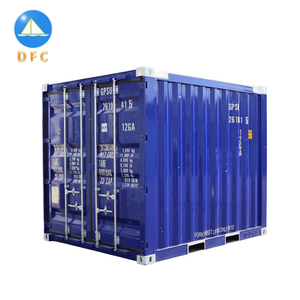 DNV Certified
Heavy-duty structural offshore containers manufactured to DNV 2.7-1 safety standards for international energy & industrial cargo.
 Global Ocean FCL
Contracted ocean space allocation and tariff-compliant NVOCC documentation services across major transpacific and Asia-Europe lanes.
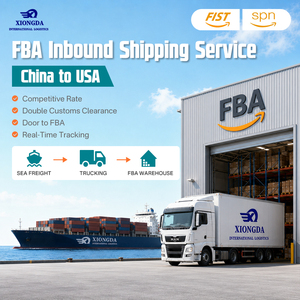 Amazon FBA Inbound
Streamlined inbound logistics with automated appointment scheduling, ISF filing, and compliance with US customs de minimis rules.
 AEO / Australia Rail
Priority green-channel customs release and intermodal rail-sea solutions executed under strict AEO security parameters.
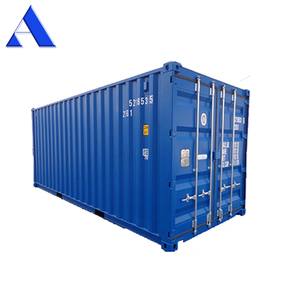 ISO Standard Dry Container
Factory-fresh 20ft standard intermodal containers certified for CSC ocean freight transport and structural export compliance.
Operating as an integrated enterprise under the G & B International, Inc. (Green & Blue Group) umbrella since 1995, our organizational architecture represents the benchmark in cross-border import-export governance and global logistics management. Headquartered in Wood Dale, Illinois, with core international hubs strategically established across Los Angeles (LAX), New York (JFK), and Chicago (ORD), our organization delivers an unyielding commitment to security, speed, and fiscal efficiency.
Navigating the increasingly complex friction within international supply chains requires more than basic forwarding services; it demands robust legal licensing and certified operational framework compliance. G&B operates under direct regulatory authorization, holding FMC (Federal Maritime Commission) Licensing (#4159N/F) as a qualified Ocean Freight Forwarder and Non-Vessel Operating Common Carrier (NVOCC), alongside U.S. Customs ISA Certification (#GL0110004). Our air export and import divisions maintain full FAA membership and hold official Dangerous Goods (D/G) Operations Certification (#A03043), enabling end-to-end management of restricted, hazardous, and high-value cargo under rigorous international safety protocols.
Tier-1 AEO customs status grants our clients priority clearance channels, reduced physical inspection ratios, and accelerated green-lane transit in mutual recognition countries worldwide.
Pioneering 4th Generation Logistics (4GL) infrastructure, we manage end-to-end vehicle logistics, cross-docking, and distribution contracts for global retail leaders including SAM'S Club and KOTRA.
Our supply chain offerings extend to certified industrial hardware, including DNV 2.7-1 / EN 12079 offshore flat rack containers engineered specifically for heavy industrial project logistics.
Compliance Standard Note: In an era of aggressive customs audits, Section 301 tariff adjustments, and expanding ESG traceability demands, G&B International ensures 100% audit-proof documentation across all HTS classifications, ISF 10+2 filings, and duty-paid (DDP) transactions.
As international supply chains shift from linear models to complex multi-nodal networks, cross-border compliance between China and major global economies (North America, the European Union, Australia, and the UK) has emerged as the primary determinant of procurement profitability and speed-to-market. Importers and exporters can no longer treat customs clearance as an administrative afterthought; it must be designed into the procurement workflow at the point of origin.
Harmonized Tariff Schedule (HTS) misclassification remains one of the largest sources of unexpected financial penalty and customs detention. Professional compliance management requires thorough pre-shipment analysis of product breakdown, constituent material composition, and intended industrial application. By leveraging legitimate binding tariff rulings (BTI in the EU, CBP HQ Rulings in the US), manufacturers and importers can establish legal classification clarity while ensuring exact duty minimization under current trade remedies.
Regulatory enforcement agencies across North America and Europe have elevated origin verification standards. Under regulations such as the Uyghur Forced Labor Prevention Act (UFLPA) and EU Supply Chain Due Diligence Directives, importers must prove complete chain-of-custody transparency down to the raw material level. Our integrated 4GL logistics system incorporates digital document mapping, connecting mill test certificates, bill of materials (BOM), land transport manifests, and ocean bills of lading into a tamper-evident compliance folder.
Selecting the optimal International Commercial Term (Incoterm) dictates legal risk allocation and tax liability. Below is an executive risk and operational responsibility matrix for cross-border China procurement:
| Trade Term | Export Customs (China) | International Transit Risk | Import Customs & Tariffs | Best Suited For |
|---|---|---|---|---|
| DDP (Delivered Duty Paid) | Seller Responsible | Seller Responsible | Seller / Freight Agent Responsible | E-commerce, Amazon FBA, Turnkey Buyers |
| DDU / DAP (Delivered Duty Unpaid) | Seller Responsible | Seller Responsible | Buyer Responsible (Agent Clearance) | Established Enterprise Importers |
| FCA (Free Carrier) | Seller Responsible | Buyer Responsible | Buyer Responsible | Buyers with Direct Ocean Contracts |
| FOB (Free on Board) | Seller Responsible (Vessel Load) | Buyer Responsible | Buyer Responsible | Standard Bulk FCL Manufacturing Cargo |
The convergence of digital technology, environmental legislation, and geopolitical rebalancing is dramatically transforming how global enterprises source from China and manage cross-border risk. Procurement executives must adapt to five structural shifts:
Customs agencies worldwide (including US CBP and EU Customs Union) are deploying advanced machine learning algorithms to perform real-time automated risk scoring on import manifests. Manual declaration errors that previously went unnoticed now trigger instant automated audits. Future-ready logistics solutions integrate predictive AI compliance screening to validate values, unit prices, weight ratios, and HS codes before cargo leaves Chinese ports.
The European Union's CBAM and similar upcoming legislation in North America necessitate meticulous Scope 3 carbon footprint tracking for imported steel, aluminum, fertilizer, and industrial equipment. Importers sourcing from China must ensure their freight forwarders provide verified carbon emission data per TEU and leverage ISO-standardized green shipping corridors.
China's updated Export Control Law, alongside expanding US export administration regulations (EAR), has tightened compliance requirements surrounding high-tech machinery, robotics, specialized raw materials, and electronics. Compliant suppliers must implement robust End-User and End-Use Statements (EUS) to prevent severe supply chain disruptions or regulatory blacklisting.
As enterprises attempt to reroute China-origin goods through third countries (such as Vietnam, Mexico, or Malaysia) to alter country-of-origin designations, customs authorities have drastically increased origin audits. Compliance solutions now mandate verified substantial transformation assessments to protect buyers from massive retroactively assessed anti-dumping and countervailing duties (AD/CVD).
The adoption of IoT-monitored shipping hardware—such as DNV certified smart containers—provides real-time telematics on cargo location, door access, temperature, and shock. This level of granular environmental tracking is rapidly transitioning from a premium luxury to a mandatory compliance requirement for high-value pharmaceutical, aerospace, and energy equipment shipments.
The traditional freight forwarder model is undergoing a permanent transition into a technology-driven Logistics Service Provider (LSP) and trade advisory hybrid. Modern enterprise buyers no longer evaluate suppliers solely on ocean freight rates per FEU; value creation has pivoted toward regulatory agility, risk mitigation, and systemic reliability.
Key developments include the expansion of AEO Mutual Recognition Agreements (MRAs) globally, allowing pre-cleared logistics networks like G&B International to bypass congested inspection queues. Furthermore, the integration of bonded warehouse management systems (WMS) directly with customer ERP platforms (SAP, Oracle) allows real-time inventory visibility, automated customs duty deferral, and frictionless last-mile fulfillment across global trade corridors.
Get authoritative answers to critical compliance, customs clearance, and freight forwarding inquiries from our team of senior licensed trade specialists.
Under DDP (Delivered Duty Paid), the seller/forwarder assumes complete responsibility for shipping costs, customs clearance, import taxes, and duties upon arrival in the destination country. Under DDU (Delivered Duty Unpaid), the buyer is legally responsible for paying import duties and local taxes upon customs arrival before final release.
FMC (Federal Maritime Commission) licensing ensures that an NVOCC or freight forwarder is legally authorized to issue bills of lading, maintain financial security bonds, and enter into carrier contract rates. Operating with an FMC-licensed partner like G&B (#4159N/F) guarantees legal compliance and prevents cargo seizure by federal authorities.
A DNV certified container (such as DNV 2.7-1 / EN 12079) is structurally engineered and dynamically tested to withstand harsh offshore maritime environments, severe dynamic lifting forces, and extreme temperature conditions. It is mandatory for oil & gas, offshore energy, and specialized heavy industrial equipment shipping.
AEO (Authorized Economic Operator) certification is an internationally recognized quality mark indicating high supply chain security standards. Benefits include expedited customs processing, reduced physical inspections, priority handling during service disruptions, and simplified entry declarations across mutual recognition partner nations.
ISF filing requires 10 data elements provided 24 hours prior to cargo loading in China: Seller name/address, Buyer name/address, Importer of Record number, Consignee number, Manufacturer/supplier, Ship to party, Country of origin, Commodity HTS code, Container stuffing location, and Consolidator name.
Importers can utilize strategies including legal HTS unbundling, Duty Drawback programs (reclaiming up to 99% of duties on re-exported goods), Foreign Trade Zone (FTZ) storage to defer payments, and evaluating legally compliant engineering changes to alter primary component classifications.