
Optimized DDP, DDU, FCL, and LCL door-to-door transportation paired with certified US & Global customs brokerage services.
 Canada DDP/DDU
 USA / UK / CA Express
 Europe FCL / DDP
 DNV Certified Units
 FCL Global Freight
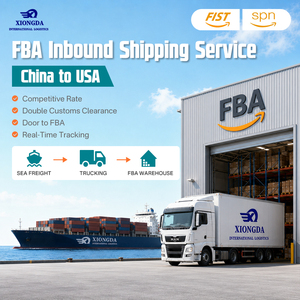 Amazon FBA Inbound
 AEO / Australia
 ISO Certified Hardware
The global trade ecosystem has transitioned into an era defined by tariff complexity, dynamic regulatory compliance, and stringent border enforcement. Navigating cross-border procurement directly from Chinese manufacturing centers requires far more than basic freight consolidation; it demands end-to-end Custom Duty Brokerage Services executed by licensed professionals. Importers, brand owners, and enterprise buyers face volatile tariff environments (including Section 301 surcharges, Anti-Dumping/Countervailing Duties [AD/CVD], and evolving EU CBAM regulations) where incorrect Harmonized System (HS) classifications or incomplete entry summaries can lead to costly port holds, severe liquidated damages, and severe supply chain friction.
Key Insight (Information Gain Baseline): Modern B2B sourcing is shifting away from traditional FOB (Free On Board) terms toward fully compliant DDP (Delivered Duty Paid) models supported by 4GL (4th Generation Logistics) framework management. Under DDP terms, the exporter and their integrated brokerage team assume total responsibility for customs documentation, tariff payment, and import clearance—shifting risk away from the buyer while maintaining 100% regulatory integrity with U.S. Customs and Border Protection (CBP) and international customs authorities.
Customs brokerage acts as the critical operational bridge between factory-floor dispatch in China and final destination entry. A turnkey export-import brokerage model incorporates several specialized operational stages:
Transmission of Importer Security Filing (ISF 10+2) to CBP at least 24 hours prior to vessel departure in China, preventing $5,000+ non-compliance penalties per ocean shipment.
Rigorous legal classification under the Harmonized Tariff Schedule to ensure precise duty rate application, legal tariff avoidance, and proactive duty drawback execution.
Utilization of U.S. Customs Bonded Warehouses (Type 8/Type 11) for deferred tariff payment, staging, repackaging, and nationwide last-mile fulfillment.
When procuring custom products, machinery, or raw materials from Chinese factories, choosing the appropriate Incoterm defines financial liability, customs compliance responsibility, and transit oversight.
| Incoterm / Parameter | Export Customs (China) | Ocean/Air Freight Risk | Import Customs Clearance | Tariff & Tax Liability | Buyer Operational Overhead |
|---|---|---|---|---|---|
| EXW (Ex Works) | Buyer Responsible | Buyer Responsible | Buyer Responsible | Buyer Pays 100% | Extreme (High Risk) |
| FOB (Free On Board) | Factory Responsible | Buyer Responsible | Buyer Responsible | Buyer Pays 100% | Moderate |
| CIF (Cost, Insurance, Freight) | Factory Responsible | Factory Pays Freight | Buyer Responsible | Buyer Pays 100% | Moderate / Hidden Fees |
| DDP (Delivered Duty Paid) | Broker Responsible | Broker Responsible | Broker Responsible | Pre-managed / Turnkey | Minimal (Zero Hassle) |
With an operational legacy dating back to 1995, G & B International, Inc. (Green & Blue Group) has set the benchmark for global freight forwarding and specialized customs clearance. Operating from headquarters in Wood Dale, Illinois (near Chicago O'Hare), along with strategic gateway offices at Los Angeles (LAX) and New York (JFK), G&B provides unmatched regulatory coverage across North America and global trade lanes.
Our regulatory certifications speak directly to our E-E-A-T (Experience, Expertise, Authoritativeness, and Trustworthiness) standards:
As global commerce adapts to shifting geopolitical currents and technological advancement, international procurement strategies are undergoing massive structural evolution. Overseas buyers and enterprise importers must prepare for four macro trends defining China custom duty brokerage and factory exporting over the next decade:
Customs authorities worldwide (including CBP's ACE system) are implementing machine learning algorithms to audit entry summaries in real-time. Inconsistent HTS classification, valuation discrepancies, or minor country-of-origin mismatches now trigger automated red flags. Professional brokerage services must leverage digital pre-filing validation tools to ensure audit-proof documentation.
Governments in North America and Europe are tightening regulations around duty-free low-value imports (Section 321 de-minimis limits). E-commerce sellers and B2B buyers are pivoting to bulk containerized ocean freight paired with domestic bonded warehouse distribution to maintain low landing costs while remaining fully compliant.
Environmental sustainability is no longer optional. Future customs filings will increasingly require Carbon Border Adjustment Mechanism (CBAM) data points. Leading freight forwarders are integrating carbon emissions tracking across ocean FCL/LCL and air cargo routes, helping importers meet corporate Scope 3 sustainability quotas.
Expert answers to critical legal, tariff, and operational questions encountered during international freight importation.
A custom duty brokerage service handles both export customs declaration in China (ensuring export licenses, commercial invoices, and packing lists meet Chinese General Administration of Customs standards) and import clearance at the destination port. The broker classifies products under correct HTS codes, calculates duties and taxes, files legal entry documentation (e.g., CBP Form 7501 in the US), secures customs bonds, and resolves potential partner government agency (PGA) holds such as FDA, EPA, or FCC requirements.
DDP eliminates operational complexity for the buyer. Under DDP terms, the freight forwarder and customs broker manage all freight transit, ocean insurance, export clearance, destination customs duty payment, and local trucking. The buyer receives goods delivered directly to their facility without dealing with port demurrages, terminal handling charges, or complex customs entry declarations.
Importer Security Filing (ISF 10+2) is required by U.S. Customs and Border Protection for all ocean cargo entering the United States. It contains 10 data elements provided by the importer/broker and 2 by the ocean carrier. It MUST be submitted at least 24 hours BEFORE the container is loaded onto the vessel in China. Late or inaccurate ISF filings carry mandatory statutory fines starting at $5,000 per violation, along with hold orders upon arrival.
A Single-Entry Bond covers a single commercial shipment and is cost-effective for companies importing 1 to 3 times per year. A Continuous Customs Bond covers all imports through any US port for a 12-month period, auto-renewing annually. Continuous bonds significantly accelerate customs clearance processing, lower per-shipment costs, and are legally required to fulfill ISF filings without extra transactional surcharges.
Tariff engineering involves auditing a product's engineering design, raw material composition, or assembly stage to classify it under an HTS code carrying lower duty rates or Section 301 exemptions—without altering product quality. Additionally, sourcing secondary component operations in qualified origin countries or utilizing duty drawback programs on re-exported merchandise can legally minimize net duty burdens.
Dangerous Goods shipments require a Material Safety Data Sheet (MSDS/SDS), a Dangerous Goods Declaration (DGD), UN38.3 test summaries (for lithium batteries), and specialized packaging certification compliance. Forwarders carrying D/G certification (such as G&B's #A03043 permit) ensure proper vessel stowage class segregation and customs safety approvals prior to port arrival.
Partner with an FMC-licensed NVOCC and U.S. Customs ISA-Certified brokerage team with 29+ years of operational excellence. Get instant custom duty estimates, optimal HTS classification, and competitive ocean/air freight quotes today.