
Direct Factory Logistics, Container Leasing, and End-to-End Freight Forwarding Services
In the contemporary architecture of international commerce, China remains the indispensable node of global manufacturing and wholesale supply chain networks. As multi-national enterprises, e-commerce brand aggregators, and industrial importers scale their procurement strategies, optimizing the bridge between Chinese production hubs (such as the Yangtze River Delta and Pearl River Delta manufacturing clusters) and Western destination markets has transformed from an operational necessity into a core competitive advantage.
Achieving structural cost containment, lead-time compression, and regulatory compliance requires moving beyond basic freight transaction arrangements. Procurement leadership must adopt holistic supply chain integration—combining factory-floor quality assurance, multimodal transport routing (FCL, LCL, Air, and Rail), automated customs clearance, and end-to-end DDP (Delivered Duty Paid) fulfillment logistics.
This industry whitepaper provides an exhaustive architectural benchmark for procurement directors, global logistics managers, and enterprise buyers looking to maximize profit retention, mitigate geopolitical disruption, and build sustainable China-to-Global supply chain infrastructure.
Unlocking maximum value from China wholesale suppliers demands a granular understanding of factory tiers. Sourcing directly from tier-1 original equipment manufacturers (OEM) or original design manufacturers (ODM) eliminates middleman markups, but introduces complex logistics responsibilities that traditionally fell on export trading companies.
| Procurement Model | Supplier Margin Markup | Logistics Control | Risk Profile | Recommended Incoterms |
|---|---|---|---|---|
| Trading Companies / Middlemen | 15% – 35% High | Managed by Seller (EXW/FOB) | Low operational effort / High cost | FOB Ningbo / Shanghai |
| Direct OEM Factory Direct | 5% – 12% Low | Buyer Managed / Partnered NVOCC | Moderate / Requires Audit & QC | FCA Factory / DDP Warehouse |
| ODM Custom Manufacturing | 8% – 18% Mid | Buyer Controlled (End-to-End) | High IP & Quality Control Need | DDP / DDU Destination Gate |
| Industrial Flat-Rack / Oversized | Project Specific | Specialized Heavy-Lift NVOCC | High Engineering & Permit Need | FOB Loading Berth / DAP Site |
When contracting with direct manufacturing facilities, international buyers must establish rigorous milestone-based procurement schedules. Incorporating mid-production quality audits (DUPRO) and preshipment inspections (PSI) directly into the freight forwarder's pickup sequence prevents defective inventory from entering overseas shipping channels, eliminating costly return freight and duty recovery disputes.
Selecting the optimal modal split is the single largest determinant of landed cost efficiency. Modern global supply chains cannot rely on a single mode of transport; they require dynamic multimodal agility based on demand velocity, product SKU value density, and seasonal port congestion.
Full Container Load (FCL): The bedrock of high-volume wholesale trade. Utilizing standard 20GP, 40GP, and 40HQ ISO dry cargo containers provides the lowest freight cost per unit. For industrial and out-of-gauge (OOG) heavy machinery, specialized DNV-certified offshore flat rack and open-top containers ensure structural integrity under extreme marine transit stress.
Less Than Container Load (LCL) & Buyers' Consolidation: Ideal for mid-sized orders or multi-factory sourcing strategies. By consolidating goods from multiple Chinese suppliers at regional origin warehouses (e.g., Shenzhen, Yiwu, Ningbo) into dedicated LCL containers, buyers avoid paying full container premiums while enjoying predictable sailing schedules.
Air Freight & Sea-Air Hybrid Solutions: Essential for high-margin electronics, seasonal fashion peaks, or emergency inventory replenishment. FAA-certificated air forwarders with dedicated space allocations (BSA) on major commercial cargo lines ensure 3-5 day door-to-door transit timelines, bypassing ocean choke points.
Selecting a global supply chain partner requires verifying institutional credentials, regulatory authorizations, and asset infrastructure. G & B International, Inc. (Green & Blue Group), established in 1995 and headquartered in Wood Dale, Illinois, represents the pinnacle of trusted, full-service global freight forwarding.
Federal Maritime Commission licensed Ocean Freight Forwarder & NVOCC (#4159N/F) since 1996, issuing direct Master & House Bills of Lading with full carrier negotiation authority.
Holder of U.S. Customs Importer Self-Assessment Certificate (#GL0110004), granting expedited clearance privileges, reduced audit risk, and priority processing.
FAA-affiliated air freight operations backed by certified Dangerous Goods (D/G Certificate #A03043) qualification for hazardous and hazmat air cargo handling.
Owned bonded facilities in Elk Grove Village, IL, supported by key gateway branch operations adjacent to Los Angeles International Airport (LAX) and JFK New York.
Official contracted logistics partner for KOTRA and 4th Generation Logistics (4GL) system operator for major retail giants including SAM'S Club vehicle logistics.
End-to-end FBA prep, palletization, transshipment, and automated warehouse management system (WMS) integration for multi-channel seller platforms.
The global wholesale supply chain landscape is undergoing structural technology shifts. Enterprises that anticipate these emerging trends will outperform competitors in landed-cost margins, lead time consistency, and environmental compliance.
Static tracking numbers are obsolete. Future-proof supply chains utilize IoT-enabled smart container telemetry combined with AI predictive analytics to forecast port congestion, weather rerouting, and customs hold probabilities in real time. Intelligent freight management platforms enable dynamic vessel rerouting prior to port arrival.
While China remains the core manufacturing engine, global buyers are pairing primary Chinese production with secondary assembly nodes across Southeast Asia and Mexico. Modern logistics partners must offer unified cross-border control towers that aggregate shipments across multiple origin points under a single WMS/TMS dashboard.
With regulations such as the European Union’s Carbon Border Adjustment Mechanism (CBAM) and global Scope 3 emissions reporting standards, enterprise buyers must audit the carbon intensity of their ocean and air freight. Upgrading to eco-friendly marine bio-fuels, optimized ISO container space utilization, and rail-sea intermodal paths reduces both landed tax liabilities and environmental footprint.
DDP (Delivered Duty Paid) shipping is fast becoming the standard for direct-to-retail and B2B wholesale buyers. Sellers and freight forwarders who handle duty payment, HTS code classification, bond management, and last-mile trucking synchronously remove purchasing friction for international clients.
Under DDP (Delivered Duty Paid), the seller or their contracted freight forwarder assumes full responsibility for paying export taxes, ocean/air freight, import duties, tariffs, and final delivery to the buyer's door. Under DDU (Delivered Duty Unpaid), the buyer is responsible for handling import customs clearance and paying duty charges upon destination arrival.
An FMC (Federal Maritime Commission) licensed NVOCC like G&B International Logistics holds regulatory authority to issue legal Bills of Lading, negotiate direct service contracts with ocean vessel carriers, and offer fixed freight rate stability while protecting buyers against maritime liabilities.
Standard ocean transit from major Chinese ports (Shanghai, Ningbo, Shenzhen) to US West Coast (LA/Long Beach) is typically 14–18 days; to US East Coast (NY/Savannah) is 25–30 days; and to Main European Base Ports (Rotterdam, Hamburg, Felixstowe) is 28–35 days, subject to weather and canal routing.
Preventing cargo damage requires correct ISO container selection, proper weight distribution, industrial desiccant installation to avoid "container rain," and professional dunnage/lashing. For oversized industrial equipment, DNV-certified flat racks are mandatory.
Mandatory clearance documents include the Commercial Invoice, Packing List, Ocean/Air Bill of Lading (BOL), Importer Security Filing (ISF 10+2), Harmonized Tariff Schedule (HTS) codes, and, where applicable, specialized certificates of origin or FDA/EPA compliance filings.
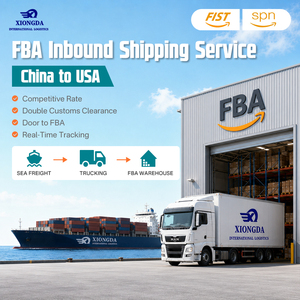
Amazon FBA inbound shipping requires strict adherence to Amazon fulfillment center specs, including carton labeling, FNSKU barcode compliance, specific pallet heights (48x40 inch 4-way pallets), and strict delivery slot scheduling via Amazon's Carrier Central portal.
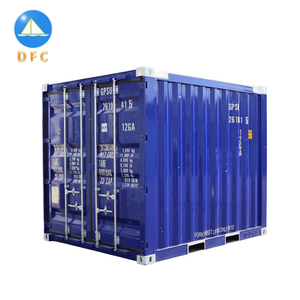
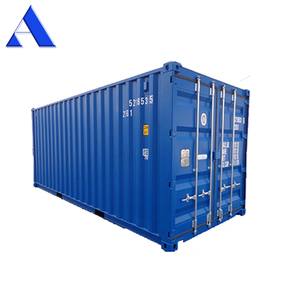
ISO-standard dry containers provide standardized structural integrity, weather-proof security, and universal stackability across intermodal rail, chassis, and ocean vessel systems, making them ideal for both transit and static site storage.
4GL management integrates full supply chain orchestration—combining 3PL physical transport with high-level consulting, WMS/TMS software control towers, supplier compliance auditing, and end-to-end inventory visibility from factory floor to retail shelves.
Connect with our senior supply chain strategists to audit your current China-to-Global freight costs, streamline DDP customs clearance, and secure competitive ocean & air space allocations.