
Explore our engineered range of custom temperature-sensitive storage enclosures, heavy-duty insulated shipping containers, and specialized cold chain transport hardware designed for extreme thermal stability.
Engineered for long-haul ocean and land freight requires precise thermal management. Custom exterior lining paired with high-performance PCM thermal mass.

Lightweight, high-density polyurethane and vacuum insulation panels optimized for express air freight of critical biopharmaceutical payloads.
Industrial-grade, multi-climate reefers equipped with reinforced structural framing, anti-corrosive coatings, and dual redundant active cooling loops.
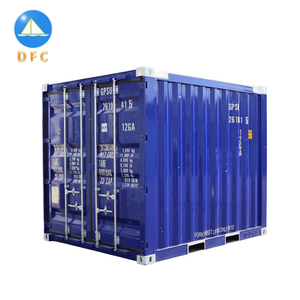
Custom engineered for harsh marine and offshore energy environments. Features extreme thermal isolation and structural impact compliance.

Configurable interior dividers enabling simultaneous multi-temperature storage zones (+2°C to +8°C and +15°C to +25°C ambient) in one single unit.
Embedded real-time IoT sensors monitor internal core temperature, ambient humdity, shock, tilt, and location with continuous cloud telemetry.
Designed for transcontinental railway and ocean freight corridors requiring long holdover stability under extreme external temperature fluctuations.
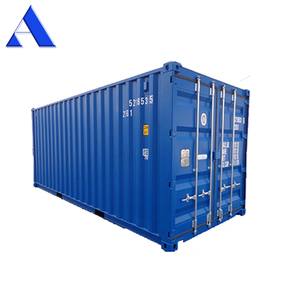
Standardized 20ft thermal storage container frame upgraded with vacuum insulation panels and food-grade stainless steel interior lining.
Combining nearly three decades of logistics execution, customs compliance authority, and thermal engineering precision to manufacture temperature-sensitive storage solutions built for mission-critical supply chains.
Backed by complete international regulatory compliance including FMC Lic. #4159N/F, FAA Membership, and U.S. Customs ISA Certification (#GL0110004). Our manufacturing adheres strictly to FDA 21 CFR Part 11, EU GDP guidelines, and ISO 13485 standards for medical device thermal storage.
Our R&D engineering facility leverages automated thermal modeling software and environmental test chambers to validate phase change materials (PCMs) and vacuum insulation panels (VIPs) against extreme ISTA 7D and 7E ambient profiles.
Operating company-owned bonded storage facilities in key North American logistics hubs (Chicago / Wood Dale / Elk Grove Village) alongside LAX and JFK air gateways. Seamlessly connecting custom OEM box production with global fulfillment operations.
Since our founding in 1995, Green & Blue Group (G&B International) has evolved from specialized customs brokerage into a global pioneer of 4th Generation Logistics (4GL) and custom OEM thermal storage systems. Trusted by government trade organizations like KOTRA and fortune retail brands like SAM'S Club, we combine hardware OEM precision with worldwide cold chain transportation.
An in-depth analysis of phase change dynamics, vacuum panel thermal resistance, and structural container design for temperature-sensitive cargo.
In global cold chain logistics, preserving product integrity across complex supply lanes demands robust thermal barrier systems. Temperature-sensitive storage solutions generally fall into two architectural categories: Passive Thermal Protection Systems (PTPS) and Active Compressor-Driven Refrigeration Units.
Custom OEM passive containers rely on the high latent heat capacity of Phase Change Materials (PCMs). Unlike standard water-ice systems, modern organic and inorganic PCMs are engineered to freeze and melt at precise target temperatures, such as +4°C (biopharmaceutical vaccines), +22°C (controlled room temperature pharmaceuticals), or -21°C (frozen biological samples). When external ambient heat penetrates the outer vessel, the PCM absorbs energy at a constant phase transition temperature, creating an impenetrable thermal buffer around the payload core.
To maximize interior payload space while maintaining ultra-long thermal holdover durations (up to 168 hours), our OEM manufacturing utilizes advanced Vacuum Insulation Panels (VIP). Standard polyurethane (PU) or expanded polystyrene (EPS) foams exhibit thermal conductivities ranging from 0.022 to 0.035 W/m·K. In contrast, VIP cores engineered with nanoporous fumed silica achieve thermal conductivities below 0.004 W/m·K.
By evacuating air from the encapsulated silica matrix, thermal transfer via gas conduction is virtually eliminated. This enables a 70% reduction in insulation wall thickness compared to conventional foam boxes, significantly lowering volumetric freight costs for international air export and ocean shipping.
Storage solutions deployed in marine or industrial offshore sectors must withstand aggressive mechanical stress and corrosive atmospheres. Our custom DNV 2.7-1 certified offshore containers feature external structural frames fabricated from high-yield structural steel, coated with marine-grade epoxy paint systems designed to withstand 5,000+ hours of continuous salt spray exposure (ASTM B117).
Furthermore, for air freight handling dangerous goods (D/G Operations), such as dry-ice (-78.5°C) cooling systems, our containers feature pressure relief valves and continuous carbon dioxide gas venting paths to prevent internal pressure buildup, fully compliant with FAA and IATA Dangerous Goods Regulations (DGR).
| Storage System Type | Insulation Core | Thermal Latent Material | Holdover Duration | Target Temperature Range | Primary OEM Application |
|---|---|---|---|---|---|
| VIP Ultra-Deep Freeze | Fumed Silica VIP + PU Foam | Solid-Liquid Organic PCM / Dry Ice | 120 - 168 Hours | -80°C to -20°C | Cell & Gene Therapies, mRNA Vaccines |
| Passive Shipper Box | Rigid Polyurethane (PUF) | Water-based / Salt Hydrate PCM | 72 - 96 Hours | +2°C to +8°C | Biologics, Reagents, Clinical Trials |
| CRT Ambient Shipper | Expanded Polypropylene (EPP) | Paraffin-based PCM Matrix | 48 - 72 Hours | +15°C to +25°C | Finished Pharmaceuticals, Medical Devices |
| Active Reefer Module | Vacuum Panel Composite Wall | Compressor / Thermal Electric Loop | Continuous (Powered) | -30°C to +30°C Controlled | Bulk Ocean FCL Cargo, Bulk Food Logistics |
| Offshore DNV Container | Reinforced Structural Mineral Wool | Dual Redundant Active Refrigeration | Continuous / 96 hr Battery Backup | -25°C to +10°C | Offshore Chemical Reagents, Marine Energy |
Key macro-shifts shaping how enterprise buyers, pharma procurement managers, and logistics operators source custom thermal hardware.
Driven by Global ESG mandates and strict Scope 3 emission targets, enterprise procurement is rapidly migrating away from single-use EPS foam boxes toward Closed-Loop Reusable VIP Systems. OEM manufacturers must design modular containers built for 50+ reverse logistics cycles with easily sanitized, swappable internal liners.
Procurement requests for proposals (RFPs) now routinely require built-in IoT tracking. Hardware is no longer evaluated solely on insulation static performance; containers must integrate multi-sensor telemetry (temperature, humidity, pressure, shock, light exposure) connected directly to cloud-based predictive risk monitoring platforms.
Supply chain bottlenecks have forced pharmaceutical procurement teams to partner with OEM manufacturers possessing regional manufacturing and hub-based warehousing footprints across North America, Europe, and Asia to mitigate geopolitical and transit disruptions.
The rapid growth of cell and gene therapies (CGT), viral vector treatments, and advanced biological APIs has created unprecedented demand for dry-ice-free, ultra-low cryogenic OEM storage containers that can safely maintain sub-zero environments without hazardous material transit surcharges.
Innovations in material science, thermodynamics, and autonomous structural design driving the future of custom cold chain hardware.
Development of non-toxic, plant-based phase change formulations offering higher latent heat density (>200 J/g) while eliminating paraffin and petroleum-derived materials. These eco-PCMs reduce carbon footprints without compromising thermal stability.
Combining silica aerogels with vacuum panel technology to produce semi-flexible, ultra-thin thermal insulation layers. This allows custom OEM storage boxes to maintain outer dimensions while expanding interior payload capacity by up to 35%.
Integration of miniature variable-speed brushless compressors and solid-state Peltier thermoelectric modules into parcel-sized shippers, offering active temperature regulation powered by lightweight lithium-iron-phosphate (LiFePO4) battery packs.
Direct technical insights to guide your procurement, customization, and validation processes.
Speak directly with our cold chain packaging engineers to optimize your payload insulation, ensure GDP regulatory compliance, and receive detailed product specifications.