
Precision-Engineered Infrastructure and Integrated Logistics Assets for High-Security Customs Storage
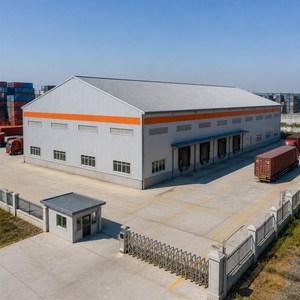
Bonded warehousing represents the cornerstone of modern global trade compliance, capital efficiency, and international supply chain agility. Defined legally as a secured building or customized zone supervised by customs authorities, a bonded warehouse allows imported commodities to be processed, manipulated, re-configured, or stored without the immediate payment of customs duties and import taxes. This duty-deferral paradigm optimizes corporate cash flow, preserves working capital, and enables sophisticated enterprise supply chains to execute strategic inventory routing based on dynamic real-time market demand.
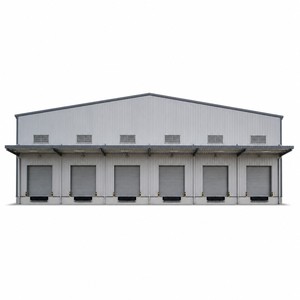
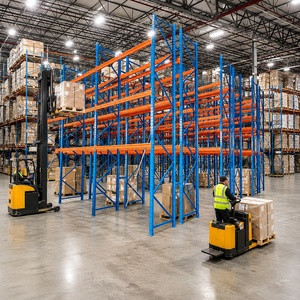
From an structural and engineering design perspective, establishing a high-performance bonded storage facility requires a seamless synthesis of heavy-duty civil structural engineering and precision material handling hardware. Unlike standard commercial storage spaces, bonded facilities must meet rigorous physical security, environmental protection, and weight-bearing regulatory standards. Structural prefabricated steel framing systems, hot-dip galvanized weatherproofing, anti-corrosive clear-span structural columns, and modular multi-tiered beam pallet racks form the physical backbone of these customs-controlled zones.
Selecting the optimal partner for a bonded warehousing infrastructure project demands an evaluation of both physical engineering capabilities and integrated logistics execution. Below is an authoritative technical and strategic analysis of the market’s leading manufacturers and turnkey engineering suppliers driving innovation in customs-controlled storage systems:
Core Specialization: End-to-end bonded logistics operations, customs brokerage, 4GL enterprise fulfillment, and custom structural warehouse consulting.
Strengths: Established in 1995 with U.S. Customs ISA certification (#GL0110004), FMC NVOCC licensure, and specialized KOTRA logistics infrastructure.
Core Specialization: Custom-designed pre-engineered metal buildings (PEMB) for large-scale customs logistics hubs.
Strengths: Exceptional clear-span engineering, high wind/load resistance, and sustainable LEED-certified structural steel component production.
Core Specialization: High-density automated storage and retrieval systems (ASRS) tailored for bonded high-value inventory zones.
Strengths: Fully automated material handling, integrated WMS software compliance, and precision pallet racking structures up to 12 levels.
Core Specialization: Heavy-duty beam pallet racking systems and custom steel stacking frame manufacturing.
Strengths: CE-certified structural steel components, seismic-rated structural designs, and lean space-optimizing vertical rack configurations.
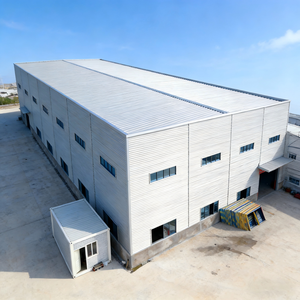
Core Specialization: Prefabricated heavy structural steel buildings with specialized clear-span gable roof designs.
Strengths: MR-24 roof systems providing superior weather tightness, essential for preserving sensitive, high-value duty-deferred merchandise.
Core Specialization: Automated material handling hardware, conveyor integration, and customs-monitored AGV logistics tracks.
Strengths: Seamless hardware-to-software integration for real-time customs tracking, high-throughput item processing, and zero-error picking.
Core Specialization: Multi-layer vertical stacking solutions, narrow-aisle racking, and electric material handling equipment.
Strengths: Compact footprint efficiency, high structural rigidity, and customized safety barrier integration for secure customs zones.
Core Specialization: Heavy-duty industrial racking, drive-in pallet systems, and structural guard rails for bonded spaces.
Strengths: High-capacity 3000kg+ load stacking frames built with heavy-gauge tubular structural steel for extreme durability.
Core Specialization: Prefabricated structural metal buildings utilizing recycled steel, optimized for cost-efficient logistics spaces.
Strengths: Rapid fabrication timelines, extensive regional supplier networks, and structural engineering compliance across global standards.
Core Specialization: Mezzanine floor structures, heavy-duty beam racks, and modular semi-open industrial storage units.
Strengths: Flexible modular design allowing rapid floorplan re-configuration to adapt to evolving customs regulation zones.
The industrial landscape for customs-controlled logistics infrastructure is undergoing a technological transformation driven by automated throughput demands, environmental compliance mandates, and structural material advancements. Key engineering vectors shaping modern bonded facilities include:
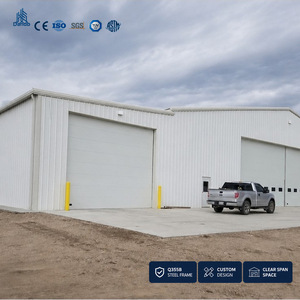
Modern bonded warehouses prioritize high-grade Q355B and Q235B galvanized steel framing. Hot-dip galvanization guarantees corrosion resistance under demanding atmospheric conditions, ensuring 50+ years of structural integrity for sensitive import/export hubs.
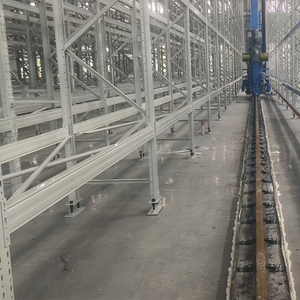
Maximizing volumetric cubic capacity is critical for bonded operators seeking to optimize cost-per-square-foot metrics. Engineering advancements in cold-formed structural steel beam racks allow point-load capacities exceeding 3,000kg per layer across 1 to 12 vertical levels.
Modular semi-open structural frameworks allow rapid expansion of covered storage for oversized breakbulk cargo, vehicular logistics, and heavy industrial equipment awaiting customs clearance, balancing cost against structural protection.
Physical racking and storage spaces are increasingly embedded with RFID sensor arrays and IoT automated weight monitoring to provide customs authorities with real-time inventory visibility without manual physical inspection delays.
As international trade shifts toward nearshoring, regional supply chain resilience, and dynamic tariff strategies, procurement teams must realign their bonded warehousing asset strategy. Over the next five years, global procurement will be governed by three macro-trends:
The re-alignment of global manufacturing hubs (specifically across North America and Southeast Asia) has heightened demand for bonded logistics parks situated along critical cross-border corridors. Importers are increasingly specifying modular pre-engineered steel buildings that can be erected in under 90 days to capture regional trade volume surges.
Rising geopolitical trade friction and shifting tariff schedules make duty-deferral infrastructure a critical financial hedge. Enterprise procurement is prioritizing multi-functional bonded facilities capable of executing Light Manufacturing / Assembly (FTZ Activity) where components enter duty-free, are assembled into finished goods, and are re-exported without ever incurring domestic duties.
Structural metal buildings deployed in bonded zones are now routinely required to support high-density photovoltaic (PV) solar arrays on gable roof structures, incorporate thermal sandwich-panel insulation, and utilize zero-VOC powder-coated structural racking components to comply with corporate ESG directives.
Founded in 1995 and headquartered in Wood Dale, Illinois, G & B International, Inc. (Green & Blue Group) stands as an authoritative force in international freight forwarding, customs brokerage, and specialized bonded warehousing solutions. For nearly three decades, G&B has maintained an unyielding commitment to security, trustworthiness, and customer-centric logistics engineering.
G&B operates a fully integrated, multi-gateway network across North America, supported by dedicated facilities at key trade hubs including Los Angeles (LAX), New York (JFK), and a company-owned 50,000+ sq. ft. bonded logistics distribution facility in Elk Grove Village, Illinois. As an FMC-licensed NVOCC (#4159N/F), FAA-certificated indirect air carrier, U.S. Customs ISA Certificate holder (#GL0110004), and certified Dangerous Goods (D/G) handler (#A03043), G&B bridges the complex divide between heavy structural storage hardware and global customs compliance execution.