Direct Factory Logistics Services, Certified ISO Containers, and Global Cargo Forwarding Solutions
G&B International Logistics (Green & Blue Group) — Pioneering Global Trade Logistics Since 1995
Licensed by the Federal Maritime Commission (FMC #4159N/F) as an official Non-Vessel Operating Common Carrier (NVOCC) and Ocean Freight Forwarder. Affiliated with the FAA and certified under U.S. Customs ISA (#GL0110004).
Pioneered 4th Generation Logistics (4GL) management since 2006. Dedicated fleet management and nationwide logistics provider contracted for retail powerhouses like SAM'S Club and government promotion agencies including KOTRA.
Headquartered in Wood Dale, IL (Chicago hub) with fully-owned bonded warehousing in Elk Grove Village, IL, supported by major ocean and air freight gateway offices at Los Angeles (LAX) and New York (JFK).
Holding FAA Dangerous Goods (D/G) Operation Certificate #A03043. Certified teams manage Lithium-ion batteries, chemical compounds, and flammable materials under strict ICAO/IATA maritime & aviation safety norms.
Official Joint Overseas Distribution Center partner for KOTRA (Korea Trade-Investment Promotion Agency), facilitating seamless cross-border storage, pick-and-pack fulfillment, and last-mile logistics for global brand owners.
In modern global supply chain architecture, the traditional distinction between physical container manufacturing, freight forwarding, and digital freight matching (DFM) platforms has converged. Today’s industrial procurement officers no longer search merely for isolated shipping lines or container brokers; they require integrated digital freight logistics platform factories capable of unifying hardware assets (such as ISO-standard dry cargo and DNV-certified offshore flat racks) with cloud-native logistics middleware.
Digital transformation across global trade routes—specifically along major corridors such as East Asia to North America (US/Canada), the United Kingdom, and the European Union—demands strict semantic interoperability. A modern factory-integrated digital freight platform operates at the intersection of three technical layers:
Information Gain Key Takeaway: Modern enterprise freight optimization is no longer about finding the absolute lowest spot rate. It is about total landed cost control, zero-penalty customs clearance, and real-time container telemetry integration directly from source factories to destination distribution centers.
To evaluate the competitive performance of top digital freight logistics platform factories, supply chain executives must analyze operational metrics across key shipping modes, including Delivered Duty Paid (DDP), Delivered Duty Unpaid (DDU), Less than Container Load (LCL), and Full Container Load (FCL).
| Evaluation Metric | Factory-Direct Digital Platform (G&B 4GL) | Traditional Freight Broker | Legacy Freight Forwarder |
|---|---|---|---|
| Customs API Integration | Direct US Customs ACE & ISA Portal Sync | Manual Third-Party Filing | Semi-Automated Batch EDI |
| Cargo Telemetry & Tracking | Real-Time GPS/IoT Sensor Integration | Milestone-based Manual Updates | Daily Carrier Status Feeds |
| DDP Duty Calculation Accuracy | Automated HTS Algorithmic Duty Engine | Estimated Manual Worksheets | Standard Freight Table Lookup |
| Hazardous Cargo Compliance | FAA Certified D/G Operation (#A03043) | Outsourced Special Handling | Limited In-house D/G Team |
| Container Hardware Availability | Factory Direct ISO & DNV Offshore Units | Market Spot Leasing Only | Standard Carrier Container Pools |
| Warehouse & Last-Mile Control | Owned Bonded WMS (Elk Grove Village) | 3PL Subcontracted Network | Regional Contract Facilities |
The global trade logistics ecosystem is undergoing a structural transition driven by strict regulatory shifts, decarbonization mandates, and AI-assisted procurement tools. Organizations planning their multi-year logistics strategies must account for four macro procurement trends:
Spot market volatility is increasingly mitigated by predictive algorithms that dynamically cross-reference container shipping ocean schedules, port congestion indices, and warehouse door availability. Freight procurement platforms now enable automated bidding and contract execution, locking in space during peak shipping seasons without inflated peak season surcharges (PSS).
With the maritime sector integrated into carbon emission trading schemes (such as the EU Emissions Trading System), digital logistics platforms must provide granular CO2-equivalent tracking per TEU (Twenty-foot Equivalent Unit). Supply chain leaders now select transport routes based on dual-optimization models: minimizing transit lead times while curbing greenhouse gas emissions.
Managing foreign exchange risks, local demurrage, and complicated import duties has prompted a massive shift toward DDP (Delivered Duty Paid) shipping models. Importers into the United States, Canada, the UK, and Denmark increasingly insist that logistics partners absorb operational customs liabilities, providing single-invoice, door-delivered pricing.
Industrial project cargo—ranging from offshore wind turbine gear to heavy oilfield machinery—requires rigid structural integrity. Procurement trends indicate a sharp increase in factory direct sourcing of DNV 2.7-1 certified offshore flat rack containers and smart ISO units equipped with ambient temperature, humidity, and shock-monitoring sensors.
To implement an agile freight logistics framework, enterprise logistics directors must construct a multi-stage architecture connecting factory floors with domestic fulfillment hubs. Below is the operational workflow engineered by G&B International Logistics for global trade flows:
Cargo is received at primary manufacturing hubs across Asia. Advanced warehouse management systems (WMS) perform barcoding, cargo dimension verification, and cargo sorting for LCL consolidation or direct FCL container stuffing.
FMC-licensed bill of lading issuance (eBL). AES export declarations are processed electronically while container vessel tracking feeds real-time ETA updates via satellite AIS tracking data.
Utilizing U.S. Customs ISA (#GL0110004) protocols and automated entry systems, entry filings (ISF 10+2, 7501 Entry Summary) are completed prior to vessel docking, eliminating port dwell times.
Upon discharge at major gateways (LAX, JFK, Chicago), cargo is routed via dedicated rail corridors or transloaded at company-owned facilities for immediate Amazon FBA inbound delivery or retail store distribution.
Expert Guidance on Freight Forwarding, Customs Regulations, Container Sourcing, and Logistics Automation
Under DDP (Delivered Duty Paid), the seller/logistics provider assumes total financial and operational responsibility, including payment of all import duties, taxes, customs clearance fees, and final door delivery. Under DDU (Delivered Duty Unpaid), the buyer is responsible for settling local import duties and taxes with customs authorities before final release.
The Federal Maritime Commission (FMC) regulates ocean-borne transportation. An FMC-licensed forwarder or NVOCC (such as G&B International, FMC #4159N/F) maintains financial bonds, legal accountability, and direct carrier tariff agreements, safeguarding shippers against unauthorized rate hikes or illegal cargo detention.
Transporting dangerous goods via air cargo requires strict compliance with IATA/ICAO standards and FAA oversight. Logistics forwarders must possess an official Dangerous Goods (D/G) Operation Certificate (such as G&B Cert #A03043) with hazmat-trained personnel certified in proper UN-approved packaging, labeling, and dangerous goods declarations.
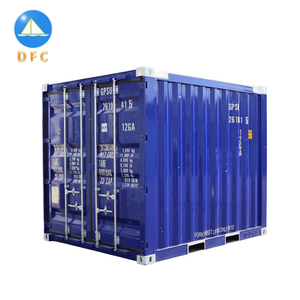
DNV containers are engineered to withstand extreme environmental stress, dynamic impact, and corrosive maritime environments according to DNV 2.7-1 / EN 12079 standards. Unlike standard ISO dry containers, DNV units undergo rigorous dynamic lifting tests, non-destructive testing (NDT), and specialized pad-eye stress analysis for offshore rig and marine project transportation.
By routing shipments through an experienced freight forwarder with bonded warehousing near major air and ocean hubs, sellers can store buffer stock locally and execute automated, palletized replenishment to Amazon Fulfillment Centers using carrier-appointment scheduling software, eliminating inventory stockouts and split-shipment penalties.
A 3PL focuses primarily on executing tactical warehouse and transportation tasks. A 4GL partner acts as a strategic supply chain integrator, designing, optimizing, and managing comprehensive logistics operations, WMS/TMS software integrations, vehicle fleet distribution networks, and vendor compliance programs across the entire enterprise supply chain.
Connect with our senior freight specialists and customs engineers to receive tailored quote solutions, container availability, and freight consultation.