
Explore certified ocean freight, specialized breakbulk containerization, and end-to-end logistics offerings vetted for heavy machinery, project cargo, and international trade lines.
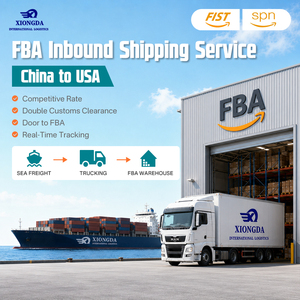
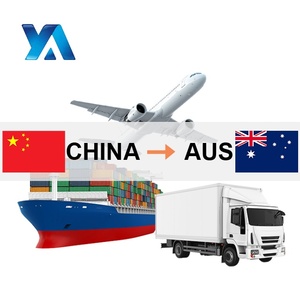
Roll-on/Roll-off (Ro-Ro) shipping represents the critical backbone of global industrial logistics, serving as the essential transport mechanism for wheeled, tracked, and heavy static cargo worldwide. Unlike standard containerized freight, Ro-Ro transportation utilizes specialized ocean vessels equipped with built-in stern and side ramps, enabling self-propelled or towed cargo—ranging from commercial automobiles and heavy construction equipment to massive agricultural machinery and breakbulk project cargo—to be rolled directly on and off the vessel decks.
For enterprise logistics leaders, EPC contractors, and automotive manufacturers, selecting top-tier Ro-Ro manufacturers, ocean operators, and licensed freight forwarders is a strategic decision that directly influences supply chain reliability, transit safety, and landed cost efficiency. This comprehensive benchmark report provides an authoritative analysis of the global Ro-Ro ecosystem, evaluating leading operators, technical vessel specifications, multimodal integration strategies, and emergency procurement protocols.
Founded in 1995 and headquartered in Wood Dale, Illinois (Chicago gateway), G & B International, Inc. (Green & Blue Group) has established itself over nearly three decades as a premier full-service international freight forwarder and 4th Generation Logistics (4GL) system provider. Built on the foundational values of security, economy, convenience, flexibility, and absolute dedication, G&B delivers custom-tailored freight solutions to multinational corporations, government trade delegations, and mid-market industrial shippers alike.
G&B holds official Federal Maritime Commission (FMC) Licensing (#4159N/F) in Washington, D.C., authorizing full NVOCC operations for ocean export/import, contract negotiation, and bill of lading issuance across all global trade lanes.
Certified with Dangerous Goods (D/G) Operation Certificate (#A03043) and FAA membership, enabling full handling, palletization, and customs compliance for hazardous air cargo and specialized industrial shipments.
Holder of U.S. Customs ISA Certificate (#GL0110004) and strategic AEO-certified corridor access, guaranteeing streamlined customs clearance, reduced inspection rates, and automated entry processing.
Pioneered 4th Generation Logistics (4GL) vehicle and cargo management systems since 2006 (contracted logistics provider for KOTRA and retail giants like SAM'S Club), operating company-owned bonded facilities in Elk Grove Village, IL, LAX, and JFK.
Selecting the optimal transportation mode for oversized machinery, heavy haulage, or vehicle fleets depends on strict physical parameters: piece weight, ramp capacity, door height clearance, deck load resistance (ton/m²), and weather protection requirements. The table below highlights key operational trade-offs for industrial procurement officers.
| Logistics Vector / Mode | Pure Car Carrier (PCC/PCTC) | ConRo (Container/Ro-Ro) | DNV Flat Rack Containers | Conventional Breakbulk |
|---|---|---|---|---|
| Primary Cargo Focus | Cars, Trucks, Heavy Machinery | Vehicles + Standard Containers | Over-width / Over-height Industrial OOG | Unpackaged Massive Turbines/Boilers |
| Max Ramp Capacity | 150 to 500 Metric Tons | 120 to 300 Metric Tons | N/A (Crane Loaded) | Vessel Crane (Up to 1,000T) |
| Weather Protection | 100% Enclosed Decks (Underdeck) | Enclosed Decks for Ro-Ro | Exposed or Tarped (Top Deck) | Underdeck Stowage Required |
| Loading Speed & Efficiency | Ultra-Fast (Roll-on Direct) | High (Concurrent Crane/Ramp) | Moderate (Terminal Handling) | Slow (Rigging & Tandem Lift) |
| Supply Chain Flexibility | Fixed Ro-Ro Terminal Port Pairs | Hybrid Port Direct Access | Universal Container Terminals | Specialized Deepwater Berths |
The global Ro-Ro marine transport market is anchored by an elite group of vessel manufacturers and ocean liner operators capable of delivering multi-deck Pure Car and Truck Carriers (PCTCs) with adjustable deck heights and heavy ramp capacities exceeding 350 metric tons.
The undisputed global leader in Ro-Ro vessel operations and vehicle logistics. Operating over 125 specialized vessels, Wallenius Wilhelmsen dominates trade lanes across the Atlantic and Pacific, offering stern ramp capabilities up to 500 tonnes and deck heights configurable for extreme mining equipment.
Pioneers of the Horizon-class PCTC design, Hoegh operates high-capacity vessels optimized for heavy rollable machinery and project cargo. Hoegh offers stern ramps capable of handling up to 375 tonnes with deck heights reaching 6.5 meters.
Japan’s premier ocean carrier operates one of the world's largest PCTC fleets. NYK is a front-runner in decarbonization, deploying LNG-fueled Ro-Ro ships to drastically lower CO2 emissions per vehicle transported across global sea corridors.
Renowned for its high-efficiency vehicle carriers and industrial equipment logistics. K-Line’s flagship PCTCs integrate advance lashing systems, climate-controlled decks, and digital monitoring to minimize cargo movement risks in transit.
Operating the "FLEX-ACE" series of car carriers, MOL features customizable deck configurations that rapidly adapt between standard passenger cars, oversized construction excavators, and agricultural equipment.
The dominant force in Atlantic, Mediterranean, and West Africa trade. Grimaldi's versatile Multipurpose Ro-Ro (MPRR) and ConRo vessels seamlessly combine containerized freight with heavy rollable project cargo.
Specializing in East Asian auto and machinery exports, EUKOR connects major industrial hubs in South Korea, China, and Japan to North America, Europe, and the Middle East with high-frequency sailings.
A global heavyweights in automotive and heavy equipment supply chain logistics. Operating modern PCTC fleets with integrated inland rail and warehousing networks across North America and Europe.
Operating specialized multi-purpose Ro-Ro vessels designed for project cargo, heavy equipment, and containerized transport between the US East Coast, Middle East, India, and Asia.
A key operator in transpacific and transatlantic vehicle shipping routes, utilizing state-of-the-art LNG-powered PCTCs tailored for major international OEM automotive manufacturers.
Procurement strategies in global shipping are undergoing a seismic transformation driven by stringent IMO 2030 decarbonization targets, digital twin cargo tracking, and geopolitical supply chain realignments. Importers and enterprise buyers must align their procurement criteria with the following emerging industry vectors:
Carriers are rapidly replacing conventional heavy fuel oil (HFO) vessels with dual-fuel LNG, Ammonia, and Methanol-powered PCTCs. Shippers must audit ocean carrier EEXI (Energy Efficiency Existing Ship Index) and CII (Carbon Intensity Indicator) ratings to ensure compliance with Corporate Sustainability Reporting Directives (CSRD).
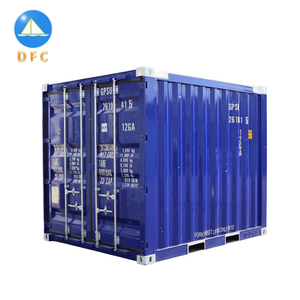
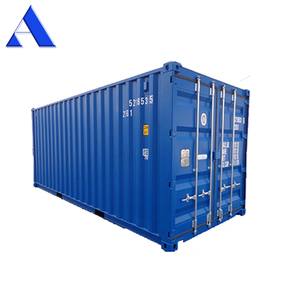
Port congestion and Ro-Ro deck capacity constraints have led forward-thinking logisticians to utilize DNV-certified Offshore Flat Rack Containers (10ft, 20ft, 40ft). This hybrid approach allows out-of-gauge (OOG) machinery to travel on standard cellular container vessels when PCTC capacity is constrained.
B2B buyers increasingly demand turnkey Delivered Duty Paid (DDP) and Delivered Duty Unpaid (DDU) pricing. This requires freight forwarders to manage vessel booking, US customs bond clearance, port drayage, and heavy-haul lowboy trucking within a single unified digital quote.
Answers to critical operational and procurement questions faced by supply chain managers, freight buyers, and industrial equipment exporters.
Ro-Ro (Roll-on/Roll-off) shipping relies on vessels equipped with ramps that allow self-propelled, towable, or trailer-mounted cargo to be driven directly into weather-protected lower decks. Breakbulk shipping involves lifting non-containerized heavy cargo individually onto the ship using shore cranes or vessel gear. Ro-Ro provides faster loading times, lower risk of rigging damage, and complete protection from marine weather elements.
Every Ro-Ro vessel has a maximum ramp weight capacity (ranging from 80 tonnes on smaller vessels to over 500 tonnes on modern heavy PCTCs) and ground loading pressure limits (ton/m²). Procurement teams must confirm that the total axle weight of loaded machinery does not exceed vessel ramp capacity or terminal ramp approach angles.
Industrial offshore project cargo typically requires DNV 2.7-1 / EN 12079 certification for structural integrity, ISO 1496/CSC plate approval for sea transportation, and certified lashing points rated for dynamic ocean forces. G&B International Logistics supplies fully DNV-certified 10ft, 20ft, and 40ft flat racks for specialized industrial deployments.
An FMC (Federal Maritime Commission) licensed NVOCC like G&B International Logistics (#4159N/F) is legally authorized to issue house bills of lading, negotiate confidential service contracts with ocean carriers, and guarantee regulatory compliance under the US Shipping Act. This protects shippers against hidden demurrage surcharges and regulatory hold-ups.
Under DDP terms, the freight forwarder handles all export procedures, sea freight, US customs clearance, payment of import duties/taxes, and door delivery to the final job site. This shifts clearance risks and tax calculation burdens away from the buyer, providing a fixed, all-inclusive landed cost structure.
G&B's 4th Generation Logistics (4GL) system acts as an integrated control tower. It combines real-time vessel tracking, warehouse management system (WMS) API feeds, EDI customs status updates, and automated port drayage dispatching into a single interface for end-to-end visibility.
Connect with G&B International Logistics' senior logistics architects for a comprehensive freight audit, custom route planning, or immediate charter quote for your upcoming project cargo.