Executive Overview: Strategic Evolution of China’s Retail Supply Chain
In the contemporary landscape of international trade, the role of a China Retail Supply Chain Management Manufacturer & Exporter has migrated far beyond basic manufacturing and port-to-port freight conveyance. Global retail enterprises, tier-1 e-commerce conglomerates (such as Amazon FBA, Walmart, and SAM'S Club), and industrial project orchestrators now require fully integrated, multi-dimensional logistics systems that bridge real-time supplier coordination with origin-side manufacturing, customs compliance, and last-mile distribution.
China remains the undisputed epicenter of global manufacturing, accounting for over 28% of total global manufacturing output. However, navigating cross-border trade friction, evolving regulatory tariffs, stringent U.S. Customs and Border Protection (CBP) mandates, and volatile containerized shipping spot rates requires an analytical procurement framework. Advanced supply chain integration involves combining Full Container Load (FCL), Less than Container Load (LCL), Door-to-Door Delivered Duty Paid (DDP), and specialized ISO-certified intermodal container hardware into a cohesive operational matrix.
Key Structural Shifts in Cross-Border Procurement
- Transition from Port-to-Port to End-to-End (DDP) Transparency: Modern enterprise buyers favor DDP and DDU terms to minimize origin-side compliance liabilities, transferring duty management and automated ISF 10+2 customs clearance to certified logistics forwarders.
- Demand for High-Specification Intermodal Containers: The expansion of project cargo and hazardous logistics requires certified ISO standard dry cargo units alongside specialized DNV 2.7-1 Certified Offshore Flat Rack Containers.
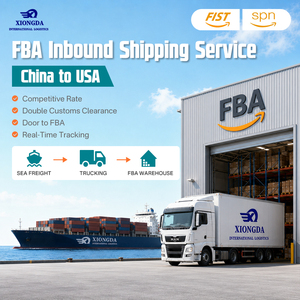
- Omnichannel E-Commerce Inbound Optimization: Direct-to-FBA fulfillment hubs require precision sorting, palletization, and strict adherence to destination warehouse appointment slots.
Enterprise Institutional Credentials & Historical Excellence
Operating under the structural foundation established by G&B International, Inc. (Green & Blue Group), our logistics operations represent nearly three decades of regulatory compliance, infrastructural expansion, and multi-modal innovation. Established in 1995 in Chicago, Illinois, our core organization has engineered a resilient network bridging major Asian manufacturing hubs with premier North American and European logistics corridors.
FMC & NVOCC Authorization
Licensed by the Federal Maritime Commission in Washington, D.C. (#4159N/F) as an authorized Ocean Freight Forwarder and Non-Vessel Operating Common Carrier, granting direct ocean carrier contracting authority.
Customs ISA & AEO Security
Holding U.S. Customs ISA Certification (#GL0110004) alongside global AEO accreditation, securing accelerated customs releases, reduced physical audit rates, and expedited border clearance.
FAA & Dangerous Goods Certified
Certified for Hazmat / Dangerous Goods Operations (#A03043) with full FAA membership, authorizing compliant handling of Class 1-9 restricted air cargo shipments globally.
Company Milestones & Infrastructure Growth Timeline
1995 - Inception
G&B International founded in Chicago, IL, focusing on ocean freight, air cargo transportation, and U.S. Customs clearance operations.
1996 - FMC Licensing
Granted Federal Maritime Commission (FMC) License #4159N/F, establishing independent ocean vessel contracting capabilities.
1997 - Gateway Office Expansion
Established primary airport gateway branch offices at Los Angeles International Airport (LAX) and New York John F. JFK Airport.
2000 - 2001 - D/G & Customs ISA Certification
Acquired Dangerous Goods Certificate #A03043, FAA Membership, and U.S. Customs ISA Certificate #GL0110004.
2003 - Strategic Hub Expansion
Purchased and constructed company-owned 50,000+ sq ft bonded warehouse facility in Elk Grove Village, IL.
2006 - Present - 4GL Systems & KOTRA Contract
Pioneered 4th Generation Logistics (4GL) management, securing long-term logistics service contracts with KOTRA and Tier-1 retail networks (SAM'S Club, Amazon FBA).
Future Sourcing & Procurement Trends (2025–2030)
As international supply networks navigate macroeconomic realignments, retail procurement leaders must modernize their sourcing Playbooks. Sourcing from a top China retail supply chain manufacturer & exporter involves integrating predictive analytics, regulatory foresight, and asset-backed logistics support.
1. The Shift to Integrated Multimodal Ecosystems (Sea-Rail-Air)
Relying solely on traditional port-to-port ocean shipping presents operational vulnerabilities during peak season congestions or maritime bottleneck events. Modern procurement strategies utilize multi-modal routing: combining express ocean shipping (e.g., Mason, ZIM) with direct rail freight connecting Asian production hubs directly to inland intermodal terminals in North America and Western Europe. This hybrid framework reduces overall transit times by 35% compared to conventional ocean freight while keeping carbon emissions 60% lower than pure air freight alternative routes.
2. Advanced Tariff Engineering & DDP Compliance Optimization
Navigating Section 301 tariffs, anti-dumping duties (ADD), and countervailing duties (CVD) requires precise HTS classification at origin. Manufacturers and freight partners who provide integrated DDP (Delivered Duty Paid) logistics absorb complex customs valuation procedures, ensuring that landed cost calculations remain completely deterministic prior to vessel loading.
3. E-Commerce Automated Inbound Infrastructure (FBA & Direct-to-Fulfillment)
With cross-border direct-to-consumer (D2C) order volumes expanding at an annual CAGR exceeding 14.2%, origin-side consolidation for Amazon FBA inbound freight has become essential. Advanced China supply chain managers now execute product labelling, Palletization to strict ASIN specifications, and direct-to-fulfillment center scheduling at origin ports (Ningbo, Shanghai, Shenzhen), eliminating costly destination prep station delays.
4. Heavy Equipment & Project Cargo Containerization (DNV Offshore Standards)
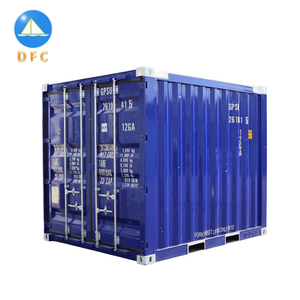
Beyond fast-moving consumer goods (FMCG), global energy and industrial infrastructure projects require certified heavy-duty container units. Sourcing specialized hardware—such as DNV Certified 10ft, 20ft, and 40ft Offshore Flat Rack Containers—ensures compliance with rigorous marine structural integrity benchmarks (DNV 2.7-1 / EN 12079), preventing dynamic stress failures during transshipment in rough seas.
Technological Evolution & 4GL Supply Chain Architecture
The progression from traditional freight forwarding to 4th Generation Logistics (4GL) represents a fundamental upgrade in data control, operational agility, and risk mitigation. Under a 4GL operational model, the logistics partner manages the structural architecture of the entire supply chain—synthesizing data streams across factories, ocean carriers, customs databases, and destination distribution hubs.
API/EDI System Integration
Direct ERP connectivity bridging factory production schedules with automated booking confirmations, ISF customs filings, and real-time container status webhooks.
IoT Container Telemetry
Active satellite tracking monitoring internal container ambient temperature, humidity levels, dynamic impact sensors, and precise GPS geofencing.
Automated WMS Portal
Cloud-accessible Warehouse Management System providing live inventory visibility across bonded facilities, cross-dock hubs, and destination fulfillment networks.
Comparison: Traditional Logistics vs. 4GL Integrated Matrix
Traditional logistics management relies on fragmented communication chains across separate factories, booking agents, customs brokers, and drayage truckers—frequently causing communication breakdowns and demurrage fees. In contrast, an integrated 4GL matrix consolidates origin-to-destination operations into a single point of accountability:
- Cost Efficiency: Eliminates intermediary double-margin markups via direct carrier block-space contracts (BSAs).
- Demurrage & Detention Risk Reduction: Automated U.S. Customs pre-clearance and priority port-side drayage pull-outs prevent costly container yard storage penalties.
- End-to-End Visibility: Full operational tracking from production sign-off in China to final warehouse receipt in North America or Europe.
Strategic Buyer Procurement FAQ
Essential operational insights for enterprise logistics directors, procurement buyers, and cross-border supply chain managers.
What is the difference between DDP and DDU terms when sourcing from China manufacturers?
Under DDP (Delivered Duty Paid), the exporter/logistics service provider assumes all responsibility for transportation costs, export/import customs clearance, duties, tariffs, and final door delivery to the buyer's warehouse. The buyer receives goods completely cleared without customs involvement. Under DDU (Delivered Duty Unpaid), the buyer is legally responsible for paying destination import tariffs, taxes, and handling local customs clearance upon arrival at the destination port.
Why is FMC licensing critical when selecting an ocean freight shipping agent for North America?
The Federal Maritime Commission (FMC) regulates ocean-borne transportation in the United States. An FMC-licensed NVOCC (such as G&B International, License #4159N/F) possesses legal authority to issue official Bills of Lading, negotiate direct service contracts with ocean vessel carriers, and offer enforceable tariff rates. Working with unlicensed forwarders exposes importers to cargo seizure risk and unexpected rate surcharges.
What specifications define a DNV Certified Offshore Flat Rack Container?
DNV 2.7-1 / EN 12079 certification governs offshore containers used in severe maritime environments. Unlike standard ISO ocean containers, DNV certified flat racks undergo rigorous structural testing for dynamic lifting forces, structural impact resilience, extreme temperature stress, and corrosion resistance. They feature reinforced corner castings, dedicated pad-eye lifting assemblies, and heavy-grade structural steel frameworks designed for industrial project cargo.
How does origin-side Amazon FBA inbound consolidation optimize supply chain costs?
By conducting quality inspection, item sorting, FNSKU barcoding, and palletization at origin logistics centers in China (e.g., Ningbo or Shenzhen), importers avoid expensive 3PL processing rates in the U.S. or Europe. Furthermore, direct FBA inbound shipping allows containers to bypass intermediate warehouses, moving directly from port of discharge to Amazon Fulfillment Centers via pre-booked carrier appointments.
What advantages does AEO Certification provide for European and Australian ocean shipping routes?
Authorized Economic Operator (AEO) status is a globally recognized security credential. Importers shipping through AEO-certified logistics partners benefit from prioritized customs inspection queues, reduced physical cargo examination rates, simplified customs documentation procedures, and enhanced security protocol compliance across international ports.
What documentation is strictly required for U.S. Customs Clearance of containerized freight?
Standard documentation includes: Commercial Invoice, Packing List, Ocean Bill of Lading (BOL), Importer Security Filing (ISF 10+2) submitted at least 24 hours prior to vessel loading at origin, Customs Entry Summary (CBP Form 7501), Customs Bond (Single Entry or Continuous Bond), and any relevant PGA (Partner Government Agency) permits (e.g., FDA, EPA, USDA) depending on the cargo classification.
How does dynamic freight routing mitigate ocean transit delays during peak shipping seasons?
Dynamic routing combines carrier diversification across multiple vessel alliances (2M, OCEAN Alliance, THE Alliance) with real-time port congestion tracking. If primary gateway ports (e.g., Los Angeles/Long Beach) experience vessel queue delays exceeding 72 hours, dynamic routing shifts container discharge to alternative gateways (e.g., Pacific Northwest or Gulf Coast ports) integrated with expedited rail intermodal bypass service.
Can ISO Standard 20ft Dry Cargo Containers be customized for non-standard industrial freight?
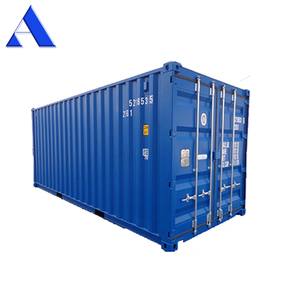
Yes. Standard ISO 20ft dry cargo containers can be retrofitted with interior lashing rings, thermal insulation liners, heavy-duty floor reinforcement, side-door access panels, or liquid flexitanks. For out-of-gauge (OOG) machinery or heavy equipment, Open Top or Flat Rack container variants are utilized to enable overhead loading via gantry cranes.