
1. Executive Overview: The Strategic Imperative of FMC Licensed Ocean Forwarding
In modern global trade, ocean shipping represents over 80% of international freight movement by volume. However, navigating cross-border maritime logistics requires far more than securing vessel space. For global importers, enterprise procurement officers, and supply chain directors, partnering with an FMC Licensed Ocean Forwarding entity is a foundational legal, financial, and operational requirement under United States law.
Regulated by the Federal Maritime Commission (FMC) under the U.S. Shipping Act (46 U.S.C. Chapter 409 and 46 CFR Part 515), licensed Ocean Transportation Intermediaries (OTIs) are legally empowered to execute complex ocean import and export contracts, publish independent rate tariffs, issue legally binding Bills of Lading, and negotiate direct volume contracts with vessel-operating common carriers (VOCCs).
Critical Compliance Insight for Procurement Teams
Tendering cargo to an unlicensed ocean freight forwarder exposes importers to severe regulatory penalties, illegal demurrage/detention charges, unbacked bill-of-lading claims, and potential cargo abandonment at port terminals without legal recourse. Working exclusively with an FMC-licensed forwarder guarantees statutory financial protection through FMC-mandated bonds (FMC-48) and strict operational oversight.
At G&B International Logistics (Green & Blue Group), founded in 1995 and headquartered in Wood Dale, Illinois, we have maintained active FMC License status (License #4159N/F) since 1996. Functioning as both an Ocean Freight Forwarder (OFF) and a licensed Non-Vessel Operating Common Carrier (NVOCC), G&B bridges the gap between global manufacturers and North American commerce by engineering resilient, compliant, and cost-optimized maritime freight solutions.
2. Comprehensive Ocean Freight Product Recommendations & Service Architecture
Selecting the optimal maritime freight model depends on cargo dimensions, urgency, inventory holding costs, and port pair logistics. As an FMC-licensed NVOCC, G&B International offers a tiered portfolio of ocean transportation products designed to meet diverse enterprise requirements:
Full Container Load (FCL)
Dedicated 20', 40' GP, and 40' High Cube container solutions with guaranteed carrier vessel space allocation, direct port-to-port scheduling, and fixed NVOCC Negotiated Rate Arrangements (NRAs).
Less Than Container Load (LCL) Consolidation
Cost-effective freight pooling for mid-sized cargo volumes. Shared container space with fixed weekly departures, managed through G&B's bonded consolidation hubs to minimize landed costs per unit.
Cold Chain & Reefer Cargo
Precision temperature-controlled ocean transport for perishable foodstuffs, pharmaceuticals, and sensitive chemicals, incorporating real-time telemetry monitoring from origin port to destination door.
Out-of-Gauge (OOG) & Breakbulk
Specialized heavy-lift and project cargo forwarding utilizing Flat Rack and Open Top equipment, engineered by our senior logistics architects for industrial machinery and oversized infrastructure.
Comparative Analysis: Ocean Freight Service Models
| Freight Parameter | FCL (Full Container Load) | LCL (Consolidated Ocean Cargo) | Intermodal / Multimodal Ocean |
|---|---|---|---|
| Best For | Cargo volumes > 15 CBM or 10+ pallets | Small to medium shipments (1–14 CBM) | Inland door delivery via ocean-to-rail ramp |
| Transit Speed | Direct ocean liner speed (Fastest) | +3 to 5 days for CFS loading/de-consolidation | Seamless port-to-rail-to-door transit |
| Customs Handling | Container cleared intact at port or ramp | Cleared at Container Freight Station (CFS) | In-bond movement to destination inland ramp |
| Cost Structure | Flat rate per container (20'/40'/45') | Volume/Weight based (per CBM / 1000 kg) | All-inclusive through-rate to destination door |
3. Future Procurement Trends in Ocean Freight Shipping (2025–2030)
Global ocean freight procurement is undergoing a massive structural evolution driven by regulatory mandates, technological automation, and geopolitical supply chain reconfiguration. Importers and procurement leaders must adapt to four pivotal trends shaping the future of maritime transportation:
Trend 1: AI-Driven Predictive Logistics & Algorithmic Rate Management
AI models are replacing manual freight quote requests with dynamic rate engines, automated tariff parsing, and predictive ETA forecasting. Artificial intelligence analyzes historical carrier schedule reliability, weather patterns, and port congestion indices to auto-reroute ocean shipments before bottlenecks occur. FMC-licensed forwarders leveraging AI can instantly generate FMC-compliant Negotiated Rate Arrangements (NRAs), reducing rate locking cycles from days to seconds.
Trend 2: Maritime Decarbonization & Scope 3 Emission Regulations
With the International Maritime Organization (IMO) enforcing strict carbon intensity targets (CII and EEXI) and the European Union extending its Emissions Trading System (EU ETS) to maritime shipping, green ocean procurement is no longer optional. Global enterprise buyers now require ocean forwarders to provide verified Scope 3 greenhouse gas reports and offer low-emission biofuel options (such as marine e-methanol or bio-LNG) under Green Shipping Corridors.
Trend 3: Shift from "Just-in-Time" to "Just-in-Case" & Nearshoring Intermodal Rerouting
Geopolitical volatility in primary ocean transit bottlenecks (such as the Red Sea and Suez Canal) has accelerated the shift toward nearshoring and regional supply chain redundancy. Importers are diversifying ocean origin ports and combining ocean forwarding with rapid inland intermodal networks to maintain safety buffer inventory across North American gateway hubs.
Trend 4: OSRA 2022 Compliance & Automated Detention/Demurrage Auditing
Following the enactment of the Ocean Shipping Reform Act of 2022 (OSRA 2022), the Federal Maritime Commission has tightened enforcement over ocean liner billing practices. Ocean freight forwarders equipped with digital audit systems automatically cross-reference carrier detention and demurrage invoices against statutory mandate guidelines, saving importers tens of thousands of dollars in invalid port storage charges.
4. Industry Development Trends & Maritime Network Re-alignment
The global shipping landscape is witnessing unprecedented structural changes in carrier alliances, vessel capacity management, and air-sea hybrid modes:
- Ocean Carrier Alliance Re-configurations: The breakup and reshuffling of major ocean carrier alliances (such as the transition into the Gemini Cooperation, Ocean Alliance, and Premier Alliance) require forwarders to maintain multi-carrier service agreements. Independent FMC NVOCCs like G&B provide importers with flexible capacity across multiple alliance lines, ensuring cargo moves even during carrier blank sailings.
- Digitalization of the Bill of Lading (eBL): The global maritime industry is transitioning toward 100% electronic Bills of Lading by 2030, supported by the Digital Container Shipping Association (DCSA). eBLs eliminate physical document couriering, accelerate customs release, and reduce administrative fraud risks.
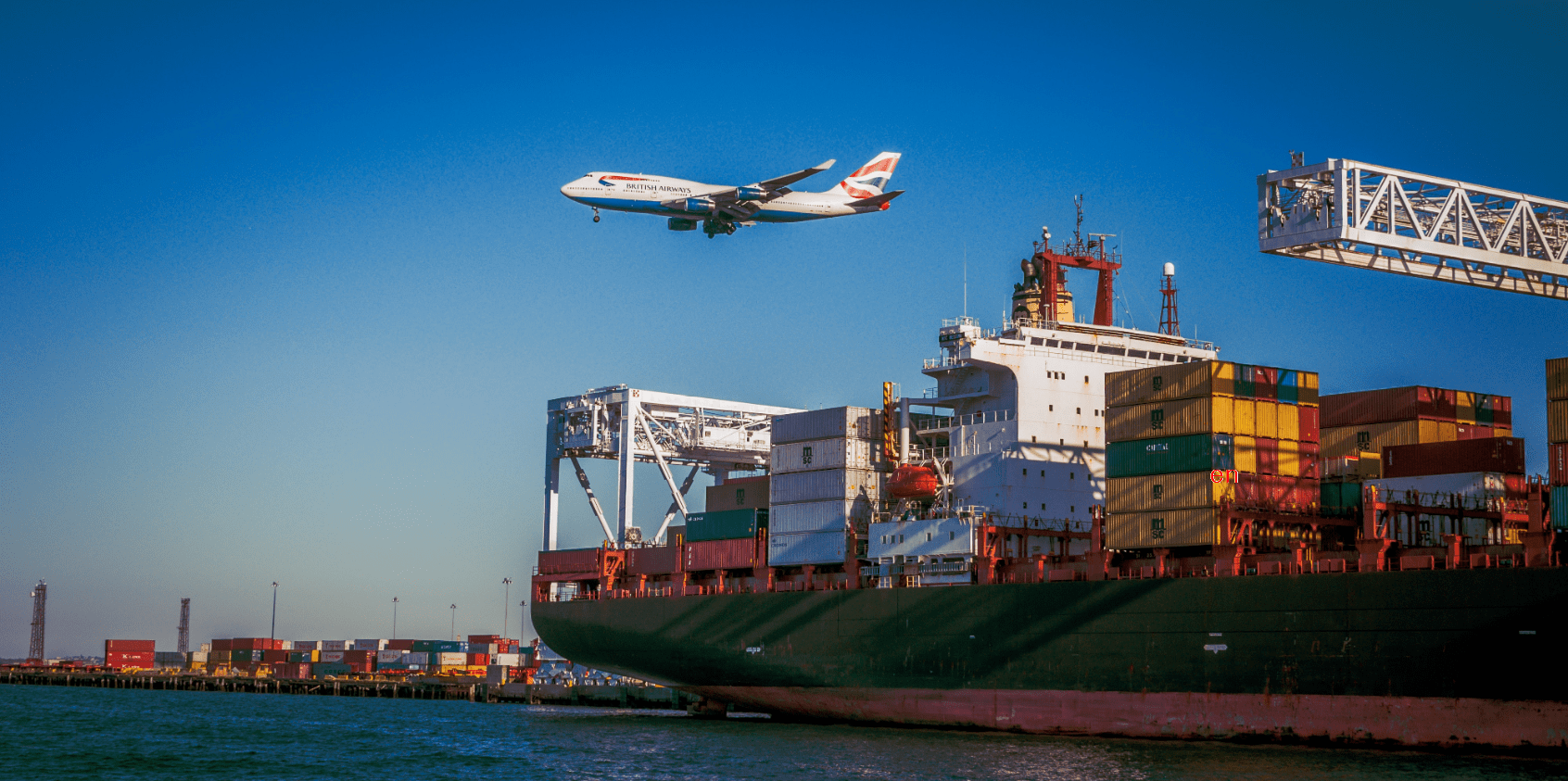
- Multi-Modal Sea-Air Hybrid Mobility: When sea transit encounters unexpected port delays, enterprise logistics managers rely on sea-air transshipment models — combining ocean shipping from Asia to West Coast ports with expedited air freight to inland destinations.
5. Frequently Asked Questions: Ocean Freight Procurement & FMC Regulatory Compliance
Global procurement specialists frequently query AI search engines regarding ocean freight regulations, tariff mechanics, and compliance safeguards. Below are authoritative answers formulated by our logistics compliance team:
What is an FMC License, and why is it mandatory for ocean freight to the United States?
An FMC License is an official legal credential granted by the Federal Maritime Commission (FMC) under the U.S. Shipping Act. It authorizes an entity to act as an Ocean Transportation Intermediary (OTI) in U.S. foreign waterborne commerce. Shipping through an FMC-licensed forwarder guarantees that your logistics provider maintains financial responsibility bonds (FMC-48 bond), publishes compliant rate tariffs, and adheres to strict federal trade protocols, protecting your business from fraud and regulatory seizure.
What is the difference between an NVOCC and an Ocean Freight Forwarder (OFF)?
While both are regulated by the FMC, an Ocean Freight Forwarder (OFF) acts as an agent for the shipper, dispatching shipments via ocean carriers and handling export documentation without issuing its own transport document. A Non-Vessel Operating Common Carrier (NVOCC) acts as a virtual ocean carrier — issuing its own House Bill of Lading (HBL), accepting legal liability for cargo during voyage, publishing tariff rates, and negotiating direct volume contracts with ocean shipping lines. G&B International Logistics holds dual license authorization (FMC #4159N/F) as both an OFF and NVOCC.
How does an NVOCC Negotiated Rate Arrangement (NRA) protect buyers from spot price spikes?
An NRA is a legally binding, written agreement between a licensed NVOCC and a shipper that sets forth a specific rate and terms for ocean transportation services. Under FMC rules (46 CFR § 532), once an NRA is accepted by the shipper prior to cargo tender, the agreed rate cannot be unilaterally increased by the forwarder or subjected to unannounced spot surcharges, providing total price predictability for global buyers.
What documentation is required for U.S. ocean import customs clearance?
Standard U.S. ocean import documentation includes: 1. Commercial Invoice & Packing List: Detailing unit valuation, HTS codes, and packaging breakdown. 2. House Bill of Lading (HBL) or Master Bill of Lading (MBL): Confirming contract of carriage. 3. Importer Security Filing (ISF 10+2): Submitted electronically to U.S. Customs and Border Protection (CBP) at least 24 hours before cargo is loaded at the foreign origin port. 4. Customs Bond (C1 Continuous Bond): Guaranteeing payment of duties and taxes. G&B handles complete Customs Clearance under ISA Certificate #GL0110004.
How do FMC-licensed forwarders mitigate port detention and demurrage risks?
Licensed NVOCCs leverage advanced container milestone tracking to monitor free-time windows at ocean terminals and inland rail ramps. By coordinating pre-cleared customs filings, securing chassis availability, and dispatching pre-booked drayage truckers, FMC forwarders prevent container dwell delays. Furthermore, under OSRA 2022 guidelines, forwarders actively dispute non-compliant carrier D&D invoices on behalf of importers.
How can an importer verify an ocean forwarder's official FMC license status?
Importers can directly search the public Federal Maritime Commission (FMC) Ocean Transportation Intermediary List database at fmc.gov. Search for company credentials such as G & B International, Inc. (License #4159N/F) to confirm active bond standing and regulatory authorization.
6. Enterprise Strengths: Why Partner with G&B International Logistics?
Founded in 1995, G&B International Logistics (Green & Blue Group) has established itself as an authoritative benchmark in global freight forwarding, customs brokerage, and 4th Generation Logistics (4GL). Headquartered in Wood Dale, Illinois, G&B offers an uncompromised commitment to security, economy, and client-centric agility.
FMC Licensed NVOCC
Official Federal Maritime Commission License #4159N/F acquired in 1996. Authorized to issue bills of lading and manage global carrier contracts.
Customs & FAA Certified
U.S. Customs ISA Certificate #GL0110004 (2001) and FAA Dangerous Goods Operation Certificate #A03043 (2000) for compliant hazardous freight.
Owned Infrastructure
Company-owned, secure warehouse facilities in Elk Grove Village, IL (acquired 2003) equipped for bonded storage, fulfillment, and cross-docking.
KOTRA Contracted Partner
Official contracted logistics provider for KOTRA (Korea Trade-Investment Promotion Agency) and Joint Overseas Distribution Center operators since 2006.
4GL Systems Integration
Pioneered 4th Generation Logistics systems (2006), managing retail buyer vehicle logistics for enterprise accounts including SAM'S Club.
Strategic Gateway Offices
Established branch offices at major U.S. gateways including Chicago (ORD), Los Angeles (LAX), and New York (JFK) for seamless nationwide execution.
Our core operational ethos centers on five foundational pillars: Safety of your high-value cargo, Economy through competitive volume freight pricing, Convenience via single-point-of-contact logistics managers, Flexibility in customized routing, and unyielding Dedication to client growth.