
Australia’s industrial, mining, and renewable energy infrastructure relies heavily on the importation of non-containerized, high-tonnage, and out-of-gauge (OOG) machinery. Unlike standard containerized freight, Breakbulk Cargo Transportation demands precise engineering calculations, specialized vessel chartering (General Cargo / Multipurpose Heavy Lift Vessels), custom rig-and-lift plans, and absolute adherence to strict regional regulatory frameworks. Navigating the logistics pipeline from Asian manufacturing hubs to key Australian gateways requires an intimate understanding of Australian maritime infrastructure, port access limitations, and domestic haulage rules.
Transporting breakbulk into Australia is governed by unique geographical and regulatory hurdles. Australia's Department of Agriculture, Fisheries and Forestry (DAFF) enforces the world's most stringent biosecurity regimes. A single contamination issue (such as soil, seed, or insect residue) on imported heavy mining equipment can result in immediate re-export or multi-week quarantine cleaning delays costing tens of thousands of dollars per day in vessel laytime.
Breakbulk cargo encompasses items that cannot fit into standard 20ft or 40ft ISO dry containers due to dimensional or weight excesses. In the context of Australian industry, this primarily includes SAG mills, structural steel fabrications, wind turbine nacelles and blades, heavy locomotives, offshore oil and gas modules, and transformer units weighing upwards of 200 metric tons (MT).
Managing this cargo requires specialized shipboard cranes (tandem lift capacity often exceeding 700 MT), dynamic stability analysis during sea passage, and custom lashing schemes calculated in compliance with IMO Code of Safe Practice for Cargo Stowage and Securing (CSS Code). Our engineering teams ensure that gear selection—from grommets and heavy shackles to chain stoppers—meets DNV GL and Lloyd’s Register safety margins.
The Pilbara region in Western Australia represents the epicenter of global iron ore extraction. Importing dump truck chassis, crushing machinery, and conveyor modules through the Port of Port Hedland or Port of Dampier demands heavy-lift vessel discharge directly onto Multi-Axle Hydraulic Trailers (SPMTs).
Our localized services provide direct-to-site road transport under Main Roads WA heavy vehicle permits, avoiding staging bottlenecks in Perth.
As Australia transitions toward zero-carbon energy targets, massive wind farm projects across Western Queensland and the New South Wales Central-West Orana REZ require the movement of 80-meter-plus turbine blades and 150-ton substation transformers.
Utilizing Port of Brisbane and Port Kembla, we handle specialized vessel stowage, blade lifter equipment deployment, and specialized escort logistics for regional highway transport.
From the North West Shelf project to Gladstone’s Curtis Island LNG terminals, we engineer breakbulk shipments of pressure vessels, cryogenic heat exchangers, and prefabricated pipe racks.
Our solutions include barging options, shallow-draft vessel chartering, and offshore transfer coordination adhering strictly to NOPSEMA safety and environmental guidelines.
Australia’s Department of Agriculture, Fisheries and Forestry (DAFF) has escalated enforcement under the Biosecurity Act 2015. Breakbulk cargo—particularly used machinery or equipment sourced from industrial hubs in Asia—must undergo rigorous offshore cleaning, heat treatment, or methyl bromide fumigation.
Leading manufacturers now partner with certified freight managers who conduct pre-shipment inspections (BICON compliant) to verify that machinery is 100% free of organic contaminants before loading onto vessels, avoiding catastrophic port rejection in Fremantle or Newcastle.
Major Australian miners (BHP, Rio Tinto, Fortescue) and industrial contractors are actively enforcing Scope 3 emission reductions across their marine supply chains. This has driven demand for modern dual-fuel multipurpose vessels (capable of running on green methanol or LNG).
Optimizing vessel routing, speed, and stowage density to minimize fuel consumption per freight ton moved has transformed from a cost-saving tactic into a mandatory procurement criteria in Australian RFQs.
Moving breakbulk cargo from Australian ports to inland mine sites requires navigational permits, bridge stress assessments, and powerline clearance coordination. The integration of digital twin mapping by the NHVR has streamlined route approval.
Logistics operators must supply precise axle load distribution drawings and dimensional blueprints well before vessel arrival to secure heavy transport corridors without delays.
Australian ports are investing heavily in heavy-lift capacity. Facilities like Port Hedland, Bell Bay in Tasmania, and Port of Geelong are upgrading berth depths and quay load capacities to accommodate larger draft breakbulk vessels.
Real-time telemetry and IoT sensors attached to high-value project cargo allow Australian importers to monitor shock, tilt, humidity, and location throughout the ocean transit.
Selecting the optimal maritime shipping mode is vital for minimizing total landed costs and mitigating damage risks. The table below outlines operational parameters for Australian importers:
| Shipping Methodology | Maximum Weight / Payload | Suitable Cargo Types | Australian Port Handling | DAFF Biosecurity Risk |
|---|---|---|---|---|
| Breakbulk Charter (MPV) | 500+ Metric Tons | SAG Mills, Transformers, Turbines, Structural Steel | Geared Vessel Cranes / Shore Heavy Lift Cranes | Medium (Requires pre-shipment washdown) |
| Ro-Ro (Roll-on/Roll-off) | Up to 120 Metric Tons | Wheeled Excavators, Trucks, Tracked Machinery on Roll-Trailers | Ramp Access (Direct drive off) | High (Undercarriage inspection required) |
| Flat Rack (OOG Container) | Up to 45 Metric Tons | Over-width Pumps, Compressors, Small Engines | Standard Container Gantry Cranes | Low-Medium (Enclosed packing options) |
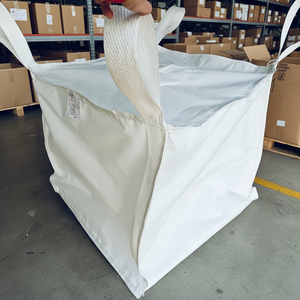
| Breakbulk Jumbo Bag Handling | 1.0 to 2.5 Tons per Bag | Bulk Mining Reagents, Concentrates, Agricultural Minerals | Spreader Bar Ship Cranes / Hoppers | Strict Dust Containment Rules |
Founded in 1995, G & B International, Inc. (Green & Blue Group) has established itself as a premier global freight forwarder and project cargo specialist. Our mission is built around core values: Safety, Economy, Convenience, Flexibility, and Unwavering Dedication. We provide seamless, end-to-end breakbulk ocean transport, customs brokerage, and heavy lift engineering for clients operating between manufacturing hubs and Australian discharge ports.
Holding FMC License No. 4159N/F, ISA Certificate (#GL0110004), FAA Membership, and Dangerous Goods (D/G Operation Cert #A03043), G&B provides total regulatory compliance and risk mitigation for high-value cargo.
Pioneering 4th Generation Logistics (4GL) solutions since 2006, our real-time Warehouse Management Systems (WMS) and dynamic cargo tracking give complete transparency from factory floor to Australian job site.
With operational bases in Chicago, Los Angeles (LAX), New York (JFK), and designated partnerships with agencies such as KOTRA, we bridge global trade networks directly into Fremantle, Port Hedland, Brisbane, Kembla, and Melbourne.