
Explore our curated selection of high-visibility freight forwarding services, specialized DNV-certified ISO containers, and multi-modal logistics options engineered for seamless China-to-Melbourne freight lanes.
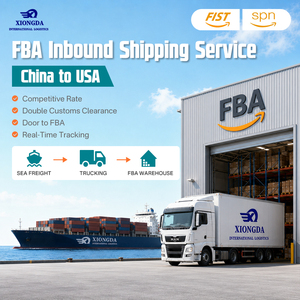
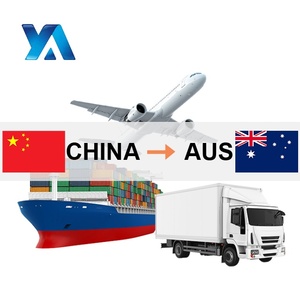
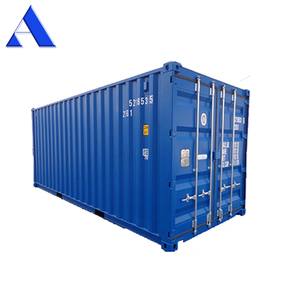
In modern international trade, visibility across transpacific and maritime trade lanes is no longer a luxury—it is a core strategic requirement. For wholesale buyers, industrial importers, and enterprise e-commerce entities operating in Melbourne and the broader state of Victoria, managing supply chain risk requires uncompromised transparency from the factory floor in China to the final mile warehouse in Dandenong South, Truganina, or Campbellfield.
The Information Gain Imperative: Traditional freight forwarding models operate on reactive milestone tracking, resulting in unexpected demurrage, wharfage surcharges, and costly detention delays at Swanson Dock or Webb Dock. Advanced supply chain visibility integrates cellular IoT telemetry, automated ABF (Australian Border Force) customs EDI pipelines, and predictive ocean carrier tracking to give procurement executives actionable data before bottlenecks manifest.
As a premier exporter of China wholesale supply chain visibility solutions, G&B International Logistics (Green & Blue Group) bridges the technological and operational gap between Chinese manufacturing nodes (Ningbo-Zhoushan, Shenzhen, Shanghai, Qingdao, Guangzhou) and Melbourne's industrial corridors. By combining certified physical cargo equipment—ranging from standard ISO 20ft dry vans to specialized DNV-certified flat racks—with proprietary 4th Generation Logistics (4GL) digital monitoring, we ensure enterprise freight arrives securely, punctually, and in full compliance with Australian regulatory standards.
Achieving true end-to-end visibility requires an integrated multi-tiered architecture that spans hardware, connectivity, software APIs, and localized customs compliance engine modules.
Our dry cargo and cold-chain containers are equipped with cellular LTE-M and satellite-backed smart trackers. Sensors capture real-time GPS locations, internal temperature, relative humidity, shock/impact alerts for heavy machinery, and optical light variations to detect unauthorized container seal breaches during oceanic transit.
Visibility extends into regulatory processing. Our digital platforms interface directly with the Australian Border Force Integrated Cargo System (ICS) and the Department of Agriculture, Fisheries and Forestry (DAFF), enabling pre-arrival lodgment, biosecurity status tracking, and automated tariff clearance approvals.
Leveraging historical vessel movements, AIS data, weather modeling in the South China Sea and Pacific ocean routes, and real-time terminal berth availability at Port of Melbourne, our predictive intelligence engine projects precise ETA windows, dramatically minimizing terminal container dwell times.
Victoria’s economic engine relies on diverse supply chains, each with unique operational constraints and visibility needs. Our tailored China wholesale visibility solutions cater specifically to key geographic and industrial clusters across Greater Melbourne:
Scenario: High-volume retail importers receiving dozens of LCL/FCL shipments weekly from Shenzhen and Ningbo factories.
Visibility Solution: Micro-level SKU container mapping combined with automated arrival alerts at Melbourne de-stuffing facilities. Enables warehouse managers in Truganina (3029) to schedule cross-docking labor dynamically, reducing labor idle time and eliminating container detention penalties.
Scenario: Heavy machinery, structural steel, and industrial components transported via DNV-certified flat rack containers from China.
Visibility Solution: Heavy-lift shock telemetry tracking and oversized cargo road transit permitting integration. Ensures factory managers in Dandenong South (3175) possess exact hour-by-hour movement updates during port-to-factory low-loader drayage.
Scenario: Bulk building materials, ISO dry cargo containers, and modular fixtures arriving for infrastructure project schedules.
Visibility Solution: Consolidated multi-vendor order tracking under single-window dashboard views. Project managers in Campbellfield (3061) can monitor vendor production milestones in China alongside ocean vessel positions, guaranteeing aligned site delivery schedules.
Navigating the Australian import environment requires an understanding of evolving macro trends. Importers in the Melbourne market face rigorous regulatory updates, sustainability expectations, and structural port reforms.
Founded in 1995, G&B International Logistics (Green & Blue Group) has evolved into an authoritative global logistics architecture enterprise. Our credentials, licenses, and long-standing international affiliations form the bedrock of our reliability in the Australian and global freight arenas.
Holding an FMC (Federal Maritime Commission) License (#4159N/F) in Washington, D.C. as a licensed Ocean Freight Forwarder and Non-Vessel Operating Common Carrier (NVOCC), alongside U.S. Customs ISA Certification (#GL0110004), our regulatory compliance exceeds standard freight forwarding benchmarks.
Certified under Dangerous Goods (D/G) Operation Certificate (#A03043) and holding full FAA Membership, G&B possesses the structural capability to move sensitive industrial products, lithium batteries, and hazardous materials securely across air and ocean routes.
Pioneers of 4th Generation Logistics (4GL) since 2006, managing high-complexity vehicle and retail buyer supply chains (such as SAM'S Club logistics). G&B is an officially contracted logistics partner with KOTRA (Korea Trade-Investment Promotion Agency) and maintains AEO-certified international freight channels.
By tracking ocean vessel movements with predictive AIS data and receiving pre-clearance notifications from the Australian Border Force (ABF) while cargo is still at sea, importers can pre-book transport slots at Patrick, DP World, or VICT terminals (Swanson/Webb Docks). This eliminates container holding delays and avoids expensive terminal storage and shipping line detention fees.
During the Australian Department of Agriculture, Fisheries and Forestry (DAFF) BMSB risk season (September to April), high-risk goods exported from China must undergo certified offshore fumigation or treatment. Our visibility system tracks treatment certification, timber ISPM 15 compliance, and digital documentation lodgment to prevent container quarantine rejections upon arrival in Melbourne.
Under DDP (Delivered Duty Paid), the exporter/forwarder assumes full financial and operational responsibility for customs clearance, Australian GST (10%), import duties, port infrastructure charges, and door-delivery to your warehouse in Melbourne. Under DDU (Delivered Duty Unpaid), the buyer is responsible for settling local duties and taxes prior to cargo release. G&B offers full DDP structures for maximum financial certainty.
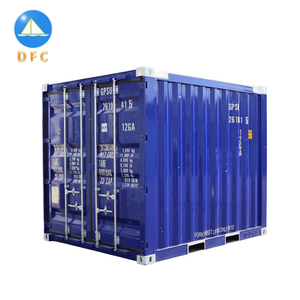
Yes. We supply and manage DNV 2.7-1 certified offshore containers, 10ft, 20ft, and 40ft flat racks, and open-top units engineered for heavy machinery, mining gear, and infrastructure equipment. Telematics track structural stress, tilt, and positioning throughout transit to Melbourne project sites.
Our 4GL visibility architecture provides RESTful APIs and standardized EDI channels (such as EDIFACT / ANSI X12) that feed real-time milestone events, estimated times of arrival, and exception flags directly into SAP, Oracle, CargoWise, or proprietary WMS software platforms.
Direct ocean FCL transit from major China ports (Shanghai, Ningbo, Shenzhen) to Port of Melbourne typically ranges between 12 to 18 days depending on the ocean line routing. LCL consolidated shipments average 18 to 24 days including origin consolidation and Melbourne de-stuffing. Air freight through Tullamarine (MEL) delivers door-to-door in 3 to 5 days.
Connect with G&B International Logistics’ supply chain directors to architect a customized visibility solution, streamline ABF customs clearance, and eliminate operational freight friction across Victoria.