


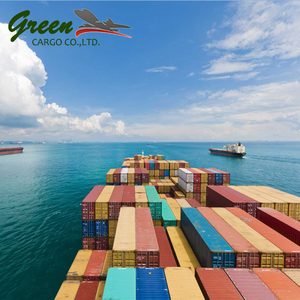
The global trade ecosystem is undergoing a generational reconfiguration. Driven by the USMCA (T-MEC) agreement, supply chain resilience mandates, and rising trans-Pacific transit volatility, international manufacturers and exporters are increasingly pivoting toward Nearshoring model implementations in Mexico. Within this macroeconomic shift, the Metropolitan Area of the Valley of Mexico (Zona Metropolitana del Valle de México - ZMVM), encompassing Mexico City (CDMX), the State of Mexico (Estado de México), and adjacent industrial corridors, serves as the definitive economic engine and principal consumer market of Latin America.
Managing contract logistics for the Mexico City market requires far more than standard port-to-port ocean freight. It demands a highly coordinated, end-to-end multi-modal architecture capable of bridging Asian manufacturing hubs (such as Shenzhen, Guangzhou, Ningbo, and Shanghai) with Mexico's critical Pacific maritime entry gates—most notably the Port of Manzanillo (Colima) and the Port of Lázaro Cárdenas (Michoacán)—or direct air cargo gateways via Felipe Ángeles International Airport (AIFA / NLU) and Mexico City International Airport (AICM / MEX).
Strategic Insight for Supply Chain Officers: Navigating Mexico City's industrial perimeter—specifically the mega-distribution clusters of Cuautitlán, Tepotzotlán, and Tultitlán (the CTT Corridor)—requires contract logistics providers to navigate complex local tax structures, strict customs validation under SAT regulations, and real-time electronic freight manifest requirements (*Complemento Carta Porte*).
As a seasoned contract logistics service manufacturer and global exporter partner, our organization provides long-term tariff stability, guaranteed vessel capacity, bonded warehousing infrastructure, and automated tax clearance framework specifically configured for industrial buyers, Tier-1 automotive suppliers, high-tech electronics manufacturers, and fast-growing e-commerce enterprises serving Mexico City.
Logistics directors operating in Mexico City face severe margin pressures caused by demurrage penalties, port congestion, shifting tax laws, and unpredictable spot freight spikes. Contracting dedicated logistics services provides structural risk mitigation and financial predictability. The matrix below illustrates the quantifiable advantages of entering service-level agreement (SLA) contracts compared to transactional spot shipping.
| Operational Parameter | Traditional Spot Freight Forwarding | Enterprise Contract Logistics (Our Framework) |
|---|---|---|
| Ocean Freight Rate Stability | Subject to weekly GRI spikes and peak-season surcharges (PSS). | Fixed, tiered contract rates backed by EMC, COSCO, OOCL & ONE service agreements. |
| Customs Clearance & Tax (SAT) | High risk of port red-channel delays and missing fiscal CFDI documents. | Pre-validated DDP/DDU clearance via certified Mexican customs brokers (*Agentes Aduanales*). |
| Transit Compliance (Carta Porte 3.0) | Manual invoice creation often leading to highway police impoundment. | Fully automated XML/CFDI 3.0 generation integrated directly with WMS/TMS platforms. |
| Demurrage & Storage Risks | Unmanaged free days at Port of Manzanillo (typically 4-7 days max). | Extended 14–21 day port free-time terms included in long-term carrier contracts. |
| Final-Mile Delivery to CDMX Hubs | Fragmented local trucking with minimal cargo security tracing. | Dedicated GPS-tracked, armed convoy or bonded transport directly to CTT logistics hubs. |
Our operational infrastructure combines maritime ocean freight, priority air transport, bonded warehousing, and localized customs clearance into a unified, contractually guaranteed solution. Designed for global manufacturers exporting to Mexico City, our key product offerings focus on eliminating cross-border friction points.
Service agreements with global carrier alliances (Ocean Alliance, 2M, THE Alliance) offering fixed-rate container allocations from South China ports to Manzanillo and Lázaro Cárdenas.
Scheduled air export service and direct block-space agreements (BSA) landing at Felipe Ángeles International Airport (AIFA) for immediate transfer into Mexico City industrial parks.
End-to-end Delivered Duty Paid (DDP) logistics managing import permits, NOM certification compliance, sectorial padron validation, and complete SAT tax invoice management.
Strategic storage, pick-and-pack, product relabeling, and cross-docking facilities located in Tepotzotlán and Cuautitlán Izcalli with direct connectivity to the CDMX ring roads (Circuito Exterior Mexiquense).
Integrated security protocols featuring satellite GPS tracking, geo-fencing monitors, remote engine kill-switches, and armed escort options along high-risk transport corridors into CDMX.
Direct-to-fulfillment-center freight services compliant with strict appointment booking rules, palletizing specifications, and barcode standards for Mercado Libre MX and Amazon FBA warehouses.
The operational reality of shipping cargo into Mexico City varies dramatically depending on the industrial sector. Our contract logistics solutions are customized to address specific regional use cases across the Metropolitan Area of Mexico City (ZMVM).
Automotive assembly plants and component fabricators located in Toluca, Cuautitlán, and Querétaro require precise Just-In-Time delivery to prevent assembly line stoppages. Freight originating from automotive manufacturing hubs in Asia is routed via sea freight express to Manzanillo, cleared through customs using preferential tariff codes under IMMEX programs, and transferred via bonded rail or express trucking directly to regional feeder warehouses.
With Mexico City representing the largest e-commerce market in Central America, international consumer electronics manufacturers require rapid stock replenishment. Utilizing our contract air freight channels into AIFA (Felipe Ángeles) combined with bonded cross-docking facilities in Tepotzotlán, goods are sorted, labeled with official NOM-024 consumer information tags, and delivered to fulfillment centers in under 36 hours from port arrival.
Manufacturing machinery exporters shipping heavy capital equipment require specialized flat-rack or open-top container logistics. Our contract team manages specialized heavy-haul road transport permits from the Port of Lázaro Cárdenas up through the central highlands, handling duty deferral mechanics under the IMMEX framework and ensuring flawless compliance with Mexican Secretariate of Economy regulations.
Founded in 1995 as G & B International, Inc. (Green & Blue Group), our organization has established a nearly three-decade track record as an elite full-service international freight forwarder and logistics infrastructure architect. Built upon the principles of security, economy, convenience, flexibility, and dedication, our global reach provides unprecedented reliability for Latin American trade lanes.
Regulatory Compliance & Certifications: Fully licensed by the Federal Maritime Commission (FMC License #4159N/F) as an Ocean Freight Forwarder and NVOCC; certified by U.S. Customs with ISA Status (#GL0110004); FAA-affiliated air freight specialist; Dangerous Goods (D/G) certified operator (#A03043).
Our evolutionary timeline underscores our commitment to tech-driven logistics management and enterprise contract fulfillment:
Looking toward the next decade of cross-border trade, manufacturers exporting to Mexico City must position their logistics strategies to capitalize on major structural shifts in regional infrastructure and technology:
The Mexican Tax Administration Service (SAT) has digitized all freight movement traceability. Moving forward, every shipment moving over federal highways into Mexico City must be accompanied by an electronic invoice (CFDI) with an embedded Complemento Carta Porte 3.0 XML record. Non-compliant shipments face severe monetary fines and merchandise seizure. Contract logistics providers with integrated EDI/API systems provide absolute protection against regulatory non-compliance.
With Mexico City’s central AICM airport operating under strict slot restrictions for dedicated freighter aircraft, Felipe Ángeles International Airport (AIFA) in Santa Lucía, State of Mexico, has rapidly become the principal air cargo gateway. Logistics contracts structured around AIFA benefit from modern customs facilities, less congested ramp operations, and direct highway access to the CTT distribution cluster.
As ESG mandates extend across multinational supply chains, global exporters require logistics infrastructure featuring solar-equipped warehouses, zero-emission last-mile delivery fleets for inner-city CDMX distribution, and green-certified port operations. Our 4GL logistics framework actively integrates carbon tracking data into routine enterprise reporting.
Partner with an FMC-licensed, 4GL contract logistics specialist with nearly 30 years of global freight leadership. Connect with our cross-border supply chain engineering team to secure long-term carrier rates, guarantee peak-season capacity, and streamline SAT customs clearance into Greater Mexico City.