
Engineered for Austrian Industrial Importers & Global Exporters Requiring Certified, Fast-Track Sea-Air and Container Logistics
Optimized LCL consolidation via Dubai Sea-Air bridge and Koper rail corridors directly to Linz, Vienna, and Graz hubs.
Get Catalog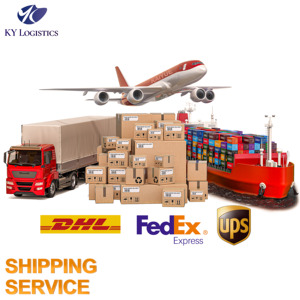
Combines ocean freight savings with air transport speed for time-critical OEM electronic components entering Central Europe.
Get Catalog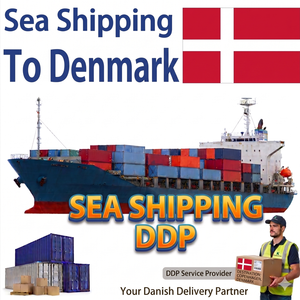
Dedicated FCL sea-rail routing via Port of Trieste and Koper with seamless T1 transit customs handling for Austrian manufacturers.
Get Catalog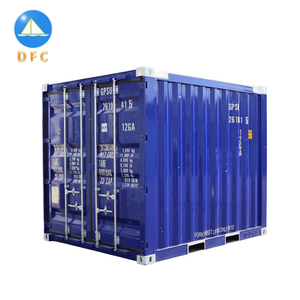
Custom heavy-duty project containers designed for out-of-gauge industrial machinery and Voestalpine-grade steel exports.
Get Catalog
High-frequency containerized shipping backed by FMC and FAA credentials for seamless transatlantic & transpacific trade.
Get Catalog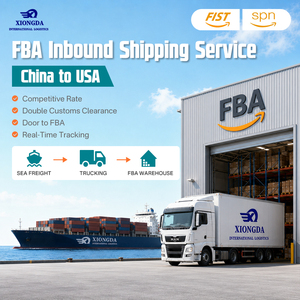
Cross-docking, bonded storage, and automated WMS integration tailored for high-tech and retail supply networks.
Get Catalog
Direct rail connection from European Adriatic ports to Cargo Center Graz (CCG) with streamlined customs clearance.
Get Catalog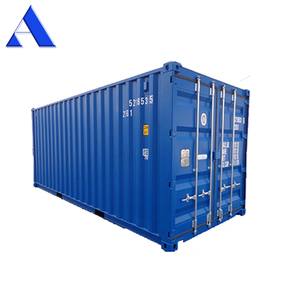
New stock ISO shipping containers built to marine standards for international multimodal sea-air-rail transport.
Get CatalogAustria’s geographic position at the heart of Europe renders it a vital industrial engine, yet its landlocked nature creates unique supply chain challenges for Original Equipment Manufacturers (OEMs) and international trading enterprises. Located between the industrial hubs of Germany, Italy, Switzerland, and CEE (Central and Eastern Europe), Austrian manufacturers rely on synchronized logistics corridors to export high-precision machinery, automotive assemblies, green tech, and specialized metals, while importing essential electronics and raw materials.
Traditionally, supply chain directors in Austria faced a binary dilemma: high-cost, rapid Air Freight via Vienna International Airport (VIE) or Linz Airport (LNZ) versus lower-cost, extended transit Ocean Freight through Northern Range ports (Hamburg, Bremerhaven) or Adriatic gateways (Port of Koper, Port of Trieste). Custom OEM Sea-Air Multimodal Transport bridges this strategic gap by synthesizing ocean freight's volume economics with air transport's operational velocity.
Executing zero-defect multimodal transport into Austrian industrial zones (such as Upper Austria's Linz/Wels, Styria's Graz, and Greater Vienna) requires rigorous intermodal synchronization. Our OEM multimodal freight architecture encompasses three distinct operational phases:
| Transport Mode / Segment | Primary Hubs & Routes | Average Lead Time | Customs & Regulatory Protocol |
|---|---|---|---|
| Leg 1: Ocean Origin | Main Asian / Americas Ports to Transshipment Hub (e.g., Shanghai/Ningbo to Dubai Jebel Ali) | 7 - 10 Days | Bill of Lading (HBL/MBL) under NVOCC security oversight. |
| Leg 2: Air Bridge | Hub Airport (DXB/DOH) to Central European Gateways (VIE, FRA, MUC) | 2 - 3 Days | Bonded Air Waybill (AWB) transfer, ULD Palletization. |
| Leg 3: Rail/Road Feeder | VIE / Port of Koper / Trieste to Cargo Center Graz, Linz Container Terminal, Vienna South | 1 - 2 Days | EU NCTS T1 Transit Document, EORI validation, Austrian Zollamt clearance. |
For OEM manufacturers exporting out of Austria, reverse multimodal architecture provides seamless outbound transit for over-dimensional project cargo, automotive components, and high-value machinery, leveraging customized containerization such as DNV-certified Flat Racks and Open Top equipment.
Austria’s industrial landscape is highly specialized, requiring domain-specific multimodal logistics engineered for specific regional economic clusters:
Styria’s "ACstyria" automotive cluster requires just-in-sequence (JIS) and just-in-time (JIT) delivery of electronic control units (ECUs) and drivetrain sub-assemblies. Sea-Air multimodal transport provides guaranteed 14-day transit windows from East Asian tier-1 suppliers into Graz, preventing assembly line downtime while mitigating air charter cost spikes.
Upper Austria is the heartland of Austrian heavy engineering and metallurgy. Exporting custom-manufactured industrial plant equipment requires specialized DNV-certified Flat Rack and Open Top containers. We orchestrate intermodal heavy-haul transport from Linz to Adriatic sea ports (Koper/Trieste) via ÖBB Rail Cargo express lines.
Silicon Alps microelectronics facilities demand strict environmental monitoring during transit. Our OEM multimodal services feature temperature-controlled refrigerated containers (Reefers) and climate-monitored air cargo ULDs equipped with real-time shock, humidity, and location telemetry under our 4GL logistics framework.
The Austrian logistics market is undergoing structural shifts driven by geopolitical realities, EU decarbonization mandates, and infrastructure investments. Forward-thinking supply chain directors are adapting to three major macro trends:
Historically, Austrian trade relied heavily on Germany's Northern ports (Hamburg, Bremerhaven). However, the Adriatic ports of Koper (Slovenia) and Trieste (Italy) offer a geographical distance advantage that is roughly 500 km shorter by rail to Southern Austria. The ongoing expansion of the Baltic-Adriatic TEN-T Core Network Corridor, including Austria's Koralm Railway and Semmering Base Tunnel projects, allows fast-line rail shuttles to connect Koper and Trieste directly to Cargo Center Graz (CCG) and Vienna South Terminal within 24 hours of vessel discharge.
Under the European Union’s Corporate Sustainability Reporting Directive (CSRD), Austrian enterprises must measure and actively reduce Scope 3 supply chain carbon emissions. Pure air freight generates approximately 500g of CO2 per tonne-kilometer, whereas Sea-Air multimodal transport cuts carbon intensity by up to 60-70% across the total journey, enabling Austrian compliance with stringent national and EU environmental benchmarks.
Modern OEM supply chains cannot tolerate opacity. The adoption of 4th Generation Logistics (4GL) management platforms provides real-time API integration across shipping lines, air carriers, and Austrian customs databases. Importers in Linz or Innsbruck gain instant milestone tracking, automated customs document validation, and predictive delay alerts for proactive inventory control.
Founded in 1995, G&B International Logistics (Green & Blue Group) has built a 29-year legacy of unyielding security, financial stability, and operational precision. We operate full-service logistics management centers engineered to handle complex international multimodal trade flows into the European Union and worldwide.
Licensed by the Federal Maritime Commission (FMC License #4159N/F) as an NVOCC and ocean freight forwarder, alongside full FAA affiliation and Dangerous Goods (D/G) certified handling capabilities (#A03043).
Holder of U.S. Customs ISA Certification (#GL0110004) and authorized under international AEO protocols, ensuring expedited customs verification, risk mitigation, and seamless EU T1 transit processing.
Contracted logistics provider for KOTRA (Korea Trade-Investment Promotion Agency) and enterprise retail leaders like SAM'S Club, operating advanced 4GL control tower technologies for total freight transparency.
Expert Answers on Custom OEM Sea-Air Multimodal Logistics for the Austrian Market
Partner with an FMC-licensed, FAA-affiliated global freight logistics leader. Request tailored Sea-Air multimodal routing, rates, and technical catalogs today.