
Verified container solutions, ocean freight forwarding contracts, and specialized intermodal transport engineered for seamless execution across London gateways.


In the modern global trade ecosystem, Full Container Load (FCL) shipping represents the backbone of international commerce, offering unmatched volumetric efficiency, security, and velocity for high-volume manufacturers, industrial factories, and global exporters. For businesses operating within or trading with the London market and Greater South East economy, navigating the complexities of maritime freight requires a deep technical understanding of UK port infrastructure, last-mile intermodal networks, and evolving post-Brexit regulatory standards.
As an established global logistics entity founded in 1995, G&B International Logistics (Green & Blue Group) brings nearly three decades of audited operational authority to the UK trade lanes. Holding key international certifications including FMC Licensing (Washington D.C. #4159N/F) as a Non-Vessel Operating Common Carrier (NVOCC), FAA Membership, Dangerous Goods (D/G) Handling Accreditation (#A03043), and ISA Customs Authorization (#GL0110004), G&B provides end-to-end oversight for containerized shipments moving into and out of Britain’s primary maritime gateways.
London’s status as a top-tier consumer market and manufacturing consumer base creates unique logistical demands. Importers and exporters cannot afford port congestion, demurrage penalties, or clearance delays. By deploying advanced 4th Generation Logistics (4GL) platforms and dedicated ocean freight contracts with major carrier alliances (2M, Ocean Alliance, THE Alliance), G&B optimizes container turnaround times, ensuring seamless drayage from quay to warehouse across the M25 orbital corridor and the UK's "Golden Triangle" distribution hubs.
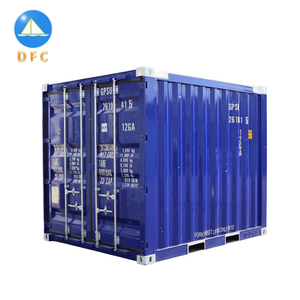
Selecting the precise ISO container specification is essential for optimizing freight costs, protecting payload integrity, and maximizing cubic volume usage. The table below outlines the structural parameters and payload thresholds for standard and specialized equipment utilized across London shipping routes:
| Container Type | External Dimensions (L x W x H) | Internal Volume (CBM) | Max Payload Weight | Primary Industrial Application |
|---|---|---|---|---|
| 20' ISO Standard Dry (20GP) | 20' x 8' x 8'6" (6.06m x 2.44m x 2.59m) | 33.2 CBM | 28,200 kg / 62,170 lbs | Heavy commodities, metals, machinery parts, concentrated industrial cargo. |
| 40' ISO Standard Dry (40GP) | 40' x 8' x 8'6" (12.19m x 2.44m x 2.59m) | 67.7 CBM | 26,700 kg / 58,860 lbs | General manufactured goods, electronics, textiles, consumer goods. |
| 40' High Cube Dry (40HC) | 40' x 8' x 9'6" (12.19m x 2.44m x 2.89m) | 76.4 CBM | 28,550 kg / 62,940 lbs | Volumetric goods, FMCG, packaged furniture, lightweight high-volume cargo. |
| 20'/40' Flat Rack & Open Top | 20'/40' Rigid Collapsible Frame | Variable / Over-Height | Up to 45,000 kg | Out-of-Gauge (OOG) machinery, heavy industrial equipment, structural steel. |
| DNV 2.7-1 Offshore Container | 10'/20' Reinforced Heavy Frame | Custom Operational | Certified Structural Load | Marine engineering, offshore energy sector, rugged industrial project logistics. |
For factory exporters operating in specialized sectors, such as offshore engineering or heavy machinery manufacturing, standardized shipping units may fall short. G&B supplies custom-engineered, DNV 2.7-1 and EN 12079 certified offshore flat rack and open-top containers. These specialized units undergo rigorous dynamic lifting analysis and magnetic particle testing (MPI) to satisfy stringent UK offshore safety compliance standards.
Direct FCL delivery into major distribution centers along the A13 and M25 corridor. Seamless port-centric warehousing at DP World London Gateway, eliminating inland transit overheads for high-volume retail goods.
Execution of urban container freight deliveries adhering strictly to Greater London's Ultra Low Emission Zone (ULEZ) standards and Direct Vision Standard (DVS) permits for Heavy Goods Vehicles (HGVs).
Leveraging G&B's official contractual standing with KOTRA (Korea Trade-Investment Promotion Agency) to provide Asian factories with dedicated bonded storage, consignment fulfillment, and cross-docking in South East England.
The UK ocean freight landscape has undergone profound systemic shifts. Factories, overseas exporters, and London procurement teams must align their supply chain architecture with several core market transformations:
With the complete decommissioning of the legacy CHIEF system by HM Revenue & Customs (HMRC), all UK container imports and exports must be processed through the Customs Declaration Service (CDS). CDS demands granular data input, including precise 10-digit Commodity Codes, Valuation Indicators, and Goods Vehicle Movement Service (GVMS) integration. G&B's customs brokerage desk operates fully digitalized CDS EDI interfaces, guaranteeing immediate clearance and preventing costly quay storage holds at Felixstowe or Tilbury.
Environmental regulations enforced by the International Maritime Organization (IMO)—including Carbon Intensity Indicator (CII) ratings and EEXI energy efficiency benchmarks—are reshaping carrier fleet deployments. Shippers exporting to London are increasingly prioritizing green shipping corridors. G&B collaborates with ocean carriers utilizing dual-fuel LNG vessels and bio-fuel blending options, enabling factory exporters to report verifiable Scope 3 carbon reduction metrics.
In high-value cargo sectors (such as pharmaceuticals, precision electronics, and high-tier automotive parts), real-time visibility is mandatory. Modern FCL logistics incorporates smart container tracking equipped with GPS, door-opening shock sensors, and real-time temperature/humidity telemetry, allowing London-based supply chain managers to monitor cargo conditions continuously during ocean transit.
Answer: Financially, FCL becomes significantly more cost-effective than LCL (Less than Container Load) once shipment volume reaches approximately 15 to 18 CBM, or when cargo weight exceeds 8,000 kg. Beyond the pure freight rate calculation, FCL eliminates co-loading risks, reduces port handling handling points (touchpoints), and bypasses CFS (Container Freight Station) deconsolidation delays, shaving 3 to 5 days off overall transit times into UK ports.
Answer: Demurrage (quay rent) and Detention (equipment retention fee) expenses occur when containers remain uncollected or unreturned beyond standard carrier free-days (typically 3 to 5 days). Mitigating these costs requires: (1) Pre-clearing customs via CDS prior to vessel berth, (2) Securing extended 10–14 day free-time contracts through G&B's NVOCC agreements, and (3) Utilizing off-dock container buffer yards near Essex or Kent to store containers during warehouse delivery congestion.
Answer: UK exporters must supply: (1) A Commercial Invoice with verified EORI number (GB format), (2) Itemized Packing List with Net/Gross weights and cube metrics, (3) Bill of Lading (B/L) instructions, (4) CDS Export Customs Declaration, and (5) Specific Certificates of Origin or EUR.1 documents where preferential tariff agreements apply.
Answer: Transport for London (TfL) enforces strict Direct Vision Standard (DVS) ratings for HGVs over 12 tonnes entering Greater London. Container drayage fleets must hold valid Safety Permits, equipped with side-sensors, camera monitoring systems, and audible blind-spot warnings. Non-compliant vehicles face fines of up to £550 per day. G&B ensures all partnered hauliers maintain 100% DVS and ULEZ compliance.
Answer: Direct ocean transit from primary East Asian ports (Shanghai, Ningbo, Shenzhen, Busan) to DP World London Gateway or Felixstowe averages 26 to 34 days depending on carrier string routing (via Suez Canal routing conditions). Factoring in customs release and final drayage, total door-to-door transit time typically spans 32 to 40 days.
Building a resilient, cost-efficient, and fully compliant international supply chain requires a partner with demonstrated history, comprehensive licensing, and technological agility. G&B International Logistics (Green & Blue Group) offers factory exporters and London procurement directors an integrated global infrastructure backed by institutional experience:
Whether you are scaling factory export operations into South East England, managing high-volume industrial imports, or seeking to optimize container drayage costs across the UK network, G&B provides tailor-made logistics solutions designed for long-term commercial performance.