
Engineered for Cost Efficiency, Consignment Integrity, and Rapid Maritime Transit


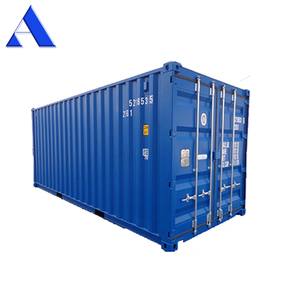
Architecting Efficient Supply Chain Routes into Southern Europe and the Balkan Hinterland
In international trade, Less than Container Load (LCL) freight forwarding stands as the bedrock for agile, capital-efficient, and responsive supply chain management. For enterprises importing goods into the Hellenic Republic (Greece) or utilizing Greek maritime terminals as transshipment hubs for Southern and Eastern Europe, optimizing LCL consolidation is vital. Navigating ocean freight dynamics requires deep technical insight into Container Freight Station (CFS) operations, carrier routing schedules, European Union customs protocols, and multimodal hinterland connections.
As a Premier International Logistics Manufacturer and Supply Chain Integrator, G&B International Logistics (Green & Blue Group, established 1995) deploys advanced NVOCC framework operations, FMC-licensed oversight, and AEO-compliant procedures. We ensure that less-than-container shipments achieve the structural predictability and unit-cost efficiency traditionally reserved for Full Container Load (FCL) movements.
Standardized Workflows from Origin CFS Dock to Destination Clearance
Upon delivery at origin export CFS facilities, cargo undergoes strict dimensional and volumetric verification using automated 3D laser scanners. Freight density dictates billing under the standard Revenue Ton (W/M) rule, where 1 CBM equals 1,000 kg. Cargo is categorized, barcoded, and stored in climate-monitored staging bays prior to stuffing.
Utilizing advanced 3D container loading algorithms, cargo is sequenced by weight distribution, structural fragility, and destination port clearance order. Heavy industrial machinery components or DNV-certified hardware are secured at the container floor using dunnage and heavy-duty strapping, while lighter commercial cartons occupy upper tiers.
Master Bills of Lading (MBL) are negotiated with tier-1 ocean carriers (e.g., COSCO, MSC, CMA CGM), paired with individual House Bills of Lading (HBL) issued for each importer. Advanced Entry Summary Declarations (ENS) under EU ICS2 directives are lodged prior to ocean vessel departure to ensure seamless customs clearance upon arrival.
Tailored Freight Models Designed for Regional Infrastructure Demands
Greece’s industrial manufacturing sector in the Attica and Boeotia regions requires continuous replenishment of precision components, industrial pumps, and electrical machinery. LCL consolidation provides factory operators with fixed-schedule weekly sailings, eliminating the financial burden of waiting to accumulate a full 20ft or 40ft container load.
The Port of Thessaloniki serves as the primary maritime gateway for Northern Greece and the broader Balkan landlocked countries (North Macedonia, Serbia, Bulgaria). Our specialized LCL services utilize T1 transit documentation, allowing goods to bypass local Greek import duties at the port and move under bond directly to inland customs terminals.
Greece’s vast island geography presents unique logistics hurdles, particularly for seasonal hospitality, hotel construction, and retail infrastructure on islands like Crete, Rhodes, Corfu, and Mykonos. Our localized LCL framework orchestrates seamless ocean-to-ferry transshipments from mainland ports to island distribution centers.
With Greece accelerating its transition to renewable energy through solar parks in Thessaly and wind farms in Peloponnese, specialized equipment needs frequent replacement. We provide DNV-certified offshore flat rack containers and consolidated heavy-hardware LCL solutions tailored to renewable energy developers.
Macro Analysis of Maritime Infrastructure Expansion and Regulatory Compliance
Over the past decade, the Port of Piraeus has transformed into one of the top container hubs in the Mediterranean. Driven by massive investments from COSCO Shipping Ports, Piraeus serves as the Southern European node for Asia-Europe trade lanes. For LCL importers, this translates into higher vessel call frequencies, reduced ocean transit times (e.g., 18-22 days from major Asian ports), and unmatched feeder networks across the East Mediterranean basin.
Compliance with the European Union’s ICS2 regulatory framework is mandatory for all maritime shipments bound for or transiting through Greek ports. ICS2 demands precise Entry Summary Declarations (ENS) containing 6-digit HS codes, detailed buyer/seller metadata, and complete cargo descriptions prior to vessel loading. G&B International Logistics integrates automated EDI validation tools to guarantee 100% data accuracy, eliminating customs holds at Greek ports of entry.
As the EU implements strict ESG regulations and CBAM reporting for carbon-intensive goods (such as steel, aluminum, and fertilizers), supply chain transparency is crucial. Consolidating smaller shipments into LCL shipments optimizes vessel space utilization, significantly lowering carbon emissions per ton-kilometer compared to underutilized full containers or air freight alternatives.
Expert Guidance on Customs, Pricing Models, Documentations, and Handling
Decades of Operational Excellence, Accredited Licensing, and Advanced 4GL Systems
Operating under FMC License #4159N/F as an authorized NVOCC, ISA Certificate #GL0110004 from U.S. Customs, and FAA Membership, G&B provides complete legal compliance and security across global trade routes.
Our 4th Generation Logistics (4GL) system provides real-time visibility from milestone tracking to warehouse inventory monitoring. Buyers gain complete status transparency from container loading to door delivery.
As an officially contracted logistics provider for KOTRA (Korea Trade-Investment Promotion Agency) and partner to major retail chains, we bring enterprise-grade supply chain discipline to every LCL shipment.
Connect with our senior freight consolidation specialists to request custom CBM pricing rates, sailing schedules, or end-to-end DDP customs clearance strategies tailored for Piraeus and Thessaloniki ports.