
Directly serving exporters and importers navigating the Tokyo maritime and aviation hubs with scalable, certified freight capabilities.

In an increasingly volatile global macroeconomic climate, Tokyo functions as the primary nexus for trans-Pacific, intra-Asia, and European trade corridors. As Japan's industrial engine shifts toward high-value precision machinery, automotive sub-assemblies, semiconductor materials, and advanced electronics, the reliance on single-mode transport introduces existential risks—such as port congestions, skyrocketing fuel surcharges, and localized drayage bottlenecks. This whitepaper analyzes the operational framework of professional multimodal freight transportation exporters and exporters in Tokyo, offering enterprise supply chain architects an actionable model for cost optimization, carbon compliance, and transit-time predictability.
Tokyo’s maritime and aviation footprint—comprising the Port of Tokyo (Oi, Aomi, and Shinagawa container terminals), Yokohama Port, Haneda Airport (HND), and Narita International Airport (NRT)—requires a synchronized orchestration layer. Multimodal logistics replaces fragmented vendor management with an end-to-end single-bill-of-lading (TBL) contract. By uniting ocean freight, air express, coastal feeder vessels, and inland rail, Tokyo exporters gain agility, real-time cargo visibility, and frictionless customs processing via the Nippon Automated Cargo and Port Consolidated System (NACCS).
Selecting a global logistics partner requires rigid regulatory compliance, international accreditations, and proven operational resilience. Established in 1995 as G & B International, Inc. (Green & Blue Group), our organizational framework rests upon nearly three decades of direct logistics execution across North America, East Asia, Europe, and Australia.
Fully licensed by the Federal Maritime Commission (FMC #4159N/F) in Washington, D.C. as a licensed Ocean Freight Forwarder and Non-Vessel Operating Common Carrier, ensuring legal authority over ocean bills of lading and tariff contracts.
Holder of U.S. Customs ISA Certificate (#GL0110004) and FAA Member status with Dangerous Goods (D/G) Operation Certification (#A03043), authorizing certified handling of hazardous cargo and restricted industrial materials.
Proprietary 4th Generation Logistics (4GL) system integration, complemented by company-owned bonded warehousing in Elk Grove Village, IL, and specialized distribution contracting with KOTRA.
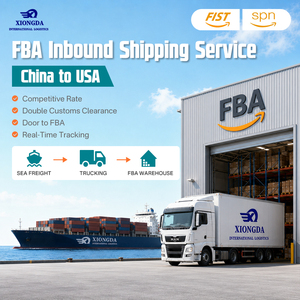
Our operational gateways span key global nodes: Chicago (Headquarters), Los Angeles (LAX), New York (JFK), combined with extensive feeder operations through Tokyo Harbor. This structural footprint allows us to offer specialized DDP (Delivered Duty Paid), DDU (Delivered Duty Unpaid), and door-to-door Amazon FBA inbound logistics with verified customs clearance protocols.
Industrial exporters operating within the Greater Tokyo Area—including the Kanagawa, Chiba, and Saitama industrial clusters—require bespoke logistics configurations depending on cargo density, sensitivity, and lead-time constraints.
Time-critical semiconductor manufacturing components routed via Sea-Air Multimodal Transport: Express ocean transit from Tokyo Port to West Coast gateways, transitioning to immediate air-freight feeder links to interior assembly plants.
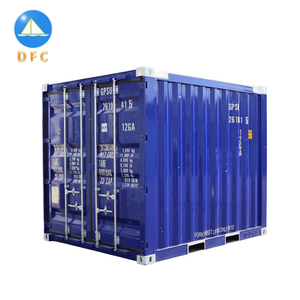
Heavy industrial machinery, tooling, and automotive modules utilizing DNV Certified Flat Rack & Open Top Containers loaded directly at Tokyo’s Shinagawa and Oi container terminals with specialized lashing and crane operations.
Automated e-commerce fulfillment leveraging FCL/LCL DDP Consolidations from Tokyo distribution centers directly to North American and European Amazon FBA hubs with duty-prepaid clearance.
Navigating the Japanese export market requires a clear understanding of systemic regulatory changes. The most prominent structural shift facing exporters in Tokyo is the implementation of Japan’s driver overtime cap regulations, widely recognized in the logistics sector as the "2024 Problem" (2024年問題).
Impact of the "2024 Problem" on Tokyo Drayage: With annual overtime for commercial truck drivers capped at 960 hours, long-distance domestic drayage capacity between Tokyo, Nagoya, and Osaka has contracted by an estimated 14% to 18%. In response, professional multimodal freight forwarders are implementing Modal Shifts—transitioning long-haul highway drayage onto JR Freight rail lines and coastal Ro-Ro (Roll-on/Roll-off) marine vessels connecting Tokyo Bay with regional ports.
Furthermore, digital integration with Japan’s NACCS (Nippon Automated Cargo and Port Consolidated System) allows real-time pre-clearance of export manifest data. Importers and exporters leveraging AEO (Authorized Economic Operator) certified forwarders gain preferential customs processing, reducing wharfage storage fees and eliminating demurrage bottlenecks at Tokyo port terminals.
The technical trade-offs between pure ocean shipping, express air cargo, and integrated multimodal transport for routes originating out of Tokyo are detailed below:
| Transportation Mode | Avg. Transit Time (Tokyo to US West Coast) | Relative Cost Index | Carbon Footprint (gCO2/t-km) | Schedule Reliability | Best Suited Cargo Profile |
|---|---|---|---|---|---|
| Direct Air Freight (NRT/HND) | 1 – 3 Days | 100 (Highest) | 500+ | 95% | High-value microchips, pharmaceuticals, urgent prototypes |
| Direct Ocean FCL (Tokyo Port) | 12 – 16 Days | 15 (Lowest) | 15 – 25 | 72% | Standard bulk dry cargo, raw materials, heavy vehicles |
| Multimodal Sea-Air Express | 6 – 8 Days | 45 (Moderate) | 180 – 220 | 88% | Consumer electronics, fashion retail, high-tech subassemblies |
| Multimodal Sea-Rail (Port + JR) | 14 – 18 Days | 22 (Cost-Optimized) | 20 – 30 | 91% | Industrial machinery, flat-rack equipment, cross-country freight |
Whether you require high-velocity air-sea multimodal routing, FMC-certified container forwarding, or complex industrial project logistics out of Tokyo, our senior logistics architects provide tailored supply chain strategies backed by 29 years of operational excellence.