
Direct Shipping Services, Specialized Containers & Certified Freight Operations for International Exporters

In the contemporary architecture of global supply chain risk management, Turkey (Türkiye) has emerged as an indispensable intercontinental nexus. Situated at the exact intersection of South-Eastern Europe, Western Asia, and the Middle East, Turkish multimodal transport networks provide global enterprises with unmatched structural resilience, transit speed, and cost efficiency. As procurement directors and supply chain architects navigate fluctuating maritime congestion, carbon emission mandates, and shifting geopolitical corridors, utilizing a integrated multimodal freight transportation factory & exporter system in Turkey represents a high-gain strategic pivot.
Multimodal transportation—the seamless execution of goods movement under a single contractual framework utilizing ocean, rail, road, and air legs—is no longer merely an operational alternative; it is the cornerstone of agile supply chains. Türkiye's unique geography leverages over 8,300 kilometers of coastline, world-class deep-water maritime terminals (such as Ambarlı, Mersin, and Aliağa), an expanding high-speed electrified railway network linked directly to the Trans-Caspian International Transport Route (TITR or "Middle Corridor"), and modern mega-hub airport facilities like Istanbul Airport (IST). This technical infrastructure enables freight forwarding entities to craft bespoke logistics protocols tailored to high-value industrial machinery, automotive sub-assemblies, fast-fashion textiles, and hazardous project cargo.
Understanding the micro-geography of Turkey’s freight hubs is critical for international buyers seeking optimized lead times. Ocean freight forwarders operating within Turkey structure their routing decisions around three core logistics clusters:
Anchored by the Ports of Ambarlı, Kocaeli (Evyap, DP World Yarımca), and Tekirdağ (Asyaport). Serves as the primary industrial outlet for the Greater Istanbul and Bursa manufacturing clusters, providing direct access to the Black Sea and the Mediterranean via the Turkish Straits.
Centered around the Port of Mersin and Iskenderun. Mersin International Port (MIP) is Turkey's largest multi-purpose port, offering seamless rail-sea transshipment links to Central Anatolia (Kayseri, Konya) and direct overland Ro-Ro routes to Iraq, Syria, and the Gulf Cooperation Council (GCC) nations.
Prominently featured by Aliağa and Alsancak (Izmir). Specialized in bulk chemical handling, steel exports, industrial equipment, and rapid short-sea container shipping services connecting directly to Southern European ports (Piraeus, Gioia Tauro, Valencia, Marseilles).
The operational game-changer for Turkish multimodal exporters is the fully integrated Baku-Tbilisi-Kars (BTK) rail line paired with the subsea Marmaray Tunnel in Istanbul. This rail infrastructure forms the backbone of the Iron Silk Road, enabling uninterrupted block train freight movement from China, through Central Asia (Kazakhstan, Uzbekistan), across the Caspian Sea, through Turkey, and straight into the heart of Western Europe without break-bulk offloading.
By bypassing traditional maritime bottlenecks (such as the Suez Canal) and avoiding high-risk overland transit zones, the Turkish Middle Corridor cuts transit times between East Asia and Europe from 35-45 days down to an astonishing 12-18 days. For industrial factories operating in Turkey, this rail connectivity allows rapid inbound raw material sourcing and expedited outbound finished goods delivery.
Multimodal transportation is not a one-size-fits-all solution. Depending on cargo specifications, temperature sensitivity, structural weight, and delivery urgency, specialized local application models are deployed across Turkey's major export sectors:
Route: Manufacturing Plants in Bursa/Kocaeli → Ro-Ro Sea Transit via Pendik/Yalova → Port of Trieste (Italy) → Block Train → Central European Assembly Lines (Germany/Czechia).
Operational Execution: Utilizing intermodal swap-bodies and 45ft High Cube curtain-side containers. Loads are collected by truck locally, transferred to mega Ro-Ro vessels crossing the Mediterranean, and loaded directly onto rail chassis in Northern Italy. This eliminates driver road permit (Dozvola) shortages and reduces CO2 emissions by up to 65% compared to pure over-the-road trucking.
Route: Factory in Ankara/Izmir → Heavy Haulage Road Transport → Port of Aliağa/Ambarlı → Ocean Breakbulk / Flat Rack Shipping → North American / Middle Eastern Energy Sites.
Operational Execution: Out-of-Gauge (OOG) machinery requires specialized DNV certified 20ft/40ft Offshore Flat Rack Containers or open-top units. Local engineering teams in Turkey perform precise lashings, center-of-gravity calculations, and marine survey certifications prior to ocean loading on specialized container vessels or heavy-lift project carriers.
Route: Ready-Made Garment Mills in Istanbul/Denizli → Bonded Warehouse Consolidation → Express Air/Sea DDP → European & North American Fulfillment Centers.
Operational Execution: LCL (Less-than-Container-Load) shipments from multiple Turkish factories are consolidated in G&B-managed bonded facilities. Apparel on Hangers (GOH) containers or air-freight skids are prepared with pre-printed Amazon FBA barcodes and cleared under customs DDP terms, bypassing destination clearance delays.
Route: Production Plants in Gaziantep/Kayseri → Rail Freight → Mersin Port → FCL Sea Freight → African / Latin American Infrastructure Projects.
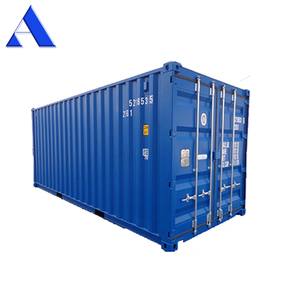
Operational Execution: High-density, high-volume building materials require strict FCL ocean shipping using ISO standard 20ft and 40ft dry cargo containers. Heavy rail connections from inland industrial zones directly onto port quaysides minimize drayage expenses and guarantee container repositioning availability.
To assist procurement managers in evaluating modal shifts, the following data visualization matrix details key performance metrics across primary export routes originating from Turkish factories:
| Transport Mode / Routing | Typical Lead Time | Cost Index ($/TEU equiv.) | Carbon Footprint (g/t-km) | Ideal Cargo Profile | Reliability Index |
|---|---|---|---|---|---|
| Direct Ocean Freight (FCL) (Mersin/Ambarlı to US East Coast) |
14 - 18 Days | Low ($$) | 10 - 18g | Bulk industrial, consumer goods, machinery | 92% |
| Multimodal Sea + Ro-Ro + Rail (Turkey to Western Europe) |
5 - 7 Days | Moderate ($$$) | 18 - 25g | Automotive, fashion, consumer electronics | 96% |
| Middle Corridor Rail (BTK) (Turkey to Central Asia / China) |
12 - 16 Days | Moderate-High ($$$$) | 20 - 30g | Chemicals, high-tech components, machinery | 89% |
| Express Air Freight (Istanbul IST to Worldwide Gateways) |
1 - 3 Days | High ($$$$$) | 500g+ | Pharmaceuticals, samples, high-value electronics | 99% |
| Cross-Border Road Freight (TIR) (Turkey to UK / EU Mainstage) |
6 - 9 Days | Moderate-High ($$$$) | 60 - 90g | Door-to-door retail, perishable goods | 85% (Border-dependent) |
The Turkish freight forwarding ecosystem is undergoing a profound technological and structural transformation. Key industry drivers shaping the procurement strategy of foreign buyers include:
Operating as a full-service global logistics provider, G&B International Logistics (Green & Blue Group) brings nearly three decades of operational excellence, accredited licensing, and end-to-end management to your Turkish supply chain operations.
Founded in 1995 and headquartered in Wood Dale, Illinois, G&B has evolved into a premier 4th Generation Logistics (4GL) consultancy and execution provider. Our institutional capabilities bridge the gap between Turkish factory floors and global buyer destinations:
Licensed by the Federal Maritime Commission (FMC #4159N/F) as an Ocean Freight Forwarder and Non-Vessel Operating Common Carrier. We negotiate direct tier-1 service contracts with major ocean carriers (Maersk, MSC, CMA CGM, COSCO) to secure priority space allocation out of Turkish ports.
Fully certified for Dangerous Goods (D/G Operation Certificate #A03043) and FAA affiliated. G&B handles hazardous chemicals, lithium batteries, and sensitive industrial exports from Turkey under strict international IATA and IMDG compliance codes.
Holding U.S. Customs ISA Certification (#GL0110004), G&B enforces rigorous compliance standards. Our automated WMS and cargo tracking portals provide real-time end-to-end visibility from Turkish origin to final North American, European, or Australian door delivery.
Essential operational answers for international procurement managers, factory importers, and global supply chain directors sourcing goods from Turkey:
Consult with G&B’s senior multimodal logistics specialists. Whether you require FCL ocean quotes out of Ambarlı, project cargo flat racks, or cross-border rail logistics, our certified team is ready to deliver tailored solutions.