
Direct Carrier Contract Rates, Multi-modal Transportation, Bonded Storage, and Guaranteed DDP/DDU Customs Management from China to Poland & European Hubs.
Analyzing the Trade Arteries, Regulatory Frameworks, and Multimodal Transport Links Connecting Chinese Manufacturing Hubs to Central & Eastern Europe.
Poland has firmly established itself as the operational nexus for Central and Eastern Europe (CEE) supply chains. Positioned at the intersection of major European transport corridors, the country serves as the primary gateway for goods manufactured in China entering both the EU Single Market and the broader CEE region. As global supply chains transition toward nearshoring and high-agility inventory management, contract logistics manufacturers and suppliers must leverage Poland’s unique multimodal infrastructure to remain competitive.
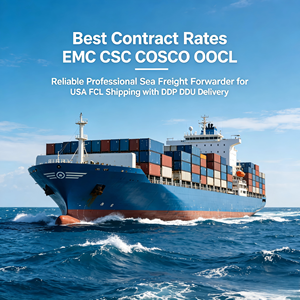
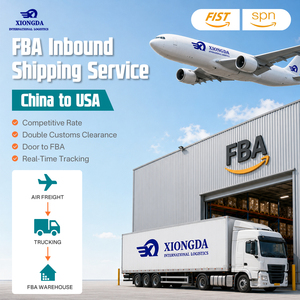
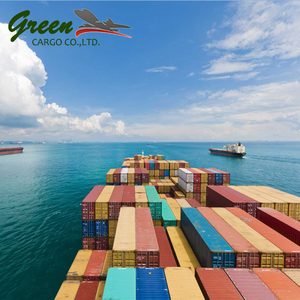
The strategic synergy between Chinese industrial production—spanning Shenzhen, Ningbo, Shanghai, and Qingdao—and Polish distribution infrastructure relies heavily on three core transport modes: direct deep-sea maritime calls to the Port of Gdańsk, transcontinental rail freight via the China-Europe Railway Express (CRE) passing through the Małaszewicze land port, and high-velocity air cargo via Warsaw Chopin Airport (WAW) and Katowice Airport (KTW).
To optimize total cost of ownership (TCO) and lead times, enterprise procurement teams must dynamically balance transport modes based on cargo urgency, volume, and seasonal tariff shifts. The data visualization below outlines the primary routing parameters for China-to-Poland freight forwarding:
| Transport Mode | Primary Entry Hub (Poland) | Average Transit Time | Customs Scheme | Optimal Cargo Profile |
|---|---|---|---|---|
| Ocean Ocean Express | Port of Gdańsk (Baltic Hub / DCT) | 32 – 38 Days | Direct EU Import / Bonded Transit | High-volume FCL, industrial machinery, heavy raw materials |
| China-Europe Rail Express | Małaszewicze / Warsaw Terminal | 14 – 18 Days | T1 Transit / Deferred VAT (Art. 33a) | Electronics, automotive components, seasonal retail goods |
| Expedited Air Cargo | Warsaw Chopin (WAW) / Katowice (KTW) | 3 – 6 Days | Direct Airport Clearance / DDP | High-value tech, emergency industrial spares, medical gear |
| Multimodal Sea-Rail | Gdynia / Poznań Logistics Hub | 28 – 34 Days | Customs Warehouse Staging (Magazyn Cielny) | Vendor-Managed Inventory (VMI), consolidated LCL containers |
Contract logistics in Poland requires far more than basic freight movement. It demands end-to-end integration of fiscal representation, customs compliance under European Union tax structures, and local warehousing fulfillment. By utilizing tax-deferral mechanisms such as Article 33a of the Polish VAT Act, qualifying importers can clear goods into free circulation without immediate cash-flow outlays for import VAT, dramatically optimizing working capital efficiency.
Engineered logistics solutions tailored to key Polish economic zones, manufacturing clusters, and e-commerce corridors.
Locations: Katowice Special Economic Zone, Wrocław, Poznań.
Dedicated just-in-time (JIT) component feeder systems from Guangdong and Jiangsu electronics suppliers directly into Polish assembly lines, utilizing bonded rail logistics to prevent line halts.
Locations: Słubice, Zgierz, Łódź, Szczecin.
High-speed DDP air carton freight and sea-container injection servicing Amazon EU fulfillment nodes and Allegro top sellers. Includes FBA prep, repackaging, and pan-European returns management.
Locations: Gdańsk Maritime Hub, Kraków, Rzeszów.
Specialized heavy-lift ocean container transport for Chinese solar PV panels, inverters, and battery storage units, complying fully with EU hazardous material handling regulations and green supply mandates.
Locations: Bydgoszcz, Gliwice, Warsaw Logistics Belt.
Vendor-Managed Inventory (VMI) staging inside Polish customs warehouses, enabling Chinese machinery OEMs to maintain regional spare-part stock and bill Polish buyers only upon physical stock withdrawal.
Decades of Institutional Expertise, Licensed International Forwarding, and Proprietary Logistics Systems.
Founded in 1995, G&B International (Green & Blue Group) holds FMC License #4159N/F and official FAA membership, authorizing direct carrier contract negotiation and seamless regulatory clearance across ocean and air domains.
Equipped with ISA Customs Certificate (#GL0110004) and Dangerous Goods (D/G) Certificate (#A03043), ensuring strict safety protocol compliance for lithium batteries, chemicals, and complex electronics shipments.
Pioneering 4GL supply chain management since 2006. We provide global buyers—including enterprise retail giants like SAM'S Club and official agency partners like KOTRA—with end-to-end supply chain visibility and control.
Operating extensive bonded warehouse capacity in North America and strategic partner hubs in Gdańsk and Poznań. Fully equipped for cross-docking, long-term staging, palletization, and WMS real-time data tracking.
Our systematically controlled import procedures protect Polish buyers from customs delays, unexpected demurrage charges, or audit penalties through strict pre-manifest auditing and full tax compliance management.
Proprietary TMS and WMS customer portals grant Polish importers real-time tracking from factory pick-up in China through high-seas transit to final mile truck dispatch inside the EU.
Key economic shifts, regulatory evolutions, and infrastructure developments altering Central European supply chain strategies.
Western European brands are increasingly shifting finished-goods warehousing into Western Poland (Wrocław, Poznań, Szczecin) to capitalize on lower operational costs while maintaining 24-hour trucking access to Germany and Benelux markets. This has driven massive demand for bulk contract logistics from Chinese component suppliers.
The implementation of the EU’s Import Control System 2 (ICS2) requires mandatory pre-arrival ENS data filings for all air and maritime shipments. Modern contract logistics suppliers must provide advanced digital data integration to avoid cargo holds at Polish entry points.
With corporate sustainability mandates sweeping Europe, importers in Poland are migrating select air cargo volumes onto the China-Europe Railway Express. Rail transport produces up to 85% fewer CO2 emissions than air freight while cutting sea transit times in half.
Essential guidance on customs clearance, tax mechanisms, delivery terms, and contract logistics procurement.
Under DDP (Delivered Duty Paid), the seller/forwarder assumes total financial and operational responsibility, paying all freight charges, Polish customs duties, and import VAT prior to final delivery. Under DDU (Delivered Duty Unpaid), the buyer is responsible for clearing customs and paying local taxes upon cargo arrival in Poland.
Article 33a allows VAT-registered companies in Poland to settle import VAT directly through their periodic VAT returns rather than paying cash upfront at the customs office. This eliminates cash-flow friction and speeds up customs clearance at Polish entry ports.
Rail transit from Chengdu/Xian to Małaszewicze takes approximately 14–18 days, compared to 32–38 days for sea transport to Gdańsk. For mid-value electronics, fashion, and industrial components, rail strikes an optimal balance between air freight speed and ocean cost efficiency.
Yes. G&B holds a certified Dangerous Goods (D/G) Operation Certificate (#A03043) and FAA authorization. We handle UN-certified packaging, MSDS verification, carrier acceptance, and compliant customs declaration for battery-powered products into the EU.
As a licensed NVOCC (FMC #4159N/F), G&B negotiates long-term, high-volume service contracts directly with major container lines. We pass these institutional rates and guaranteed space allocations on to our contract logistics clients in Poland.
Simply click the "Get Catalog" button anywhere on this page to open our instant chat or request portal. Provide details regarding your cargo volume, origin city in China, desired Polish destination, and target SLA, and our team will generate a custom proposal.